Monday, 30 August 2010

Fret diagrams with LilyPond

If you are playing (or learning to play) guitar, you may have wondered if LilyPond can help to produce the cute fret diagrams alongside (or instead) the classic notation. Indeed it can! For illustration purposes, I chose And I Love Her by The Beatles:

% ****************************************************************
% And I Love Her (Lennon/McCartney)
% ****************************************************************
\version "2.12.3"
verseI = \lyricmode {
  \set stanza = #"1."
  I give her all my love, 
  that’s all I do. __ _ 
  And if you saw my love
  you’d love her too.
  And I love her.
}
verseII = \lyricmode {
  \set stanza = #"2."
  She gives me ev -- ’ry -- thing
  and ten -- der -- ly. __ _
  The kiss my lov -- er brings
  she brings to me.
  And I love her.
}
verseIII = \lyricmode {
  \set stanza = #"3."
  Bright are the stars that shine,
  dark is the sky. __ _
  I know this love of mine
  will ne -- ver die.
  And I love her.
}
theChords = \chordmode {
  fis1:m cis1:m fis1:m cis1:m fis1:m cis1:m a1 b1:7 e1:6
}
staffMelody = {
   \key cis \minor
   r4 fis'4 gis'8 a'4 dis''8(
   dis''8) cis''4 e''8( e''2)
   r4 fis'4 gis'8 a'4 dis''8\((
   dis''8) cis''8( cis''2.)\)
   r4 fis'4 gis'8 a'4 dis''8(
   dis''8) cis''4 e''8( e''2)
   r4 e''4 cis''8 a'4 gis'8(
   fis'2) r8 cis'8 b8 cis'8(
   cis'8) gis'8( gis'2.)
}
\score {
  <<
    \context ChordNames { \theChords }
    \context FretBoards { \theChords }
    \new Staff {
      \context Voice = "voiceMelody" { \staffMelody }
    }
    \new Lyrics = "lyricsI" {
      \lyricsto "voiceMelody" \verseI
    }
    \new Lyrics = "lyricsII" {
      \lyricsto "voiceMelody" \verseII
    }
    \new Lyrics = "lyricsIII" {
      \lyricsto "voiceMelody" \verseIII
    }
  >>
}

The result:

(1)

One little problem here: I don’t like these diagrams. Fortunately, LilyPond has an option to include the (more pleasing) predefined fretboard diagrams. To do this, one has to add just one line to the script:

\include "predefined-guitar-fretboards.ly"

Now the output looks much nicer:

(2)

The closer inspection shows that the last chord still does not look right. The reason is that the table of predefined diagrams does not include sixth chords. Therefore, one has to add this fret diagram manually to the script, e.g. like this:

\storePredefinedDiagram \chordmode {e:6}
                        #guitar-tuning
                        #"o;2-2;2-3;1-1;2-4;o;"

Here’s the final version:

(3)

See photos of guitar chords @ Shutterstock.

Sunday, 29 August 2010

St Ives 900 Street Party

Arco Iris played two sets today at a Bank Holiday Weekend St Ives Street Fest. Once again, we had the good size band even though a bit skewed choice of instruments (five caixas but only one timba and one shaker). It matters not, the public seemed to enjoy the samba. First, we did a mini parade and it was raining. This did not stop some local (?) salseros dancing to our music. Which was nice. We played the second (static) set at the quayside in glorious sunshine.

Saturday, 28 August 2010

My Father’s Wives

by José Eduardo Agualusa
translated by Daniel Hahn

Here’s one more book which I picked up in the library solely because I liked the cover art. The drawing of a black man hugging a double bass. This is Faustino Manso, the “father” of the title. I never heard about this novel (or its author) before. And a good thing too: if anyone were trying to explain me what it is about, I would choose something else for my summer reading. The truth is, it is easier to read than summarise. I’ll try anyway.

Like Maja, the heroine of The Opposite House, Laurentina endeavours to visit her native country in search of her roots. Unlike Maja, she actually does it. Her boyfriend Mandume is not so keen on the idea.

Right away Laurentina got into her hard head the idea that she had to meet her biological parents. I was horrified when she told me she meant to go back to Africa.
‘Have you gone mad? What are you going to look for in Africa?’
Roots. She wanted to look for roots.
‘Roots are what trees have,’ I shouted to her, ‘neither one of us is African.’

Still, Mandume follows Laurentina to Angola and even suggests to make a documentary about her reunion with the family. The story (or stories) are told, in turns, by Laurentina herself, Mandume, her newly-found nephew Bartolomeu, and Albino Amador, aka “Pouca Sorte”, the mysterious driver of Malembemalembe. Following the trail (of numerous wives and children) left by Manso, the four embark on an epic journey from Luanda to Namibia to South Africa to Mozambique and back to Angola. The short chapters are interspersed with the author’s notes which are not chronologically ordered. You see, the author is also travelling throughout the southern Africa in search of his heroes.

Miraculously, this seemingly convoluted structure is a joy to read. The novel is full of warmth, love and gentle humour. And there are a few surprises in the end. But does Laurentina learn the truth about her parents? In words of Faustino Manso’s widow, Dona Anacleta, ‘The truth is a recourse for people with no imagination’. A masterful work by Agualusa and his translator, Daniel Hahn.

‘You know I nearly died here in ’99? It was this baobab that saved me.’
‘You would have died in an ambush?’
‘No ma’am, it was my wife who almost killed me.’
‘Your wife?’
‘Affirmative. I was inside the car fooling around with a Benguela girl called Mil Flores — a thousand flowers — a fair mulatta girl... like this girl here... I was already completely — how should I put it — fully operational, when my wife appeared. As I learned later the person who’d given us away was another girlfriend of mine, severely afflicted by jealousy, by the name of Anunciação. Maria Rita, my wife, appeared armed with a katana. I didn’t see her coming. I only realised she was there when the driver’s-side window smashed. Mil Flores opened the door on the other side and ran off, stark naked — a lovely sight to see — towards Lobito. God made me as you see me now — thin and agile — like a little goat, but I’m old, my wife is much younger, not so quickly out of breath, and it was only a matter of time before she caught me. And if she caught me — yikes! — there I was, unarmed, so I climbed the baobab.’
‘It’s not possible! How did you do it?’
‘How do cats fly?’
‘Cats don’t fly!’
‘They don’t fly over there in Europe, miss. Here they do fly! Put a greyhound behind a cat and see if it doesn’t fly.’

Friday, 27 August 2010

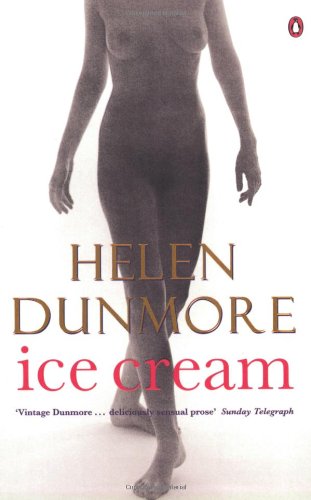
Ice Cream

by Helen Dunmore

Ice Cream is a collection of short (sometimes too short) stories by a hitherto unknown to me author, Helen Dunmore. Some of them, including the title story, are rather disposable. Some are tragic and beautiful: Emily’s Ring, The Lighthouse Keeper’s Wife, Lisette. The three stories featuring Ulli (but otherwise unrelated) are curious although not particularly convincing. The best are The Clear and Rolling Water, You Stayed Awake With Me and Lilac — poetic tales of childhood friendships, love and swimming.

Thursday, 26 August 2010

The World According to Bertie

by Alexander McCall Smith

This is the first novel from the 44 Scotland Street series that I read (and hopefully not the last one). I am not sure that “novel” is a right term though. It has no apparent beginning or end, and perhaps it also could be read from any place in the middle. It does not matter really, because McCall Smith’s writing is so thoroughly enjoyable. Moreover, I think that’s exactly what made 44 Scotland Street series ideal for daily appearance in The Scotsman.

They were always somewhat excited at the beginning of a new term and usually took a few days to settle down, especially if there were any new members. As it happened, there were not, and indeed the class was one member down with the departure of Merlin. He had been withdrawn by his parents, who had decided to home-school him for a trial period. Miss Harmony had not thought that a good idea, as she believed in the socialisation value of the classroom experience, particularly when the parents themselves were so odd. And she had the gravest doubts as to what Merlin’s mother could actually teach her son. There was something very disconcerting about this woman, Miss Harmony thought; her vague, mystical pronouncements, her interest in crystals, and her slightly fey appearance did not inspire confidence. But it was her choice, and it would be respected, although when she thought about it hard enough, she wondered exactly why one should respect the choices of others when those choices were so patently bad ones.

Saturday, 14 August 2010

Alexander / Lundgren Quartet @ Jazzhus Montmartre

Yesterday, we went to Copenhagen’s Jazzhus Montmartre to see in action the Eric Alexander / Jan Lundgren Quartet, with Jesper Lundgaard on bass and Kristian Leth on drums. I never heard any of these names before. The quartet played two sets of hard bop standards and, um, hard bop originals. The music was great without being groundbreaking. If it was innovative, then it was innovative in very subtle ways. I liked the contrast of Alexander’s (sometimes frenetic) playing with the cool of the Nordic trio. The drumwork of Kristian Leth throughout the evening impressed me most. Two of his solos felt distinctly Brazilian. I was hoping for the encore but apparently the rest of the audience were not too keen, so after the last song more or less everybody did rise and leave. Oh well.

The venue is very hyggelig but a bit small. Since they also serve dinner there, in order to get good seats you’d better arrive early. And it is pricey — both tickets and drinks.

Walking back to the hotel, we passed a cheerful crowd dancing to Balkan rhythms. A free street party, we were told. Alas, by the time we came closer, the brass band responsible for these rhythms has finished the set, to more cheers.

Sunday, 8 August 2010

Lizard

by Timur Kulikov

Timur brought home his school project T-shirt with a splendid picture of a lizard. As he explained to me right now, it is based on a Caribbean tale called Clever Anansi and Boastful Bullfrog, where the said bullfrog was pulled out of shape and became a lizard. “Which is weird,” added the juvenile zoology expert, “because really, it should have become a newt”.