Wednesday, 9 September 2026

По волне моей памяти

by David Tukhmanov

Fifty years ago, there was no Soviet disco that wouldn’t play the impossibly catchy «Из вагантов» (From Goliard Poetry). I had no faintest idea who goliards were, and it seems that neither the composer nor the singer did. Another thing I didn’t know at the time was that this schlager came from a freshly released LP «По волне моей памяти».

A few years later, I finally heard it as a whole, once again, thank to my cousin who brought the vinyl to our house. My I was impressed, expecially by Good Night sung entirely in English. Three more songs included verses in a foreign language: French in Sentimental Journey, German in Heart, my Heart, and Polish in Dedication in the Album*. I didn’t expect that from a composer of patriotic songs like «Мой адрес — Советский Союз» (My address is the Soviet Union) and «День Победы» (Victory Day). Cool.

Somewhat disappointedly, the title track did not have any Spanish in it. The original poem by Nicolás Guillén, as I just learned, is called Agua del Recuerdo. Maybe it’s not the Russian version of it (the only one I knew until now) as such but its interaction with the tune that makes me cringe. Which is a shame really because the music is magical. Who plays the flute, I wonder?

Then again, the whole album is magical, and has to be listened to non-stop from the beginning to the end many times in a row. Every song has a twist or three in it. Whether it is a journey from soul-funk to baroque and back in Heart, My Heart, followed by a reprise of the jazz-rock theme from the opening track, or the psychedelic From Sappho, 2.5 millennia later reimagined as Confusion which also quotes from Sentimental Journey — you can’t help wondering what else is hidden there and wanting for more.

Alas, more was not to be. «По волне моей памяти» stands as sui generis in Tukhmanov’s discography. It was not the first conceptual art/prog/any rock album made in the USSR — Alexander Gradsky recorded «Размышления Шута», also based on classical poetry, a few years before — but it remains the most influential Soviet record of the 1970s, and definitely Tukhmanov’s best.

По волне моей памяти On a Wave of My Memory
I сторона Side A
  1. Я мысленно вхожу в ваш кабинет (Максимилиан Волошин)
  2. Из Сафо (Сапфо, перевод Викентия Вересаева)
  3. Из вагантов (ваганты, перевод Льва Гинзбурга)
  4. Приглашение к путешествию (Шарль Бодлер, перевод Ирины Озеровой)
  5. Доброй ночи (Перси Биши Шелли)
  1. I Step into your Study in my Thoughts (Maximilian Voloshin)
  2. From Sappho (Sappho, translation by Vikenty Veresaev)
  3. From Goliard Poetry (translation by Lev Ginsburg)
  4. Invitation to a Journey (Charles Baudelaire, translation by Irina Ozerova)
  5. Good Night (Percy Bysshe Shelley)
II сторона Side B
  1. По волне моей памяти (Николас Гильен, перевод Инны Тыняновой)
  2. Сентиментальная прогулка (Поль Верлен, перевод Ариадны Эфрон)
  3. Сердце моё, сердце (Иоганн Вольфганг Гёте, перевод Вильгельма Левика)
  4. Смятение (Анна Ахматова)
  5. Посвящение в альбом (Адам Мицкевич, перевод Семёна Кирсанова)
  1. On a Wave of my Memory (Nicolás Guillén, translation by Inna Tynyanova)
  2. Sentimental Journey (Paul Verlaine, translation by Ariadna Efron)
  3. Heart, my Heart (Johann Wolfgang von Goethe, translation by Wilhelm Levick)
  4. Confusion (Anna Akhmatova)
  5. Dedication in the Album (Adam Mickiewicz, translation by Semyon Kirsanov)
    Музыка и аранжировка Давида Тухманова
    Литературный материал подобран Татьяной Сашко
    Music composed and arranged by David Tukhmanov
    Literary source selection by Tatiana Sashko
    Борис Пивоваров — гитара
    Аркадий Фельдбарг — гитара-бас, скрипка
    Владимир Плоткин — ударные
    Давид Тухманов — фортепиано, орган, синтезатор, электропиано
    Boris Pivovarov: guitar
    Arkady Feldbarg: bass guitar, violin
    Vladimir Plotkin: drums
    David Tukhmanov: piano, organ, synthesizer, electric piano
    Mehrdad Badie: vocals (1, 5)
    Natalia Kapustina (Natasha Shneider): vocals (2)
    Igor Ivanov: vocals (3)
    Alexander Byrykin: vocals (4)
    Vladislav Andrianov: vocals (6)
    Sergey Belikov: vocals (7)
    Alexander Lehrman: vocals (8)
    Liudmila Barykina: vocals (9)
    Sound engineer: Nikolai Danilin
    Cover design by Alexander Schwartz

* In this track, the first half is sung in Polish and the second in Russian.
The singer’s name was not listed on the album cover because of her emigration to the USA.
The singer’s name was not listed on the album cover because of his emigration to the USA.

Wednesday, 2 September 2026

Жил-был Козявин

a film by Andrei Khrzhanovsky
screenplay by Lazar Lagin and Gennady Shpalikov
based on a short story by Lazar Lagin
music by German Lukyanov

It’s a (not so) little miracle that this surrealist 1966 animation was released at all, the Thaw notwithstanding. Not only that: Khrzhanovsky’s debut film was his only work to be released without any amendments or alterations (mutilations). Written by Lazar Lagin (the author of The Old Genie Hottabych) and Gennady Shpalikov (Walking the Streets of Moscow) and featuring “noise music” jazz by German Lukyanov, a Pythonesque story and aesthetics predating Monty Python itself — an absolute classic that aged surprisingly well.

Monday, 31 August 2026

Free live music and stuff in Las Palmas, July—August 2026

I was away for the most of July, and in August there wasn’t much on offer. Still.

  • 30 July: Primer conversatorio de cantautoras de Gran Canaria @ Biblioteca Pública Municipal Josefina de la Torre, Paseo de las Canteras, Las Palmas de Gran Canaria
      With Dácil Santana, Laura Perdomo, Sara Brito, Aldara, Ana Label, Claudia Álamo, Ana Falcón, Sylvie Hernández and Mararía González. This and other events at the Biblioteca Pública Municipal Josefina de la Torre were part of the cycle «Ola de Letras».

  • 8 August: Versos a pie de orilla @ Biblioteca Pública Municipal Josefina de la Torre
      Mararía González (vocals, guitar), Ana Falcón (vocals, piano) and Adriana Medina (poetry).

  • 12 August: Miguel Ángel Castro @ Centro Atlántico de Arte Moderno (CAAM), Calle de los Balcones, 9
  • 15 August: Música Viva @ Jardines del Atlántico
      This was the first of the new cycle of open-air concerts, Música Viva, a double bill of Pleito, a solo project by Alba Gil Aceytuno (saxophone, loops, percussion, voice), and La Cofradía, a jazz quartet featuring Kervin Barreto (trumpet), Juan Pérez Pérez (drums), Nelson Saavedra (double bass) and Luis Sánchez Guerra (piano).

  • 21 August: Jazz en el aire @ CAAM
      Luis Sánchez Guerra (piano), Carlos Meneses (double bass) and Suso Vega (drums) playing mostly original compositions, with Let It Be as an encore. A concert from this year’s cycle JazzCAAM.

  • 22 August: Ibaute @ Biblioteca Pública Municipal Josefina de la Torre
      What it says: Ibaute (vocals, guitar).

  • 27 August: Muestra abierta de escuelas de danza @ Biblioteca Pública Municipal Josefina de la Torre
      With the participation of students from several dance schools of Las Palmas.

And exhibitions:

  • 16 July — 14 August: «Módulo 4» @ Centro de Artes Plásticas (CAP), Calle Colón, 8
      A mural created by the graffiti artist Ayoze Jiménez with participation of the Gran Canarian public, including several inmates of the Prison Las Palmas I.

Three exhibitions @ Centro Atlántico de Arte Moderno (CAAM), Calle de los Balcones, 9

Goodbye, summer.

Wednesday, 26 August 2026

Once in Os Peares

Os Peares (officially Nosa Señora do Pilar dos Peares) is the strangest village I’ve been to. It belongs to (or shall we say, is torn between) two provinces, four municipalities, three judicial districts and two dioceses. In part — but only in part — this is due to its unusual geography. The rivers Búbal, Minho and Sil meet here; cross one of them and you are bound to find yourself in another administrative division. This peculiar arrangement is guaranteed to make any paperwork-related undertaking a nightmare for the villagers. On the contrary, the mere mentioning of its name must provide infinite joy to bureaucrats dealing with the local matters.

It’s difficult to say what exactly is the centre of the village but I’d place it near the church (Iglesia Nuestra Señora del Pilar de los Peares) — wait, there are two buildings with this name, and I’ve never seen either of them open. Scrap that, I’d place the village centre right in the natural pool of the river Búbal, because this is the place you can meet more than one person at a time. Having said that, I spent several glorious mornings by this pool enjoying total solitude.

Next to the pool there is a reasonably modern building that combines a health centre (the doctor was on holidays when I was there), an ATM and a post office. This latter is open every working day from 11:00 to 11:30. One day I came to visit it because I needed to send a gift to my friend in Santander. The postman did not have a suitable envelope but was able to fashion something resembling it out of scraps of brown paper he’d found under his desk. I was pleasantly surprised when I learned, two weeks later, that the package had safely arrived to its addressee, together with its contents.

The village boasts its own train station where a train stops twice a day: 8:37 to Ourense and 16:48 from Ourense. So a day out in the provincial capital is doable. The train in either direction stops at platform no. 3. I don’t know how useful this information is as I was unable to find platforms no. 1 and no. 2. There is an Eiffelesque railway bridge painted sky blue, the kind of bridge you’d board a train only for the privilege to cross the river by. However, you’d have to go in the direction of Monforte de Lemos to experience that, which I never did. What I did was the next best thing: to cross it on foot. Or maybe it is the first best thing, given that you can stop at any point and enjoy the view to your heart’s content.

The village also has a pharmacy; a grocery store (I heard a rumour that the owner is about to retire, which could spell the end of it); and, of course, a number of bars. My favourite is Bar Barra, where a beer in a frosty mug and a generous tapa will cost you €2.

Os Peares is the birthplace of one Alberto Núñez Feijóo, the man who thinks he is the next Prime Minister of Spain. In another bar, spookily called Luz de Gas, a big photo on the wall shows the man himself posing with the owner-cum-waiter. I don’t know why she put it there, I think it scares the customers off.

Ah, Galicia, beautiful Galicia. Apart from Estrella Galicia and pulpo a la gallega, it gave us Franco, Rajoy and now Feijóo.

Speaking of Franco. Some 1.5 km northeast of the village centre (as defined above) you’ll find a hydroelectric power station constructed during the dictatorship, between 1945 and 1955. The generalissimo just loved his dams. Below the dam, a model village was built for the power station workers, complete with a school and a chapel. Then this housing “was abandoned and fell into disuse for decades”, although the station itself seems to be working all right. Now the restored village hosts Peares Language Immersion Centre. In the summer, the students of the immersion courses descend on the natural pool in the centre of Os Peares where they outnumber the sunbathing locals by an order of magnitude. Above the power station is another place worth visiting, El Mirador Alto da Picota; do some research (a hint: Google Maps may not show you the best route) and wear proper hiking shoes, not sandals as I did.

It’s well known that the rain in Spain stays mainly in Galicia. Not in July though, and especially not in Os Peares. In the four weeks that I spent there, there was one rainy day and several misty mornings, otherwise full sun with daily temperatures up to 40 °C.

According to Wikipedia, in 2023 Os Peares had 57 inhabitants. If it is so, there are more homes than people and, inevitably, many houses are empty, which confers this idyllic corner a certain degree of creepiness. Even stray cats and dogs are conspicuous by their absence. If there are any unsolved murders in Galicia, Os Peares provides the ideal setting. It just has this aura.

This aspect aside, Os Peares is a great spot to visit and probably spend a couple of days hiking around. By the end of the first week there, I thought I’d seen all there is to see. After two weeks, I was fed up with it and with the heat. By the end of the third week, after seeing all there is to see in Ourense, I was ready to go. I left Os Peares after four weeks hoping to never come back.

Os Peares is a place you couldn’t help returning to. On many an occasion I was greeted by a road sign welcoming me, once again, to Os Peares, which means that I must have left the village behind me at some point without noticing it. I’m considering “Once in Os Peares” for the title of my new book. OK maybe “Twice in Os Peares”. But that will be it.

More photos of Os Peares @ Shutterstock.

Saturday, 22 August 2026

The Girl on the Train

by Paula Hawkins

Just like it was the case with Rosalía, I learned about this book from one of my students, who was reading it at the time, during a “one-to-one” session.

“Would you recommend it?”, I asked. “I don’t know yet”, she said, “I’ve only started. I started reading in on the train while travelling here. But I can’t put it down.”

Eight years after that conversation, I finally read it. Probably after everybody else read it, but still. I can confirm its utter unputdownability. (Why, it kept Stephen King up most of the night, or so he says.) And not only that. It’s a great story, exceptionally well written, deliciously noir with quite a few twists, including that of a corkscrew. And how couldn’t you fall in love with its unreliable, alcoholic, mentally unstable, etc. heroine, the titular girl on the train?

Some fun facts about geography of the novel. Both Ashbury and Witney are in Oxfordshire. (There are a few more Ashburys but they are even further away from London.) There are no trains serving either of them. So no way to commute to Euston in “one hour and one minute”. Ashbury, Oxfordshire is a historic village dating from the 9th century with about 500 inhabitants, not “a 1960s new town, spreading like a tumour over the heart of Buckinghamshire”. Witney is a market town, not a “village-on-the-edge-of-London”. The author studied at Oxford and perhaps wanted to transplant these names closer to the capital. The other mentioned places, such as Holkham, seem to be realistically located.

Saturday, 13 July 2013

Morning

I know without looking at a clock that it is somewhere between seven forty-five and eight fifteen. I know, from the quality of the light, from the sounds of the street outside my window, from the sound of Cathy vacuuming the hallway right outside my room. Cathy gets up early to clean the house every Saturday, no matter what. It could be her birthday, it could be the morning of the Rapture — Cathy will get up early on Saturday to clean. She says it’s cathartic, it sets her up for a good weekend, and because she cleans the house aerobically, it means she doesn’t have to go to the gym.
It doesn’t really bother me, this early-morning vacuuming, because I wouldn’t be asleep anyway. I cannot sleep in the mornings; I cannot snooze peacefully until midday. I wake abruptly, my breath jagged and heart racing, my mouth stale, and I know immediately that’s it. I’m awake. The more I want to be oblivious, the less I can be. Life and light will not let me be. I lie there, listening to the sound of Cathy’s urgent, cheerful busyness, and I think about the clothes on the side of the railway line and about Jess kissing her lover in the morning sunshine.
The day stretches out in front of me, not a minute of it filled.
I could go to the farmer’s market on the Broad; I could buy venison and pancetta and spend the day cooking.
I could sit on the sofa with a cup of tea and Saturday Kitchen on TV.
I could go to the gym.
I could rewrite my CV.
I could wait for Cathy to leave the house, go to the off-licence and buy two bottles of Sauvignon Blanc.

Wednesday, 22 July 2026

Before the Coffee Gets Cold

by Toshikazu Kawaguchi
translated by Geoffrey Trousselot

According to Wikipedia, this short novel spawned no less than five sequels. It’s difficult to say why, as the first book is not particularly well-written. The clumsy translation does not help:

‘OK then, here you go,’ Kumi said, and she quickly pulled out two notes from her purse.
Kei took the notes and counted them efficiently. ‘Receiving eleven thousand yen,’ she said, and again she punched the keys of the cash register.

How efficient you have to be to count two banknotes?

But I suspect even the best translation wouldn’t cure the novel of its annoying verbosity. And do we really need to know exactly how its characters are dressed each time they are mentioned? Now if the text was reduced to a twenty-page short story, I most probably would enjoy it. I find the idea of being able to travel to the past knowing that, no matter how hard you try, you couldn’t change it, strangely comforting.

Wednesday, 1 July 2026

Free live music and stuff in Las Palmas, June 2026

Some stuff that we saw in June.

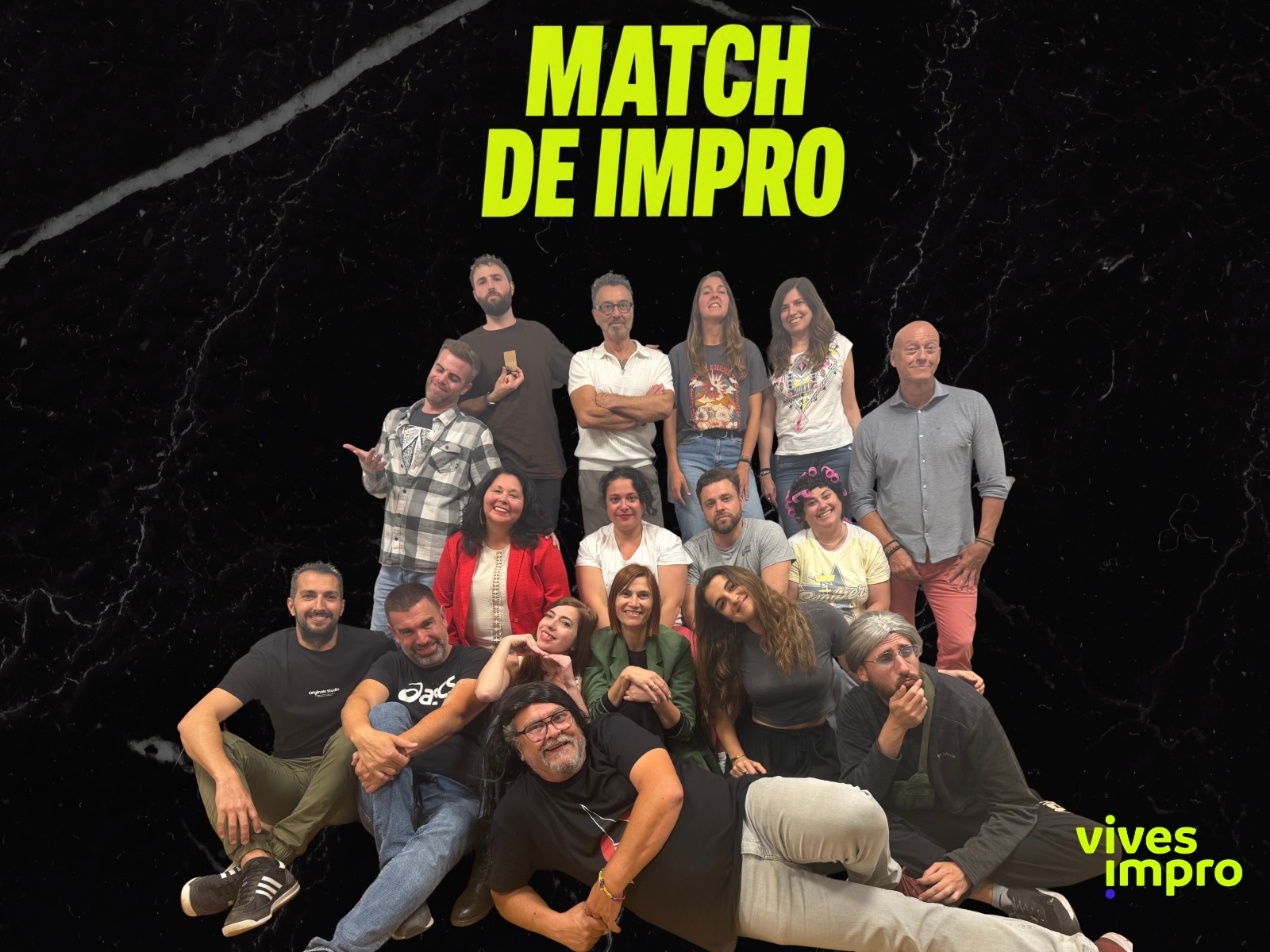
  • 5 June: «Match de impro» @ Teatro Guiniguada, Plaza F. Mesa de León, Las Palmas de Gran Canaria
      The second (of three) performances by Escuela Vives Impro lead by Romina Vives. Presented as a match between two teams who had to improvise their lines according to the words or phrases provided by the audience and randomly selected from the box. On this occasion, the green team won. The Saturday show was supposed to be a final (that is, a competition between the winners of the previous two) but I went to see Mestizo in Parque Doramas. Part of VII Muestra de Teatro no profesional.

  • 6 June: Mestizo @ Auditorio José Antonio Ramos, Parque Doramas
      Feauturing Danny Martínez (guitar), Pedro Izquierdo (timple), Marcel Montcourt (cuatro venezolano), Samuel Ortiz (clarinet, vocals), Kiko González (percussion), Luis Rivero (bass), Adrián Brito (vocals) and Claudia Álamo (vocals).

From 12 to 28 June our city celebrated its Fiestas Fundacionales. Here are some events we’ve attended:

  • 12 June: «Pangea» @ Castillo de la Luz, Calle Juan Rejón
      A work by the Galician composer, musicologist, luthier and multi-instrumentalist Abraham Cupeiro (flutes, horns, bagpipes, carnyx) performed by the author and La Banda Sinfónica Municipal de Las Palmas de Gran Canaria conducted by Juan Roda Sapiña.

  • 13 June: «60 años de soul en el Atlántico» @ Plaza de Santa Ana
      The City Dock Band featuring Cristina Ramos paid a tribute to Los Canarios and American soul artists. With guest appearance of Teddy Bautista (via video) and Toba.

  • 14 June: «Música en el corazón de Vegueta» @ various locations
      This time, the traditional Vegueta festival took place on Sunday morning. I liked this arrangement better than usual Saturday evening one. This is what we’ve seen (the full programme is available here):
      • Archinautas @ Colegio de Abogados
      • Súbito Koral @ Casas Consistoriales
      • La Musicleta @ Plaza del Pilar Nuevo
      • Barrio de Tango @ Plaza de San Agustín
      • Son x Tres @ Plaza de la Real Sociedad Económica Amigos del País
      As an extra bonus, in the patios of Vegueta the visitors were supplied with Tirma chocolate bars.

  • 17 June: Mingo Quintana and José Artiles @ Palacete Rodríguez Quegles, Calle Benito Pérez Galdós 4,
      A double bill from the cycle 12 noches de autor.

  • 19 June: Performance «Cuerpo a tinta» @ Centro de Artes Plásticas, Calle Colón, 8
      A result of the workshop taught by Sandra March, this perfomance complemented the exhibition Engravers for Peace (see below).

  • 19 June: «La costa de los cantares» @ Plaza de Santa Ana
      Olga Cerpa & Mestisay with guest singer Eneida Marta and invited artists Ricardo Campos (bass) and Cristiano Pinto (guitar).

And exhibitions:

  • 25 February — 28 June: «Alma de nacar» @ Casa de Colón, Calle Colón, 1
      Presenting enconchados created in Mexico in the 17th and 18th centuries.

  • 4 June — 3 July: «Grabadores por la Paz» @ Centro de Artes Plásticas
      The collective exhibition Engravers for Peace, coordinated by the Canarian-Palestinian artist Fátima Suleimán Afonso, brings together creations of some 60 artists from different countries, including a work by Tamara.

Goodbye, June, I’ll miss you.

Thursday, 25 June 2026

All You Need Is Love

by The Beatles
— Will that do? ——— Oh yeah, and The Beatles.
— The Beatles, said Jimmy.
— Money for jam, said Joey The Lips. — ALL YOU NEED IS LOVE —— DOO DUH DOO DUH DOO.
— Was tha’ you?
— Indeed it was me, Brother. Five pounds, three and sixpence. A fair whack in those days. ——— I couldn’t stand Paul, couldn’t take to him. I was up on the roof for Let It Be. But I stayed well back. I’m not very photogenic Brother. I take a shocking photograph.

Hey, it’s official:

Now, in a major milestone for the celebration, Apple Corps Ltd, the company founded by The Beatles to manage their creative and business ventures, has formally acknowledged Global Beatles Day.

And more:

On 25th June, alongside online and in-person events around the world that celebrate the band, The Beatles will also release a colourised version of their BBC Our World performance of “All You Need Is Love” for free on YouTube. The first time the iconic performance has been made available online, it will celebrate the iconic performance’s anniversary, mark Global Beatles Day, and give fans around the world the chance to relive that spectacular, global moment from 1967 and share their reaction in the live chat.

“The first time”, really? I’ve seen it before, black and white as well as “colourised” (although I prefer the B&W version). For free.

But of course I’ll be watching it anyway, in a hope to catch a glimpse of Joey The Lips Fagan playin’ DOO DUH DOO DUH DOO on his Gina.

Tuesday, 23 June 2026

Murder on the Orient Express

a film by Sidney Lumet
based on a novel by Agatha Christie

Curiously, it took exactly forty years from the publication of Christie’s classic novel to make its first adaptation. Of the three films from the cycle Nada es lo que parece, the last one was the one I liked the least. I found its all-star cast including Ingrid Bergman, Jean-Pierre Cassel, Sean Connery, Anthony Perkins and Vanessa Redgrave rather underwhelming, while Albert Finney portrayed the most annoying Poirot I’ve seen. It is its few comic moments that make this grandiose movie actually enjoyable.

According to Wikipedia,

Christie, who died fourteen months after the release of the film, stated that Murder on the Orient Express and Witness for the Prosecution were the only movie adaptations of her books that she liked although she expressed disappointment with Poirot’s moustache.

Thursday, 18 June 2026

Carol

a film by Todd Haynes
based on a novel by Patricia Highsmith
screenplay by Phyllis Nagy
There’s not an ounce of guilt, there’s not an ounce of regret, over the nature of their attraction for each other. I also found Highsmith’s notions of what makes a good mother to be quite radical — the choices that people have to make in order to make the lives of their children better <in 1952> seemed really fresh, and radical. And still do, to this day, actually.

A beautifully atmospheric and stylish drama starring Cate Blanchett as Carol and Rooney Mara as Therese. According to Wikipedia, it took about 19 years to make this movie (1996 through 2015) while actual “filming was completed after 34 days”; it was shot on Super 16 mm film.

Carol continues the cycle Diversidad, Igualdad y Cultura by Filmoteca Canaria and Instituto Canario de Desarrollo Cultural.

Wednesday, 17 June 2026

Witness for the Prosecution

a film by Billy Wilder
based on a play by Agatha Christie

Another first — this time, the first film adaptation of Christie’s 1953 play. Compared to last week’s feature, Witness for the Prosecution offers much more mystery, even less noir, and plenty of comedy, albeit of a different kind. Of the three main stars, Tyrone Power is unimpressive, Marlene Dietrich is interesting enough, and Charles Laughton is truly splendid. Una O’Connor is great as a 1957 version of Mrs Doyle (eggbeater = Teamaster), and Elsa Lanchester — by then, a spouse of Laughton for nearly three decades — shines as Miss Plimsoll.

Testigo de cargo continues the cycle Nada es lo que parece. 50 años sin Agatha Christie.

Sunday, 14 June 2026

Katanazo al amor romántico

by Raquel Riba Rossy

Didn’t I tell you that Lola’s katana won’t stay in its cabinet for long? Well, it depends what one means for “long”. Five years including pandemic could be an awfully long time. By 2023, Lola was back with the first part of Katanazo. In the 2026 follow-up, the sword was finally used to Lola’s (and my) satisfaction.

Katanazo is perhaps the darkest of Lola Vendetta comics. First introduced in Una Habitación Propia, Death, God and Pepito the dog return to provide much-needed comic relief. No spoilers but look for those QR codes!

Wednesday, 10 June 2026

Not a Pretty Picture

a film by Martha Coolidge

In 1962, when she was 16, Martha Coolidge was date raped by an older student of the same high school. Recreating the circumstances of the director’s ordeal, this 1976 docudrama is, just as its name suggests, not a pretty picture. Molly Haskell wrote in 2024:

Given the rise in reported incidents of rape and the omnipresence of the subject across social media in the intervening years, you’d think Not a Pretty Picture would have lost its power to shock. It hasn’t. Coolidge’s seminal film is a fascinating window onto another time, one that we would like to think of as kinder and gentler, but alas, Not a Pretty Picture also seems horribly contemporary, shudder-inducing in its relevance...

So it is. Michele Manenti, herself a rape survivor, plays Martha at 16. Jim Carrington is scarily convincing as Curly the rapist. But there’s light too. Lot of it is provided by Martha’s best friend, Anne Mundstuk, as herself.

This film, Coolidge’s debut feature, was shown as part of the cycle Diversidad, Igualdad y Cultura by Filmoteca Canaria and Instituto Canario de Desarrollo Cultural.

Tuesday, 9 June 2026

And Then There Were None

a film by René Clair
based on a novel by Agatha Christie

To me, this 1945 movie — the first cinematic adaptation of the classic novel — was not as much a mystery, let alone film noir, as a (black) comedy. According to Wikipedia, this is what René Clair wanted to make all along. Jolly good fun throughout.

The film is full of familiar faces; alas, I couldn’t recall where exactly I saw them.

Diez negritos opened the cycle Nada es lo que parece. 50 años sin Agatha Christie organised by Asociación de Cine Vértigo. Curiously, the Spanish title is faithful to the original title of the novel although the film features figurines of Indians (and was released in the UK as Ten Little Indians).

Wednesday, 3 June 2026

Orlando, ma biographie politique

a film by Paul B. Preciado

According to Wikipedia,

ARTE France reached out to Preciado in hopes of producing a documentary focused on his work as a philosopher. Preciado rejected the idea and instead jokingly suggested that the film should be an adaptation of Virginia Woolf’s Orlando: A Biography in an attempt to shut down the conversation. To his surprise, ARTE France agreed and asked Preciado to make the film.

And good thing they did. The film is neither a documentary nor adaptation nor, despite the name, biography, but a process, metamorphosis, transition — like those of the film’s many intelligent, charming, and funny protagonists. And yes, it’s political. Enough said. Watch it. Enjoy it.

Orlando, mi biografía política opens the fifth cycle Diversidad, Igualdad y Cultura organised by Filmoteca Canaria and Instituto Canario de Desarrollo Cultural.

Sunday, 31 May 2026

(Almost) free live music and stuff, May 2026

Some stuff that I saw in Vitoria, Santander, Torrelavega and Las Palmas de Gran Canaria.

  • 9 May: «Cenizas de Oro» @ Centro Cívico Langraiz-Oka, Tres de Marzo Parkea, 1, Nanclares de la Oca / Langraiz Oka
      A comedy by the amateur theatre group No Me Claves Tus Puñales. Not exactly free as €2 donation (for an NGO to be determined) was requested, but quite worth it.

  • 15 May: Cantabria en Corto 2025 @ Filmoteca de Cantabria Mario Camus, Calle Bonifaz, 6, Santander
      The programme included Relato del niño que estuvo allí by Sergio Ruiz García; Solo es cuestión de tiempo by Carlos Martínez Pérez; “Solo los muertos se quedan by Alejandro Renedo; Una playa by Juan Carlos Cabañas Soto and Luis Paredes; Instrucciones para quedarse by Caque Trueba; and Wounded Light by Abril Catalina Beascoechea.

  • 16 May: V Raw Market @ Plaza Mayor, Torrelavega
      Organised by Escuela de Arte Roberto Orallo (Puente San Miguel, Cantabria), this annual event allows the students of the school to present and market the work created during their training. The highlight was a concert of Cantabrian rock band The Haze.

  • 24 May: Ajódar Poetry Jazz @ Sala Faro, Calle Concejal Manuel Rodríguez Costas, 1, Las Palmas de Gran Canaria
      The only event of the Deriva Jazz Timur and I attended. We were not impressed. Ajódar Duo, whose members did not bother to introduce themselves, played some jazz (badly) and recited some poetry (worse). On the brighter note, we have discovered a new venue in just a five-minute walk from us.
  • 26 May: «Gran poder a de mandar o mar et todo los ventos» @ Casa de Colón, Calle Colón, 1

  • 28 May: «Tiempo de Zafra» @ Auditorio José Antonio Ramos, Parque Doramas
      La Banda Sinfónica de Las Palmas de Gran Canaria featuring Domingo Luis Rodríguez Oramas “El Colorao” on timple and voices of Tania Gil and Pedro Manuel Afonso. The concert included a performance of Zafra, a work for timple and symphony orchestra composed by Laura Vega.

And exhibitions:

  • 7—31 May: «Color, memoria y gesto» @ Sala de Exposiciones Mauro Muriedas, Calle Pedro Alonso Revuelta, 5, Torrelavega
      Works by Débora Regalado and Alejandro Mesurado.

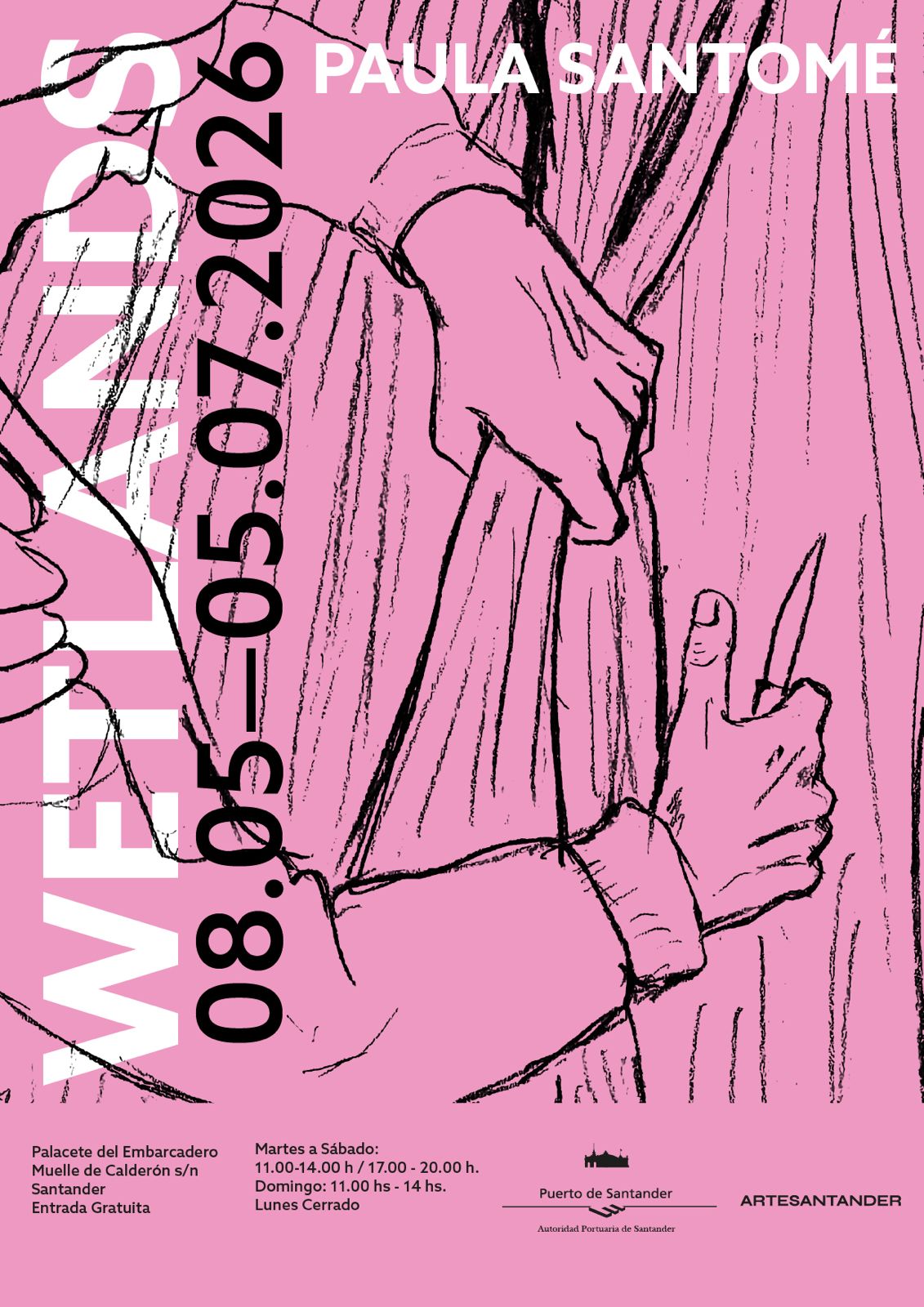
  • 8 May — 5 July: «Wetlands» @ El Palacete del Embarcadero, Muelle de Calderón, Santander
      Works by Paula Santomé.

Goodbye, May.

Tuesday, 19 May 2026

So

by Peter Gabriel

The only record of Peter Gabriel I ever owned on vinyl was manufactured in the USSR and entitled simply «Питер Гейбриэл» (apparently, they weren’t so sure how to translate So to Russian, and the spelling «Гейбриэл» must have looked innocent back then).

I also had a curious double compilation album Greenpeace Breakthrough (1989) which included the So opener «Красный дождь» (Red Rain). I completely forgot that, in addition to Peter Gabriel (now as Питер Гэбриэл), it featured Sting, Grateful Dead (Грейтфул Дэд), Sade (Шаде) and Dire Straits (Дайер Стрейтс)!

About the same time, I first spotted Sledgehammer and Big Time music videos on 2×2, the first commercial TV channel in the USSR. Man I was impressed.

The covers of the So songs abound. I love Sledgehammer by Morgan James...

...and Mercy Street by Rosegarden Funeral Party.

But nobody makes Peter Gabriel covers better than Gabriel himself, with a little help from his friends. My favourite So re-interpretations are Don’t Give Up as a duet with Tracy Chapman...

...and In Your Eyes with Youssou N’Dour, Angélique Kidjo and Soweto Gospel Choir.

Sunday, 17 May 2026

Rising

by Rainbow

If I had to choose one record from not-that-large Rainbow’s discography, that would be Rising. (Sorry, Difficult to Cure, my first Rainbow love.) I still remember the first time I read about this album («Радуга восходит») in the tremendously popular Soviet magazine Ровесник:

Наверное, это лучшая пластинка Ричи Блэкмора до сих пор. Не то чтобы она содержала какие-нибудь музыкальные откровения (единственное, возможно, исключение — «Старгейзер»; Блэкмор говорит, что первоначально написал ее как пьесу для виолончели). Главное достоинство диска — необыкновенная мощь и динамизм. Образно говоря, он сделан в нокаутирующем стиле, вполне достойном страшного костистого кулака, изображенного на обложке. «Мы записывали этот альбом около десяти месяцев, и у меня нет причин быть им недовольным», — сухо заметил Блэкмор по поводу успеха пластинки.
Геннадий Быков, «Радуга Ричи Блэкмора»

Even then I couldn’t agree with the author of this publication. What did he mean saying “not that it contained any musical revelations”? Even without Stargazer — oh blasphemy! — there are enough revelations for a dozen of rock albums.

Rising is one of those albums that are best on vinyl. Why? Because there are two sides, that’s why. The epic Stargazer is not the fifth track — it’s the first track on Side B. You can’t really listen to it properly just after Do You Close Your Eyes. You have to flip the record, and, better still, use the intermission to refill your cup/mug/glass. And then, when A Light in the Black is done, flip it back to Side A (refill the cup etc.) and listen to Tarot Woman — another epic. Also, as it is the case of In the Court of the Crimson King, the cover art it totally worth it. That fist, it has to be that big. If I ever own a turntable again, Rising and ITCOTKC will have to come with it.

So far, I didn’t hear any Rising song cover that would beat the original. Still, there are some good ones. My favourite Stargazers are that by Cincinnati Vampires featuring vocals of Melody Cristea and fantastic Kalonica Nicx on drums, and another one by Contra Bass, a kids band from Vinnytsia, Ukraine. It’s nice to see young people playing decent music.