Showing posts with label books. Show all posts

Wednesday, 22 July 2026

Before the Coffee Gets Cold

by Toshikazu Kawaguchi
translated by Geoffrey Trousselot

According to Wikipedia, this short novel spawned no less than five sequels. It’s difficult to say why, as the first book is not particularly well-written. The clumsy translation does not help:

‘OK then, here you go,’ Kumi said, and she quickly pulled out two notes from her purse.
Kei took the notes and counted them efficiently. ‘Receiving eleven thousand yen,’ she said, and again she punched the keys of the cash register.

How efficient you have to be to count two banknotes?

But I suspect even the best translation wouldn’t cure the novel of its annoying verbosity. And do we really need to know exactly how its characters are dressed each time they are mentioned? Now if the text was reduced to a twenty-page short story, I would most probably enjoy it. I find the idea of being able to travel to the past knowing that, no matter how hard you try, you couldn’t change it, strangely comforting.

Sunday, 14 June 2026

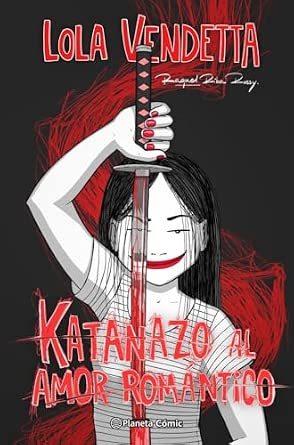
Katanazo al amor romántico

by Raquel Riba Rossy

Didn’t I tell you that Lola’s katana won’t stay in its cabinet for long? Well, it depends what one means for “long”. Five years including pandemic could be an awfully long time. By 2023, Lola was back with the first part of Katanazo. In the 2026 follow-up, the sword was finally used to Lola’s (and my) satisfaction.

Katanazo is perhaps the darkest of Lola Vendetta comics. First introduced in Una Habitación Propia, Death, God and Pepito the dog return to provide much-needed comic relief. No spoilers but look for those QR codes!

Sunday, 3 May 2026

¿Qué me quieres, amor?

by Manuel Rivas
translated by Dolores Vilavedra

An award-winning collection of sixteen short stories by the author of whom I never heard before and who happens to be, among other things, a founding member of Greenpeace España. I hope it is as joy to read in its original Galician (which I don’t speak) as this Spanish translation. My favourites are Conga, conga, La chica del pantalón pirata and Un saxo en la niebla.

After finishing the book, I learned that three of the stories were adapted into a film La lengua de las mariposas directed by José Luis Cuerda, which is now on my to-watch list.

Mi tío se llamaba Amaro y se había muerto por lo menos ocho veces antes de morirse. Era un especialista en morirse y siempre lo hacía con mucha dignidad. Volvía de la muerte perfumado con jabones La Toja, peinado como el acordeonista de la Orquesta Mallo, con un traje nuevo Príncipe de Gales y con una historia sorprendente. En una ocasión hizo una descripción muy detallada del menú del Banquete Celestial, en el que, según él, abundaba el lacón con grelos.
El inmenso camposanto de La Habana
♥ ♥ ♥
Desde que apareció la esbelta figura de la ciclista, el vigía del molino había estado al margen de la realidad. Aquella presencia se producía fuera del plano. No existía ningún trazo que simulase una figura de mujer apoyada en el pretil, contemplando el discurrir del río, ni dos círculos como ruedas que señalasen el preciso lugar, justo en el del puente, donde estaba el pilar principal y, adherida, la carga explosiva. Él permaneció aún durante unos segundos hechizado por la grácil belleza de la joven ciclista sin establecer un vínculo entre la irrealidad de la aparición y las agujas de su reloj.
La chica del pantalón pirata
♥ ♥ ♥
«Hoy el maestro ha dicho que las mariposas también tienen lengua, una lengua finita y muy larga, que llevan enrollada como el muelle de un reloj. Nos la va a enseñar con un aparato que le tienen que enviar de Madrid. ¿A que parece mentira eso de que las mariposas tengan lengua?».
«Si él lo dice, es cierto. Hay muchas cosas que parecen mentira y son verdad. ¿Te ha gustado la escuela?».
«Mucho. Y no pega. El maestro no pega».
La lengua de las mariposas
♥ ♥ ♥
«Hace viento, ¿eh, Old?», dijo Maggie, cruzando los brazos justamente por donde él lo haría si pudiese.
«Sí que hace». Y añadió en un tono que a él mismo le resultó misterioso:
«Aunque las hojas sean muchas, la raíz es sólo una».
Maggie lo miró como si descifrara un enigma. Era algo más de lo que esperaba de Old M., metido siempre, como quien dice, en su propia sombra. Esas cosas se pagan con una sonrisa. Así que se echó sobre la barra, no sin antes mirar a ambos lados por si alguien acechaba, y acercó la cara, los ojos picaros posados en él, talmente como mujer que va a avivar en la chimenea el fuego tibio de la turba.
«En los mentirosos días de mi juventud metí mis flores al sol», dijo Maggie en un dulce suspiro.
La llegada de la sabiduría con el tiempo
♥ ♥ ♥
Y también estaba Couto, que era contrabajo y durante la semana trabajaba en una fundición. A este Couto, que padecía algo del vientre, el médico le había mandado comer sólo papillas. Pasó siete años seguidos a harina de maíz y leche. Un día, en carnaval, llegó a casa y le dijo a su mujer: «Hazme un cocido, con lacón, chorizo y todo. Si no me muero así, me muero de hambre». Y le fue de maravilla.
Un saxo en la niebla

Saturday, 10 January 2026

Three Women

by Lisa Taddeo

Yet another “international No. 1 bestseller” totally not worth the hype. Probably bought in some British airport and then donated to our library after not finishing it. I myself almost gave it up halfway through.

“This is a work of nonfiction”, says the Author’s Note. “Almost all quotes come from legal documents, emails, letters, recordings, and interviews with the women and other individuals in the book.” If you haven’t read the Author’s Note though, you wouldn’t know. The true stories of, well, three women are fictionalised here to the degree of softcore, and at times hardcore, porn. I find this disrespectful towards the titular women. At least, towards Maggie and Lina. I can’t be sure about the third woman — the fictionalised Sloane, together with her voyeuristic husband, might even find it arousing, but I seriously doubt that the real Sloane would. Personally, I prefer either dry, matter-of-fact style in non-fiction, or the direct speech of protagonists*. In this way, the characters appear real, as they should. In case of this book, sorry, they do not.


* Mujeres que follan by Adaia Teruel (reviewed on this blog) is a brilliant example of this latter.

Wednesday, 19 November 2025

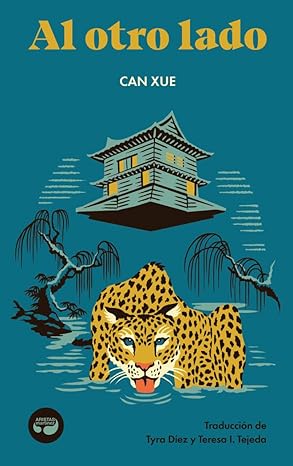
Al otro lado

by Can Xue
translated by Tyra Díez and Teresa I. Tejeda

I borrowed this book from the library without even knowing who Can Xue is. I just read the first paragraph of the first story that gave the collection its name and knew that I had to finish it. A few days later, I read that Can Xue was one of the favourites to win this year’s Nobel prize in literature. I didn’t read anything by the actual winner but I hate him already.

This compilation contains 10 stories originally published by Can Xue between 2010 and 2018; five translated by Tyra Díez and five by Teresa I. Tejeda. All these stories can be found in English translation by Karen Gernant and Chen Zeping in I Live in the Slums (Yale University Press, 2020), but I haven’t read that book. I can only hope the English versions are as good.

It’s a shame I don’t read Mandarin though because something is always lost in translation. Does the name of the village in La reina (Wang) refers to its most famous citizen, (Nǚwáng)? Is Mrs Wang of Catfish Pit also a royal? Even more intriguingly, is Xiao Ping of Catfish Pit the same girl as Xiao Ping of Venus?

Ah well. In words of Liane Moriarty, not all mysteries are meant to be solved.

旧居
Un señor mayor cogió una tetera y preguntó a Zhou Yizhen por el precio. Ella le contestó que no era la dueña de la tienda.
— Y si no eres la dueña, ¿qué haces aquí parada? — dijo en tono de reproche —. Ten el coraje de hacerte cargo. ¡Ja! He visto el precio, está pegado en el fondo de la tetera. Veintitrés yuanes.
Sacó el dinero, contó veintitrés yuanes, los puso sobre el mostrador y se dirigió hacia fuera farfullando aún enfadado: «No he visto nunca peor manera de hacer negocios que la tuya».
La antigua casa
沼泽地
Curiosamente, esta vez encontró el estudio fotográfico sin mayor complicación. Seguía siendo el edificio de ladrillo visto de tres plantas, aunque el cartel original «Fotografía de boda» había desaparecido de su fachada, así como su puerta principal. Era como si hubiera cambiado su orientación, y la entrada ya no diera a la callejuela. Ah Yuan se acercó al muro y pegó la oreja. No oyó nada. Una niña de once o doce años se le acercó.
— Eh, ¿qué haces? — le preguntó.
— ¿Sabes como puedo entrar? — le replicó a su vez, avergonzado.
— ¿Entrar? No se puede, este edificio no tiene puerta.
— ¿Y hay alguien dentro?
— Claro que hay alguien.
— Quiero decir, los que están dentro, ¿nunca salen?
— Y por qué tendrían que salir? No los he visto ni una vez. Puedes quedarte aquí esperando todo lo que quieras, pero será inútil.
El humedal
女王
Frente a ella estaba aquella mujer. Zhen no pudo evitar preguntar en voz baja:
— ¿Reina?
— Eso parece — se adivinaba cierto tono burlón en su voz.
— No pretendía importunarla.
— De todas formas, ya me has molestado. Has supuesto muy bien, no necesito que nadie venga a hacerme compañía. En cambio, sí me gusta aleccionar a los demás, es mi punto débil. Tu problema resulta muy fácil de solucionar, te voy a ayudar a resolverlo ahora mismo.
La reina

Al otro lado

隔墙的那边 Al otro lado * The Other Side of the Partition
旧居 La antigua casa Her Old Home
鹿 El tormento de Lu Er * Lu-er’s Worries
老蝉 La vieja chicharra * The Old Cicada
El Recodo del Siluro Catfish Pit
幸福 Plenitud * Euphoria
沼泽地 El humedal * The Swamp
鬼屋 La montaña del Cuervo Crow Mountain
La reina The Queen
Venus Venus

* Translated by Tyra Díez
Translated by Teresa I. Tejeda

Wednesday, 29 October 2025

An Artist of the Floating World

by Kazuo Ishiguro

Ishiguro’s second novel is not a follow-up, but is in a similar vein to A Pale View of Hills. The narrator, a retired painter Ono, could be considered a development of Ogata-San. The title, as I just learned, is based on the literal translation of Ukiyo-e, “picture of the floating world”. Once again, the characters seem to be permanently embarrassed about practically everything.

This childlike aspect of Shintaro has frequently been a source of entertainment for Mrs Kawakami, who has a somewhat wicked side to her. One night recently, for instance, during a rainstorm, Shintaro had come running into the little bar and begun squeezing his cap out over the doormat.
‘Really, Shintaro-san!’ Mrs Kawakami had shouted at him. ‘What terrible manners!’
At this, Shintaro had looked up in great distress, as though indeed he had committed an outrageous offence. He had then begun to apologize profusely, thus leading Mrs Kawakami on further.
‘I’ve never seen such manners, Shintaro-san. You seem to have no respect for me at all.’
‘Now stop this, Obasan,’ I had appealed to her after a while. ‘That’s enough, tell him you’re just joking.’
‘Joking? I’m hardly joking. The height of bad manners.’
And so it had gone on, until Shintaro had become quite pitiful to watch. But then again, on other occasions, Shintaro will be convinced he is being teased when in fact he is being spoken to quite earnestly. There was the time he had put Mrs Kawakami in difficulties by declaring cheerfully of a general who had just been executed as a war criminal: ‘I’ve always admired that man since I was a boy. I wonder what he’s up to now. Retired, no doubt.’
Some new customers had been present that night and had looked at him disapprovingly. When Mrs Kawakami, concerned for her trade, had gone to him and told him quietly of the general’s fate, Shintaro had burst out laughing.
‘Really, Obasan,’ he had said loudly. ‘Some of your jokes are quite extreme.’

Sunday, 5 October 2025

Retratos de Jazz

by Haruki Murakami and Makoto Wada
translated by Juan Francisco González Sánchez

I saw this brand new book in the library and couldn’t just leave it there. But what’s this? First edition, March 2025? Spanish translation, © 2025? Is that correct?

Yes, it is. This is the first Spanish edition. The Catalan version, translated by Albert Nolla, also appeared this year. The book, as ポートレイト・イン・ジャズ (Pōtoreito in jazu), was first published in 1997 by Shinchosha and so far hasn’t been translated to English.

Even though the order of the authors on the cover may imply otherwise, the book is not a collection of writings by Murakami illustrated by Wada. Just the opposite: a series of portraits created by Wada to which Murakami provided short essays, with a recommendation of one album, from his vast collection of vinyls. The first edition of the book contained 52 portraits, and the for the second edition the authors added three “bonus tracks”, that is, portraits of Art Pepper, Frank Sinatra and Gil Evans.

What I found surprising is how unsurprising is the selection of the musicians. All featured artists are American, apart from Django Reinhardt, Oscar Peterson and Gil Evans, and then both Peterson and Evans spent most of their lives in the United States. This is not to say that I dislike any one of Wada’s choices. Besides, it’s the music both authors were growing with.

Of course, the same argument could be applied to album recommendations, although in this case they were chosen by Murakami. I was pleased to see there Ella and Louis Again, Full House, The Sidewinder, Waltz for Debby and Maiden Voyage; I completely agree with Murakami that the latter album is indeed the Herbie Hancock best work. I thought so in the 1990s, I still think the same in 2025. But I am puzzled why no original recordings by Tony Bennett, Glenn Miller or Fats Waller were recommended. There seems to be no good explanation apart from that the corresponding tribute albums just happened to be in Murakami’s collection.

As a curiosity, Murakami says that he wrote South of the Border, West of the Sun being convinced that he heard the version of South of the Border by Nat King Cole. In reality, this song was never a part of Cole’s repertoire. One of the albums that Murakami recommends is ¡Olé Tormé! which, indeed, contains South of the Border. I couldn’t find a confirmation that George Gershwin based character of Sportin’ Life on Cab Calloway, but it’s a good story anyway.

I like Murakami’s sense of humour, like, for example, here:

Desconozco cuántos fans de Eddie Condon quedan hoy en día, pero tengo la impresión de que no deben de ser demasiados. <...> Trataba de mimetizarse con la escenografía para no llamar la atención, y por mucho que uno aguzara el oído, no lograba entender qué estaba tocando exactamente a la guitarra.

Or writing about Oscar Peterson:

Su discografía no conoce obras fallidas; toda ella mantiene un nivel considerablemente alto, y, sin embargo, debo confesar que no me entusiasma demasiado, no como para correr a comprar sus discos. Es cierto que en casa tengo más de cincuenta de sus álbumes como solista...

The translation by Juan Francisco González Sánchez is a pleasure to read, albeit I have to say that the use of the words cedé (for CD) and elepé (for LP) irritated me a lot. There is a number of typos, such as Kind of Blues instead of Kind of Blue, and some catalogue numbers are wrong, although those could have come unchecked from the Japanese original. I hope they will be corrected in the future editions.

Soundtrack

Tuesday, 26 August 2025

The Unconsoled

by Kazuo Ishiguro

This is the third and so far the most difficult novel of Ishiguro I read. It took me about six weeks to finish it.

If comic episodes and repetitive dialogues of A Pale View of Hills are charming, here they take most of the space — and become tiresome. Was it really necessary to include everything the most mediocre characters say? Ishiguro himself provides great examples of how to deal with that: “For a while he went on uttering such empty phrases” or “continued in this vein for a while longer, but I had stopped listening”. The book ended just as I started to enjoy it. Bother.

The Unconsoled was published 30 years ago and, according to Wikipedia, was not received very well at the time. Now it is considered to be a masterpiece. I hope to re-read it a few years from now, perhaps even at a slower pace.

As I started to read the book during the Women’s Euro 2025, which I followed closely, the story of Number Nine — a favourite toy football player of Boris, the protagonist’s stepson — resonated with me.

‘Number Nine’ belonged to Boris’s very favourite team, and was by far the most gifted of the players. However, for all his immense skill, Number Nine was a highly moody personality. His position in the team was somewhere in midfield, but often, for long stretches of a match, he would sulk in some obscure part of the pitch, apparently oblivious of the fact that his team was losing badly. Sometimes, Number Nine would continue in this lethargic manner for over an hour, so that his team would go four, five, six goals down, and the commentator — for indeed there was a commentator — would say in a mystified voice: ‘Number Nine so far just hasn’t found his form. I don’t quite know what’s wrong.’ Then, perhaps with twenty minutes remaining, Number Nine would finally give a glimpse of his true ability, pulling back a goal for his side with some fine piece of skill. ‘That’s more like it!’ the commentator would exclaim. ‘At last, Number Nine shows what he can do!’ From that moment on, Number Nine’s form would grow steadily stronger, until before long he would be scoring one goal after another, and the opposing team would be concentrating entirely on preventing at virtually any cost Number Nine receiving the ball. But sooner or later he would, and then, no matter how many opponents stood between him and the goalmouth, he would manage to find a way through to score. Soon the inevitability of the outcome once he had received the ball was such that the commentator would say: ‘It’s a goal,’ in tones of resigned admiration, not when the ball actually went into the net, but at the moment Number Nine first gained possession — even if this occurred deep within his own half.

Incidentally, Spain’s own Number Nine, Esther González, with four goals, won the Top Scorer award of the tournament.

Monday, 14 July 2025

Umiko

by Mónica Rodríguez
illustrated by Daniel Piqueras Fisk

A few months ago, I saw it in the bookshop. Maybe it was put on display because it won the 2024 National Prize for Children’s and Young Adult Literature. I leafed through it, read the blurb — about a modern Japanese girl who wants to become an ama — got interested and... asked our library to purchase it. To my great surprise, thay actually did it, and even phoned me when the book arrived.

I liked the story and loved the drawings.

Friday, 13 June 2025

Burning Your Boats

by Angela Carter
foreword by Salman Rushdie
I started to write short pieces when I was living in a room too small to write a novel in.
Afterword to Fireworks

I was so impressed with Fireworks (also with myself, for finishing it), that I decided to read all of Angela Carter’s short fiction. So I acquired this collection and... nothing happened for the next few years. Last summer, I finally dug it out. It took me about nine months to read it, with breaks.

The book contains four previously published collections, including Fireworks, plus six other stories. Of collected works, The Bloody Chamber is the most conceptually and stylistically coherent one, all that Gothic horror stuff with an exception of more, um, light-hearted Puss-in-Boots. Black Venus is rather uneven. The best stories there are Our Lady of the Massacre, Peter and the Wolf and The Kitchen Child, this latter providing much-needed comic relief. It looks like Ms. Carter was fascinated with wolves: the real ones, were-ones and feral children. I like that.

American Ghosts and Old World Wonders is another mixed bag, redeemed by the tasty Text-Mex-Western Gun for the Devil and delightfully Borgesian The Merchant of Shadows (it made me reach for Internet to check if Hank Mann was really born Heinrich von Mannheim: of course not, and he never made a movie called Paracelsus with Charles Laughton).

While I researched my thesis, I was rooming back there in the city in an apartment over a New Age bookshop-cum-healthfood restaurant with a science fiction freak I’d met at a much earlier stage of studenthood during the chance intimacy of the mutual runs in Barcelona. Now he and I subsisted on brown rice courtesy of the Japanese waitress from downstairs, with whom we were both on, ahem, intimate terms, and he was always talking about aliens. He thought most of the people you met on the streets were aliens cunningly simulating human beings. He thought the Venusians were behind it.
He said he had tested Hiroko’s reality quotient sufficiently and she was clear, but I guessed from his look he wasn’t too sure about me.
The Merchant of Shadows

Wednesday, 28 May 2025

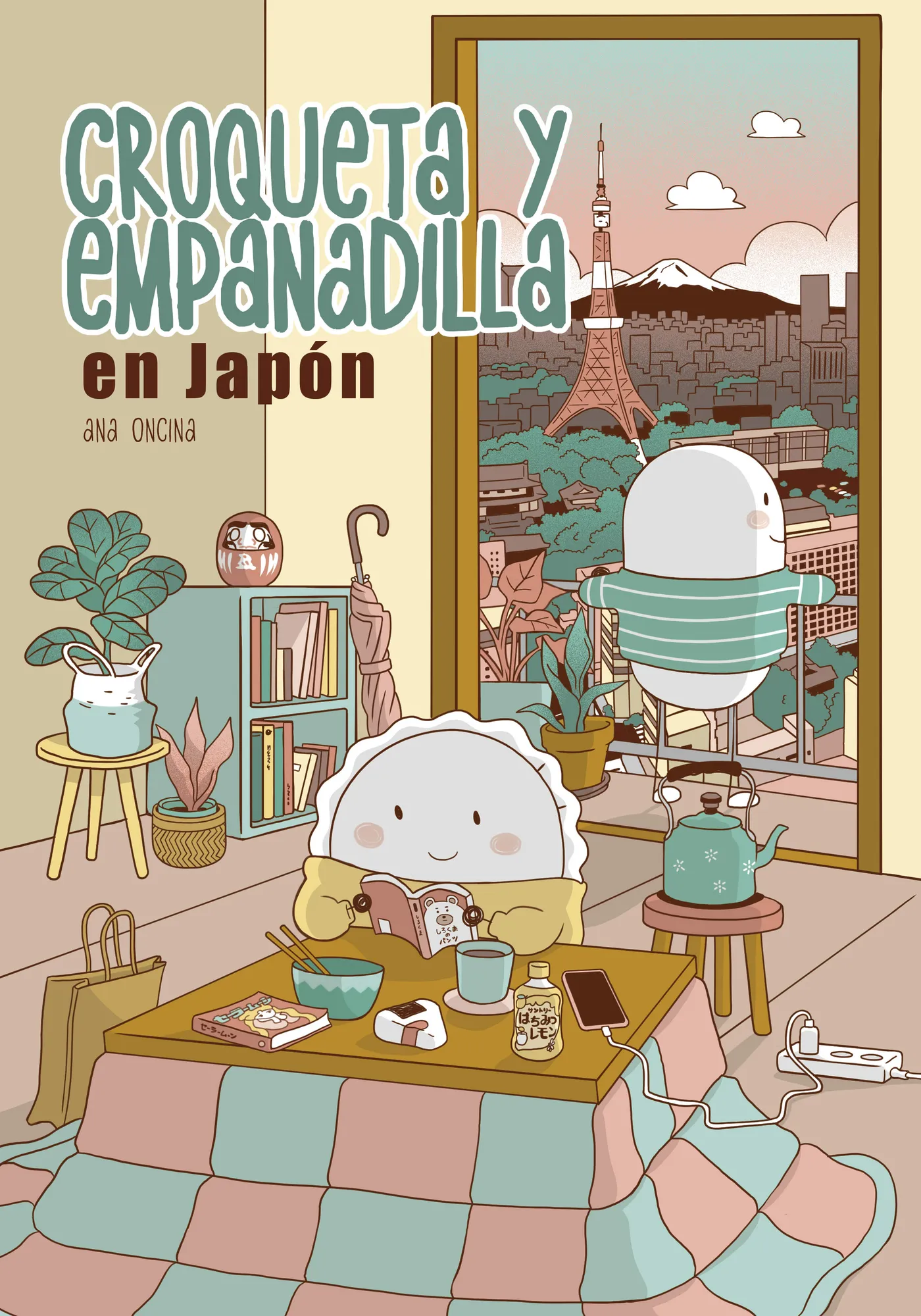
Croqueta y Empanadilla en Japón

by Ana Oncina

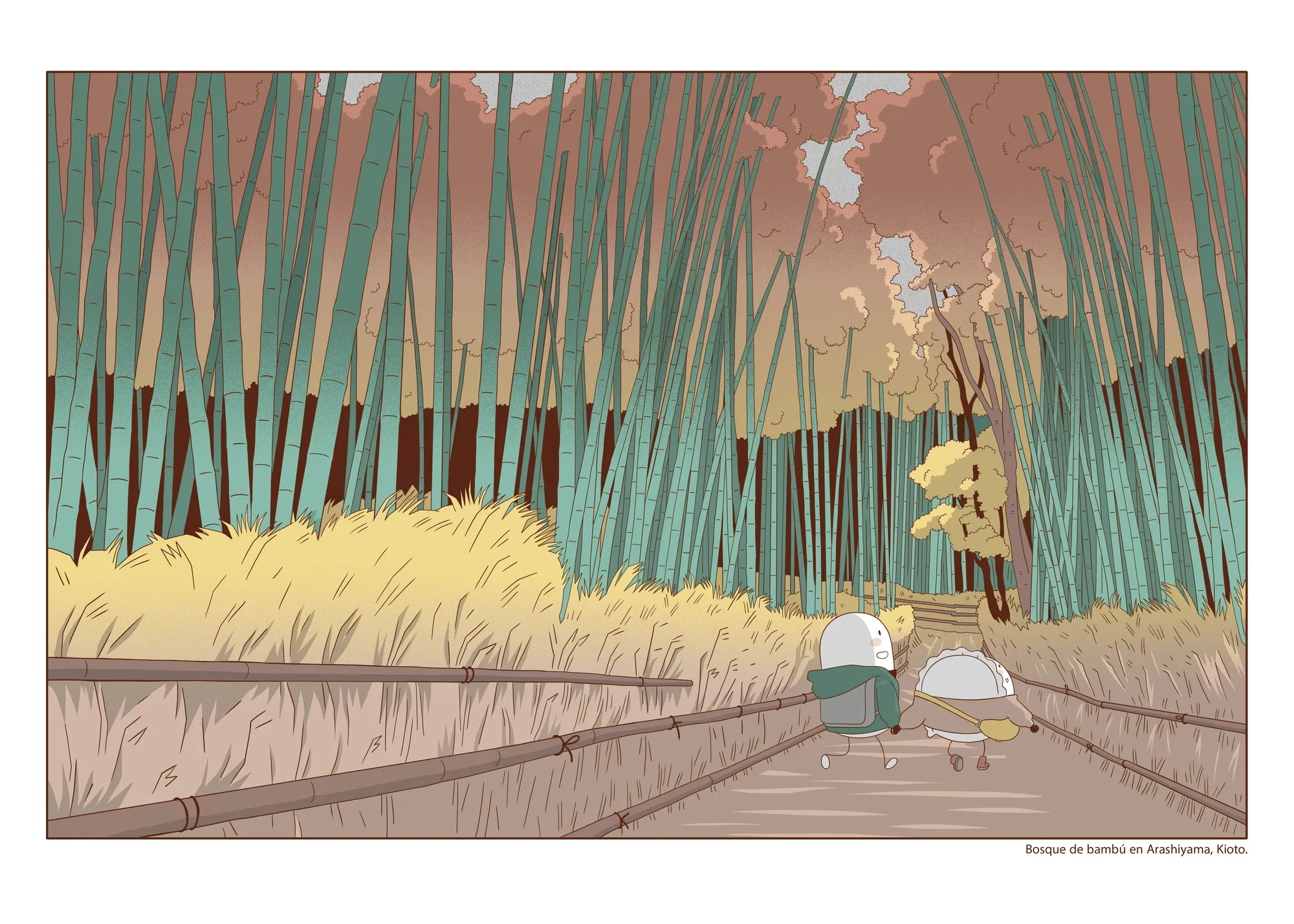
More adventures of the dynamic duo of Croqueta & Empanadilla, this time in Japan. Based on a true story.

Saturday, 17 May 2025

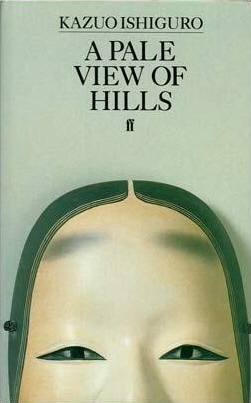
A Pale View of Hills

by Kazuo Ishiguro

Upon finishing Ishiguro’s last novel, I borrowed, as it turned out, his first.

A Pale View of Hills is very different from Klara and the Sun but equally enjoyable. The narrator, Etsuko, moves between “now” (unspecified year) of England and “then” (unspecified year) of post-war Nagasaki. The dialogues in “then” Japan are invariably repetitive and are bound to get on some reader’s nerves. I loved them. They add, dare I say, authenticity. (I have no clue how they talked in post-war Japan but, in general, people repeat themselves all the time.) Etsuko’s conversations with her father-in-law, Ogata-San, are the best.

A little later that morning, Ogata-San emerged from his room dressed in his jacket and tie.
“Are you going out, Father?” I asked.
“I thought I’d just pay a visit to Dr Endo.”
“Dr Endo?”
“Yes, I thought I’d go and see how he was keeping these days.”
“But you’re not going before lunch, are you?”
“I thought I’d better go quite soon,” he said, looking at his watch. “Endo lives a little way outside Nagasaki now. I’ll need to get a train.”
“Well, let me pack you a lunch-box, it won’t take a minute.”
“Why, thank you, Etsuko. In that case I’ll wait a few minutes. In fact, I was hoping you’d offer to pack me lunch.”
“Then you should have asked,” I said, getting to my feet. “You won’t always get what you want just by hinting like that, Father.”
“But I knew you’d pick me up correctly, Etsuko. I have faith in you.”
I went through to the kitchen, put on some sandals and stepped down to the tiled floor. A few minutes later, the partition slid open and Ogata-San appeared at the doorway. He seated himself at the threshold to watch me working.
“What is that you’re cooking me there?”
“Nothing much. Just left-overs from last night. At such short notice, you don’t deserve any better.”
“And yet you’ll manage to turn it into something quite appetizing, I’m sure. What’s that you’re doing with the egg? That’s not a left-over too, is it?”
“I’m adding an omelette. You’re very fortunate, Father, I’m in such a generous mood.”
“An omelette. You must teach me how to do that. Is it difficult?”
“Extremely difficult. It would be hopeless you trying to learn at this stage.”

Monday, 28 April 2025

Klara and the Sun

by Kazuo Ishiguro

I first spotted the name of Kazuo Ishiguro on the back cover of Homo Deus. I had no idea who he was, so I looked him up. Wow.

Next thing, I went to the library in search of his books. And there they were. I picked this one, read the first page and took it with me.

The mildly dystopian society of the novel is dystopian only mildly because it’s pretty much like the present, at least in the West. (Replace “lifted” with “priveleged”, “oblong” with “smartphone”, and “The Yard” with “nursing home”.) The protagonist, Klara the Artificial Friend, religiously follows the First Asimov’s Law — to the degree of self-sacrifice. And how do the humans repay her, the ungrateful monkeys they are? (Jessie the cowgirl of Toy Story springs to mind.)

...Manager placed a hand on my shoulder and said, in a quieter voice than before:
‘Let me tell you something, Klara. Children make promises all the time. They come to the window, they promise all kinds of things. They promise to come back, they ask you not to let anyone else take you away. It happens all the time. But more often than not, the child never comes back. Or worse, the child comes back and ignores the poor AF who’s waited, and instead chooses another. It’s just the way children are. You’ve been watching and learning so much, Klara. Well, here’s another lesson for you. Do you understand?’

I like the way Ishiguro writes. As far as I know, his other works are not narrated by intelligent gynoids, so I don’t expect to find this particular style there. Off to the library to check out the next novel.

Saturday, 29 March 2025

Homo Deus: A Brief History of Tomorrow

by Yuval Noah Harari

“Even more readable, even more important, than his excellent Sapiens”, says the quote on its back cover (by Kazuo Ishiguro, no less). Is it really so?

I have to admit that yes, it is. With chapters titles such as A Brief History of Lawns, Gap the Mind and Why Bankers are Different from Vampires, this book reads like a crime thriller. Well, the history of humankind is a crime thriller, but there have been only a few good storytellers. Harari is one of them.

On a more personal note, Homo Deus gives me a fair few ideas for my (hopefully near) future classes.

Suppose you were given a choice between the following two vacation packages:
Stone Age package: On day one we will hike for ten hours in a pristine forest, setting camp for the night in a clearing by a river. On day two we will canoe down the river for ten hours, camping on the shores of a small lake. On day three we will learn from the native people how to fish in the lake and how to find mushrooms in the nearby woods.
Modern proletarian package: On day one we will work for ten hours in a polluted textile factory, passing the night in a cramped apartment block. On day two we will work for ten hours as cashiers in the local department store, going back to sleep in the same apartment block. On day three we will learn from the native people how to open a bank account and fill out mortgage forms.
Which package would you choose?

And how about this (published in 2015):

Power will definitely not shift back to ordinary voters if Britain leaves the EU nor if Trump takes over the White House.

The task: rephrase the above sentence from the 2025 perspective, using both simple past and past perfect.

Some other predictions haven’t come true — yet. So far we didn’t see artificial intelligence meaningfully replacing doctors, lawyers and flight dispatchers, although there has been a surge in ChatGPT-generated fake research papers and job applications. What we do see at work is much more powerful natural stupidity. It doesn’t mean we are safe.

Sunday, 9 February 2025

El París de los Dragones

by Tony Sandoval and Joann Sfar
translated by Lorenzo Díaz Buendía

Confused plot and too many dead or wounded dragons for my liking. It’s the romance between a Hawaiian strongwoman princess and a pansexual mermaid, coupled with a wicked sense of humour, that makes this comic worth checking out.

Sunday, 19 January 2025

La clase de griego

by Han Kang
translated by Sunme Yoon

I never heard about this writer until she won last year’s Nobel Prize in Literature. I certainly didn’t expect to see any of her books in our library. And there it was, on the New Arrivals shelf by the entrance to the reading room. I picked it up to leaf through. Suddenly, a middle-aged man, who also was browsing next to me, said: “It’s a good book. Take it.”
“Have you read it?” I asked, a bit suspiciously. I am not used to strangers giving me reading advice.
“Yes. It’s great.”

And he was absolutely right. It’s a beautiful novel.

I read Greek Lessons in Spanish translation. I hope the English one is equally good.

Wednesday, 8 January 2025

La casa

by Paco Roca

A year after their father’s death, his three adult children return to their family home in the country. To spruce it up before selling, no doubt. As the memories flood back, they don’t seem to be that sure.

I wish them all the luck in the world and... hope they keep the house.

Tuesday, 31 December 2024

Tales from Moominvalley / Дитя-невидимка

by Tove Jansson
translated by Thomas Warburton and S. B. Plakhtinsky

I first read this charming collection of short stories in Russian, as «Дитя-невидимка» (The Invisible Child), which is the exact translation of the original Swedish title. The English title, Tales from Moominvalley, is way too generic (yes, I also said that about Finn Family Moomintroll). I know, Warburton’s translation is a classic and I grew to like it too, but every time I have a doubt about something encountered in the English version I come back to the Russian “original”.

The Whomper’s baby brother opened his mouth, took a large breath, and started to cry.
A Tale of Horror
Братик открыл рот, приготовился и заревел.
«Ужасная история»
The Fillyjonk thrust out her nose from the quilt, stared severely into the dark, and said: “I’ll show you.” Whatever that meant.
The Fillyjonk Who Believed in Disasters
Филифьонка высунула из-под одеяла мордочку, строго глянула в темноту и сказала: «Вы меня ещё не знаете». Правда, неясно было, что она имеет в виду.
«Филифьонка в ожидании катастрофы»
What was it the Mymble’s daughter had said about Hattifatteners? Last spring, at dinner one day. That they led a wicked life. And Moominmamma had said: “That’s just talk”; but My became enormously interested and wanted to know what it meant. As far as Moominpappa could remember, no one had been really able to describe what people did when they led a wicked life. Probably they behaved wildly and freely in a general way.
The Secret of the Hattifatteners
Что там Мюмла говорила о хатифнаттах? Как-то весною, за обедом. Она сказала, что они ведут разгульную жизнь. И Муми-мама сказала: «Ой, что ты такое говоришь?» — а Мю ужасно заинтересовалась и сразу захотела узнать, что это такое. Насколько папа помнил, никто так толком и не сумел объяснить, что же нужно делать, чтобы вести эту самую разгульную жизнь.
«Тайна хатифнаттов»
Even if disaster was coming, Moominpappa decided not to take one of his own firs, because he was particular about them. Instead he and Moomintroll climbed over Gaffsie’s fence and chose a big fir she couldn’t very well have any use for.
The Fir Tree
Несмотря на грозящую им опасность, свои ёлки папа решил не трогать, потому что он их берёг. Поэтому они перелезли через Гафсин забор и выбрали себе большую ель, которая Гафсе всё равно бы не пригодилась.
«Ёлка»

Thursday, 26 December 2024

Nocturnos

by Laura Pérez

Another deliciously dark work from the Valencian comic artist. Like Ocultos, it consists of several “stories”, or, rather, fragments of stories. This time, however, they are not named. So they make you to wonder how to name them as well as how they could end (or start, for that matter). The one where a man has “the same dream” reminded me the part of Finn Family Moomintroll where the exotic plants start growing from the Hobgoblin’s Hat.

Wednesday, 28 August 2024

Todo eso que no sé cómo explicarle a mi madre

by Sandra Bravo

I truly wanted to love Todo eso. Starting with the title and the phrase in its very beginning [1, p. 11]:

Si «cisgénero» te suena a chino, «poliamor» a orgías de pervertidos o eres mi madre, consulta el glosario que encontrarás al final de este libro.

I was looking forward to a blast of a book.

“But,” interrupts the perspicacious reader. “I can distinctly hear ‘but’. You wanted to love it but.”

The thing is, during the past few years, I read and enjoyed a number of books on the topic [26], some of them good and some others pretty damn good. Perhaps inevitably, I judge Todo eso against a rather high standard. So let me continue, and you’ll see if there’s a ‘but’.

We read for different reasons. One of them is to increase our knowledge. In this sense, there was little new for me to be learned from this book. (This is not the author’s fault.) For sure, there were new names, new books, a couple of concepts that I never read about in Spanish before, etc. etc. However, talking about genuinely new (for me) ideas, I would name one, coming from Luce Irigaray [1, p. 64 and clarified in the footnote 54]: Amo a te / J’aime à toi / Amo a ti, awkwardly translated to English as “I Love to You”.

Another reason is to see the author’s perspective and check how much (or how little) we have in common. I found myself agreeing with many of Sandra’s opinions — say, on homonormativity or sex work — and was glad to encounter references to familiar works, e.g. Yes, we fuck! [1, p. 115].

Yet one more reason to read is simply to take pleasure in it. Todo eso, in part, fulfilled the promise to be a fun read. Of course, it could be that this promise was imagined by me. I enjoyed the Chapter 2, Confesiones a la Virgen de una desvirgada, the most.

It’s OK to cherrypick. This is not a novel, not a prog-rock album, not a “take it or leave it” menú del día.

Now what could have been done better?*

  • Citations, citations and more citations. Sandra quotes profusely from a variety of (mostly feminist) writers. Sometimes the passages take more than a half of page, sometimes more than two pages [1, pp. 52—54, 102—104, 111—113]. What for? In many cases, they are long-winded and boring bits of text, clearly meant to support the author’s arguments. As it happens, these latter are enunciated much better, in short sentences and a lively language.
  • Solution: I’d say, ditch most of the quotes, shorten the essential ones, leave the references in the footnotes (as they currently are) and let the reader decide if they want to dig deeper. Naturally, the book will be twice as short then, about 100 pages. Good!
  • For a such a short book it’s quite repetitive. Sandra goes on in loops about her privileges, her sexuality, cisheteropatriarchy and her idea of feminism which is also anti-racist, anti-capacist and anti-capitalist. No matter how important these issues are to the author, repeating makes them less so to the reader.
  • Solution: saying once is enough; cut the repeats, maybe we’ll have 80 pages or so in the end.
  • In spite of all “own experience” and “being an exhibitionist” spiel, Sandra shares surprisingly little of that experience. For instance, she writes [1, p. 79]:
    He tenido sexo con centenares de hombres cis, y no muchos me han sorprendido. En cambio, mujeres sexualmente desinhibidas, aunque inferiores in cifra, eran mucho más abiertas, creativas y libres de complejos.
    Hundreds of men, what a perseverance! I guess most would give up after the first half dozen of them. Still, at least some of those cis men must have surprised the author, why not to tell us? And what about those “lower in quantity”, higher quality women? Alas, she doesn’t go much beyond generalisations like above.
  • Solution: a few real-life anecdotes to illustrate the author’s points will do wonders as well as pad the book up. Spare us the graphic details; these examples don’t even have to be about sex. Check out Más peligroso es no amar [3] and Mujeres que follan [6] for inspiration.
  • Now we are coming to the most cringeworthy part: Chapter 7, Y lo más importante de todo, ¿cómo le explico yo esto a mi madre?, in particular Carta a mi madre. This last chapter confirms my worst fears: Ms Bravo indeed has no clue how to explain the titular “all this” to her mum. Why on earth did she choose the open letter form then? It’s painfully embarrassing to read. How about just talk to her mum or, failing that, write a normal (closed, personal) letter?
  • Solution: do us a favour, lose Carta a mi madre.
  • Finally, the bit that was in fact promised: the Glossary. What a disappointment! Typically, authors include glossaries to provide the reader with definitions in order to avoid terminological confusion. Here it seems to exacerbate the confusion. The terms patriarchy and queer, Sandra says, are difficult to define. Instead of explaining attachment in her own words, she “clarifies” it with yet another abstruse quote which actually describes attachment theory (without defining what attachment is). In the entry for LGTBIQ+, she writes that if you don’t know what a “lesbian” or “gay” is, you’ll have difficulties understanding her book. Family is what a heterosexual couple achieves after practicing intercourse without a condom for a period of time. And so on.
  • Solution: make the definitions clear and concise. (Like the author’s definition of feminism: a fight for the elimination of any kind of oppression. It’s not required that everybody agrees with them.) Define basic concepts such as sex and gender before moving on more complex ones. Avoid emotional comments and finishing sentences with “vamos” — there’s whole book for that kind of thing. Make sure that the use of the terms in the main text is consistent with their definitions.
  • By the way, (ab)using the term “person” and avoiding “woman”, as is done in the Glossary, does a great disservice to feminism. Not that Sandra is unaware of it: elsewhere, she describes how replacing “gender violence” with “domestic violence” is employed by the far right to invisibilise the problem [1, pp. 47—50]. She also emphasises the need of safe places specifically and exclusively for women, not persons [1, pp. 114—115].
  • Solution: the obvious one. Say “man” or “woman” when needed.

See? There are problems; I suggest solutions. And did I use the word “but” (apart from right now, that is)?

I doubt that the author, in the unlikely event of reading this post, would heed my free and disinterested advice. Which is a bloomin’ shame really.


* Everybody has their own criteria of what is “good” (and, by extension, “better”). Some readers might have liked the bits that bothered me the most. As this is my blog, I express here my opinions what is better for the reader.
I wonder if the author is conscious that the sheer length of these citations is stretching the right to quote a tad too far.
Clara Serra explains this brilliantly in her Manual ultravioleta [5, chapter 16].

References

  1. Bravo, S. Todo eso que no sé cómo explicarle a mi madre: (Poli)amor, sexo y feminismo. Ediciones Plan B, 2021.
  2. Casquet, N. and Andyn. Mala mujer: La revolución que te hará libre. Lunwerg, 2020.
  3. Etxebarria, L. Más peligroso es no amar: Poliamor y otras muchas formas de relación sexual y amorosa en el siglo XXI. Aguilar, 2016.
  4. Requena Aguilar, A. Feminismo vibrante: Si no hay placer no es nuestra revolución. Roca Editorial, 2020.
  5. Serra, S. Manual ultravioleta: Feminismo para mirar el mundo. Ediciones B, 2019.
  6. Teruel, A. Mujeres que follan: Historias de sexo real contadas por ellas. Libros del K.O., 2023.