Showing posts with label hard rock. Show all posts

Sunday, 31 May 2026

(Almost) free live music and stuff, May 2026

Some stuff that I saw in Vitoria, Santander, Torrelavega and Las Palmas de Gran Canaria.

  • 9 May: «Cenizas de Oro» @ Centro Cívico Langraiz-Oka, Tres de Marzo Parkea, 1, Nanclares de la Oca / Langraiz Oka
      A comedy by the amateur theatre group No Me Claves Tus Puñales. Not exactly free as €2 donation (for an NGO to be determined) was requested, but quite worth it.

  • 15 May: Cantabria en Corto 2025 @ Filmoteca de Cantabria Mario Camus, Calle Bonifaz, 6, Santander
      The programme included Relato del niño que estuvo allí by Sergio Ruiz García; Solo es cuestión de tiempo by Carlos Martínez Pérez; “Solo los muertos se quedan by Alejandro Renedo; Una playa by Juan Carlos Cabañas Soto and Luis Paredes; Instrucciones para quedarse by Caque Trueba; and Wounded Light by Abril Catalina Beascoechea.

  • 16 May: V Raw Market @ Plaza Mayor, Torrelavega
      Organised by Escuela de Arte Roberto Orallo (Puente San Miguel, Cantabria), this annual event allows the students of the school to present and market the work created during their training. The highlight was a concert of Cantabrian rock band The Haze.

  • 24 May: Ajódar Poetry Jazz @ Sala Faro, Calle Concejal Manuel Rodríguez Costas, 1, Las Palmas de Gran Canaria
      The only event of the Deriva Jazz Timur and I attended. We were not impressed. Ajódar Duo, whose members did not bother to introduce themselves, played some jazz (badly) and recited some poetry (worse). On the brighter note, we have discovered a new venue in just a five-minute walk from us.
  • 26 May: «Gran poder a de mandar o mar et todo los ventos» @ Casa de Colón, Calle Colón, 1

  • 28 May: «Tiempo de Zafra» @ Auditorio José Antonio Ramos, Parque Doramas
      La Banda Sinfónica de Las Palmas de Gran Canaria featuring Domingo Luis Rodríguez Oramas “El Colorao” on timple and voices of Tania Gil and Pedro Manuel Afonso. The concert included a performance of Zafra, a work for timple and symphony orchestra composed by Laura Vega.

And exhibitions:

  • 7—31 May: «Color, memoria y gesto» @ Sala de Exposiciones Mauro Muriedas, Calle Pedro Alonso Revuelta, 5, Torrelavega
      Works by Débora Regalado and Alejandro Mesurado.

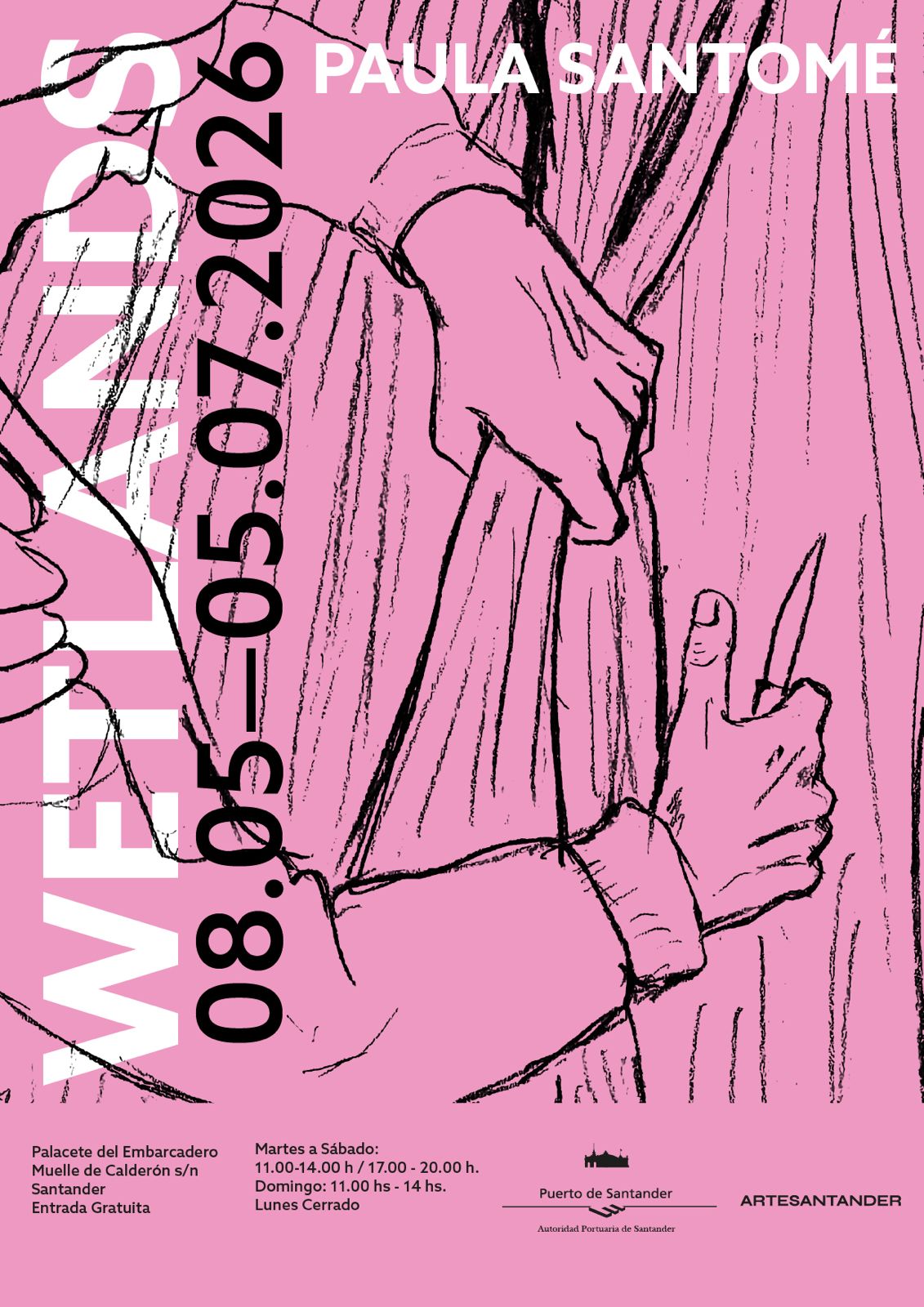
  • 8 May — 5 July: «Wetlands» @ El Palacete del Embarcadero, Muelle de Calderón, Santander
      Works by Paula Santomé.

Goodbye, May.

Sunday, 17 May 2026

Rising

by Rainbow

If I had to choose one record from not-that-large Rainbow’s discography, that would be Rising. (Sorry, Difficult to Cure, my first Rainbow love.) I still remember the first time I read about this album («Радуга восходит») in the tremendously popular Soviet magazine Ровесник:

Наверное, это лучшая пластинка Ричи Блэкмора до сих пор. Не то чтобы она содержала какие-нибудь музыкальные откровения (единственное, возможно, исключение — «Старгейзер»; Блэкмор говорит, что первоначально написал ее как пьесу для виолончели). Главное достоинство диска — необыкновенная мощь и динамизм. Образно говоря, он сделан в нокаутирующем стиле, вполне достойном страшного костистого кулака, изображенного на обложке. «Мы записывали этот альбом около десяти месяцев, и у меня нет причин быть им недовольным», — сухо заметил Блэкмор по поводу успеха пластинки.
Геннадий Быков, «Радуга Ричи Блэкмора»

Even then I couldn’t agree with the author of this publication. What did he mean saying “not that it contained any musical revelations”? Even without Stargazer — oh blasphemy! — there are enough revelations for a dozen of rock albums.

Rising is one of those albums that are best on vinyl. Why? Because there are two sides, that’s why. The epic Stargazer is not the fifth track — it’s the first track on Side B. You can’t really listen to it properly just after Do You Close Your Eyes. You have to flip the record, and, better still, use the intermission to refill your cup/mug/glass. And then, when A Light in the Black is done, flip it back to Side A (refill the cup etc.) and listen to Tarot Woman — another epic. Also, as it is the case of In the Court of the Crimson King, the cover art it totally worth it. That fist, it has to be that big. If I ever own a turntable again, Rising and ITCOTKC will have to come with it.

So far, I didn’t hear any Rising song cover that would beat the original. Still, there are some good ones. My favourite Stargazers are that by Cincinnati Vampires featuring vocals of Melody Cristea and fantastic Kalonica Nicx on drums, and another one by Contra Bass, a kids band from Vinnytsia, Ukraine. It’s nice to see young people playing decent music.

Thursday, 2 April 2026

Presence

by Led Zeppelin

50 years on, Presence remains the most underrated Zeppelin record. After the grandiosity of Physical Graffiti, it’s refreshing to hear the stripped-back band, perhaps at its heaviest. It’s a shame that in its day most of the album never made it to the stage. A performance of For Your Life from the Ahmet Ertegun Tribute Concert, with Jason Bonham on drums, gives a glimpse of how Presence could have sounded live. But the legacy lives on. Among not that many covers, Tea For One by Joe Bonamassa and Nobody’s Fault But Mine by Baldassarre’s Soul of Zeppelin stand out.

Speaking of covers: I find the cover art (just like that of Wish You Were Here, also by Hipgnosis) uninspiring and having nothing to do with the the album’s music.

Friday, 7 November 2025

Come Taste the Band

by Deep Purple

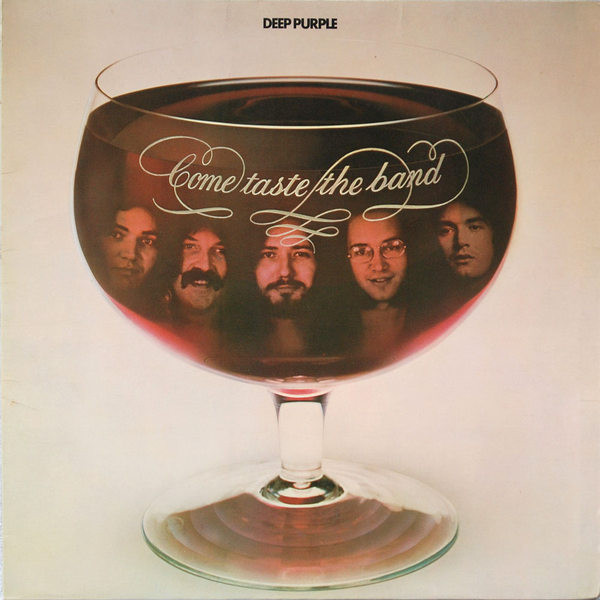
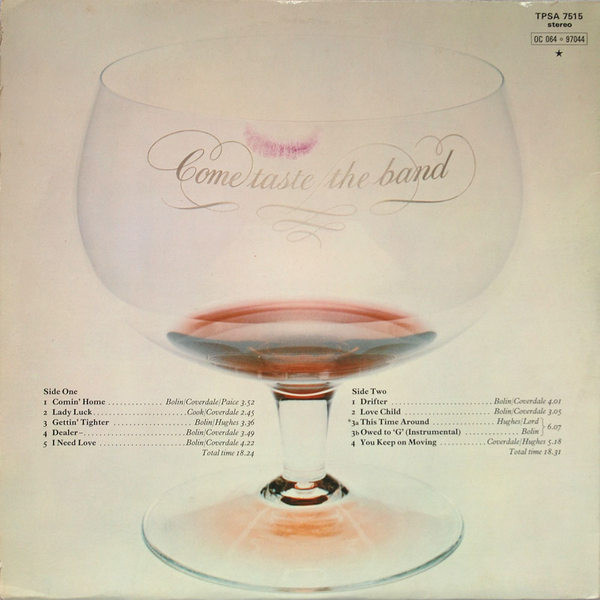
Isn’t it curious how, 50 years later*, the only Mark IV studio album still manages to divide Purple fans. Is it, or is not, DP? Why it shouldn’t be DP? Come Taste the Band could (or should) be called pioneering for being the first album in Purple discography not to feature Ritchie Blackmore. It’s not Machine Head, and thanks for that. It did not spawn any stadium hits à la Smoke on the Water — ditto.

I myself didn’t quite dig CTTB upon first hearing, some time in early ’80s. The fact that I heard the atrocious Last Concert in Japan first must have contributed to my initial prejudice towards Tommy Bolin. But why? Poor Tommy couldn’t even play on Last Concert in Japan, not with two hands anyway. Forget it. On CTTB, Bolin shines through and through. Re-listening it now, I realise how ahead of the time this record was.

The title is, of course, a portmanteau of the famous Cabaret lyrics. My favourite tracks are Gettin’ Tighter, This Time Around/Owed to ‘G’ and You Keep On Moving. The 35th Anniversary Edition (why not 30th or 36th, I wonder?) does not provide much in terms of extra material. The second CD (2010 Kevin Shirley Remix) is a refreshing alternative worth listening to... before you go back to enjoy the “original” version, in this case, CD1 (i.e. 2010 Digital Remaster). If I owned a turntable, a space to house it, and £105 to spare, I’d go for the real thing, not least because of its gorgeous cover art.


* Wikipedia says, in the same article, that the album was released on 10 October 1975 and on 7 November 1975. This cannot be right. According to the BPI database, Come Taste the Band was certified silver on 01.11.1975, six days before its release on 07.11.1975.

Sunday, 12 February 2023

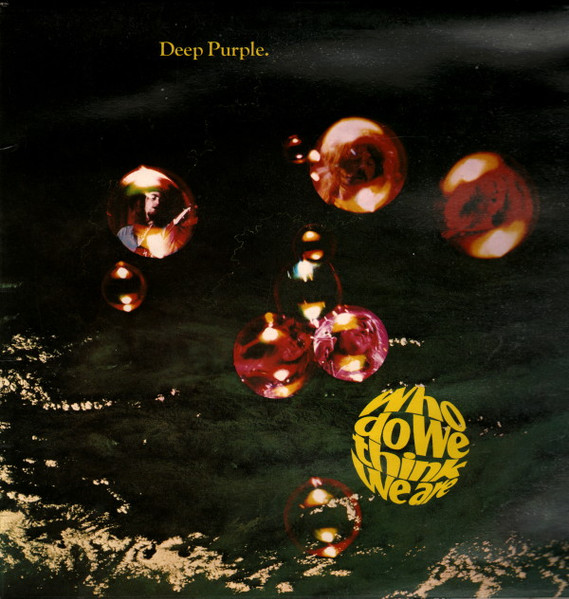
Who Do We Think We Are!

by Deep Purple

According to Wikipedia, Who Do We Think We Are was released in the States on 12 January 1973. In the liner notes to the 2000 remastered edition, Simon Robinson wrote:

In America, where live sets were always hated by major labels, Warners insisted on getting “Who Do We Think We Are” out first. Back in Europe everyone was happy for the live release to precede it and the new studio album was released in March 1973.

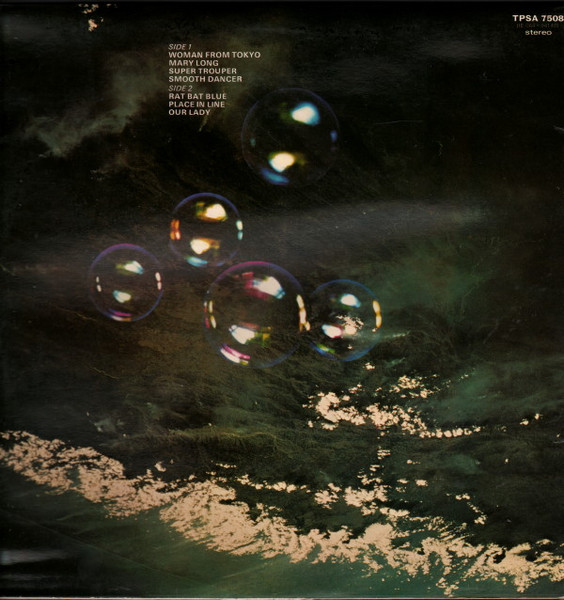
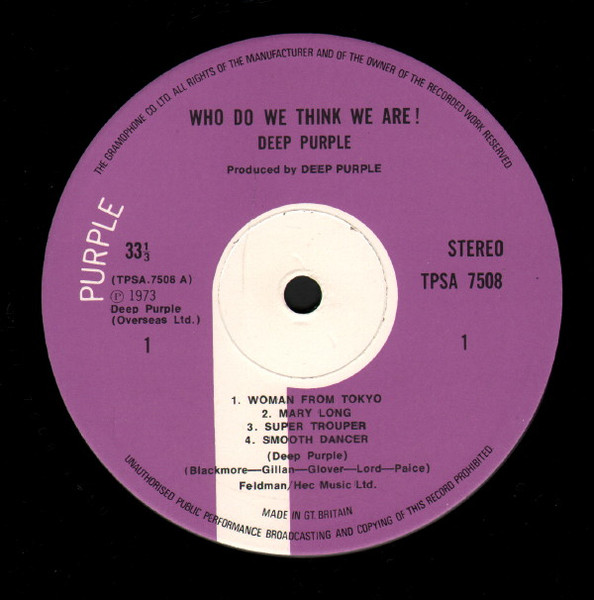
While Discogs says that the first UK issue (TPSA 7508) was in February 1973. In absence of more precise information — why not mid-February then. Happy arbitrary Birthday, WDWTWA!

As a curiosity, the title of the album on the original LP label as well as the cassettes includes the exclamation mark which is absent on the sleeve and on subsequent CD releases. Go figure. Personally, I like the “exclamation” version (as an answer to “Who do they think they are?”) more. If it was up to me, I’d put there another (inverted) one, as they do in Spanish: ¡Who Do We Think We Are!

I first heard the album in its entirety in the early 1980s. From the catchy opener Woman from Tokyo to the psychedelic-era-Beatles-inspired finale of Our Lady, I loved it all. Machine Head it wasn’t — it was so much more interesting. Especially Jon’s crazy keys on Rat Bat Blue and slow (at first) blues of Place In Line. So fresh. So different. But what about Mary Long? That song rang a certain bell. Where could I hear it before?

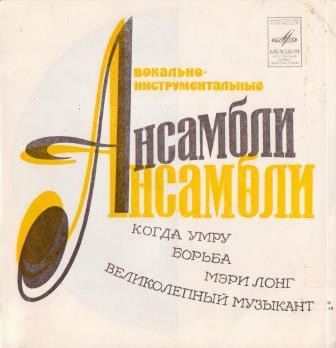
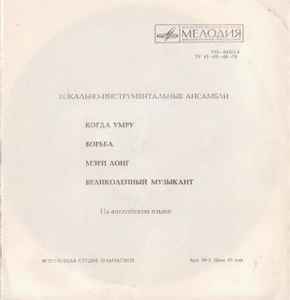
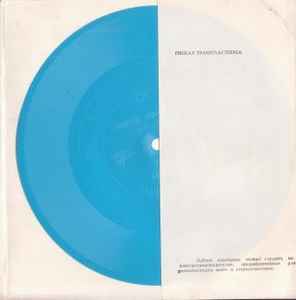
Some days or weeks or months later, rummaging through our “collection” — well, a big dusty heap — of flexidiscs, I found it. This patently weird compilation simply entitled «Вокально-инструментальные ансамбли», that is, “Vocal-Instrumental Ensembles”. No names of the bands VIAs, no songwriter credits, no nothing. Just a note «на английском языке» (“in English”, in case the listener has any doubt). Typical. The A for America side had And When I Die by Blood, Sweat & Tears and Someday by Chicago, the latter inexplicably translated as «Борьба», i.e. “Struggle”. (The class struggle maybe?) The B for Britain side: bingo! Mary Long and another song from WDWTWA, Super Trouper. How? Why? Who? Most likely we’ll never know. Godawful cover design, atrocious sound quality; all yours for 60 kopecks.

Вокально-инструментальные ансамбли
    Side A
    1. Blood, Sweat & Tears — And When I Die (Laura Nyro) / Когда умру
    2. Chicago — Someday (August 29, 1968) (James Pankow, Robert Lamm) / Борьба
    Side B
    1. Deep Purple — Mary Long / Мэри Лонг
    2. Deep Purple — Super Trouper / Великолепный музыкант

The bonus tracks to my 2000 remastered edition (Amazon still remembers that I bought it 20 years ago!) include a splendid outtake Painted Horse (which would end up on the album if Ritchie hadn’t hated it) and First Day Jam “with Ritchie on bass and Roger on the Autobahn”, as The Highway Star put it. Indeed, on the first day of recording sessions in Waldorf Nord, Germany (October 1972), Roger Glover, in his own words, “had taken a wrong turn <on the Autobahn> and was desperately looking for a way back”. 50 years later, perhaps the most underrated album of the classic Mark II line-up still rocks.

Friday, 25 March 2022

Machine Head

by Deep Purple

Released 50 years ago today, this classic of rock remains, deservedly, the most famous Purple record. My first partial encounter with it was, I reckon, in the mid-1970s. I say “partial” because the tape we listened to then lacked Pictures of Home and Lazy. Discovered by me towards 1980, they became my favourite tracks of the album.

Not as heavy as In Rock, not as diverse as Fireball, Machine Head nevertheless provides more than enough variety and fun for a rock album. It could have been perfect if not for that number about some stupid with a flare gun which I really think should have been left out and replaced by When a Blind Man Cries. Not that it’s bad; it’s just not up to the level of the other songs.

Roger Glover recalls in the liner notes to the 25th Anniversary Edition (which I purchased, pre-Amazon, directly from The Deep Purple Appreciation Society) how the name came about:

During one of these lost and searching days, I awoke one morning in my room at the Europe and, in that moment between sleep and wakefulness, with eyes still closed, heard myself say the words “smoke on the water” to the empty room. Opening my eyes, I wondered if I had actually said it out loud, or had I been dreaming? No, I concluded, I’d actually spoken those words. Mentally filing it away, I thought nothing more about it until later, when I told Ian Gillan. “Sounds like a drug song,” he observed and since we were devoutly a drinking band, we dismissed it.

Maybe I am too hard on it. (How hard one can be on a hard rock classic?) After all, thanks to it I learned about Montreux (also how this latter is pronounced by the English) and Frank Zappa and The Mothers. By now, the band themselves may well be fed up with the old Smoke but the fans can’t have enough of it. And there’s no shortage of covers. My favourites are Señor Coconut’s Humo en el agua, Dread Zeppelin’s groovy one, an instrumental by Stekpanna (from Standin’ Tall) and 1920s-style version by Robyn Adele Anderson.

Speaking of covers, the rest of the album — the good rest of the album, you understand — is as inspirational. Check out Min Chuguruk by the Siberian ethno-rockers Bugotak and another version of Highway Star by the Italian outfit Black Mamba — that “Oooh”, just before “she’s a killing machine”, is priceless. I loved the version of Lazy by Jimmy Barnes and Joe Bonamassa, from Re-Machined: A Tribute to Deep Purple’s Machine Head. Ditto When a Blind Man Cries, again by Barnes with Jon Lord and The Hoochie Coochie Men, from Live at the Basement.

CD1 of the Anniversary Edition, remixed in 1997 by Glover, is “what it <the album> should have sounded at the time”. It took me 25 years to get used to, or maybe more: I’m still working on it.

RIP Martin Birch. RIP Jon Lord. RIP Frank Zappa. RIP Funky Claude. Long live Machine Head.

Friday, 9 July 2021

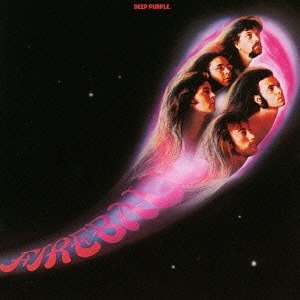
Fireball

by Deep Purple

According to Wikipedia, Fireball was released in the States 50 years ago today. So my 25th Anniversary Edition is 25 already!

Then again, the US version had Strange Kind of Woman instead of Demon’s Eye as it was in on the UK edition. That’s not right. It means, the proper 50th Anniversary of Fireball has to wait till September.

I discovered Fireball later than the other Mark II classics, and it is the only Purple album with whose lyrics I’d got acquained before I actually heard it. It so happened that one of my brother’s bandmates brought him the songbook that, in turn, somebody else lent him for several days. The book looked like this:

At the time (that is, the late 1970s) we had no access to photocopier, so we copied the book by hand, or rather, by two hands: my brother did the scores, I did the texts, which included the lyrics and also the band’s bio. My knowledge of English back then was below elementary. Of course, I remembered some words even though I was not sure how to pronounce them. The album itself remained elusive for a couple of years after that, until the day I listened to an unmarked magnetic tape reel of rather dodgy quality and by-now forgotten origin. I heard a country-style song which I liked and suddenly realised that I recognise some of these words. Farmer’s daughter? Judge’s daughter? Could it be...? I unearthed my handwritten book. Yes, here it was: Anyone’s Daughter. And the rest? I rewound the tape to the beginning and listened to the end. Bingo: complete Fireball, starting with, well, Fireball!

Purple’s last prog-rock effort, Fireball remains one of my favourite albums. The band is at the peak of their powers, the songs are diverse and well-crafted, the title track is speedier than Speed King, and even Ritchie Blackmore finally plays in tune.

The sound quality of the aforementioned 25th Anniversary Edition CD is great. If you don’t care about bonus tracks, just stop after No One Came, because that’s where the the original album ends. For those who prefers the American LP version, Strange Kind of Woman is also here, followed by I’m Alone, another great song hitherto only available on The Deep Purple Singles A’s & B’s.

Friday, 18 September 2020

Paranoid

by Black Sabbath

Paranoid, 50 years young today, is kind of genre-defining album. You can’t say you heard any heavy metal if you didn’t hear Paranoid. Right?

In my case, it was not even the first Sabbath’s album I heard. The wonderful and criminally underrated Technical Ecstasy was the first, in the early ’80s. It was not until 2000 that I actually sat down to listen to Paranoid in its entirety. So, happy 20th to that.

In 1989, I didn’t go to Moscow Music Peace Festival featuring acts like Bon Jovi, Mötley Crüe, Scorpions and, wait, I’m getting there, Ozzy Osbourne — with Geezer Butler! Missing it is one of my regrets, mostly because of that event’s zeitgeist, although probably the only band worth seeing there were Scorpions. You can see the footage in the 1989 documentary «Десант в гнездо гласности» where Ozzy sings Paranoid (rather badly, in my opinion).

Later the same year, I went to see Black Sabbath live at Olimpiyskiy stadium in Moscow. They played incredible 13 concerts there, on 19 through 28 November as a part of their Headless Cross world tour. By that time, only Tony Iommi was left of the original line-up. But the rest of the band was truly stellar: the vocalist Tony Martin, the great Neil Murray on bass, the great late Geoff Nicholls on keys and the greatest, late Cozy Powell on drums. Dismal acoustics notwithstanding, it was a blast. Amazingly, one of those shows is available on YouTube. And of course, they played Iron Man, War Pigs and Paranoid.

The kids first heard Iron Man in Futurama (Anthology of Interest I, to be precise) and then in 2008 film Iron Man. Needless to say, Paranoid made its way to Yuri’s MP3 player soon after that. Of zillions of Sabbath’s covers out there (I can’t honestly pretend that I heard even 1% of them), give me Hayseed Dixie’s version of War Pigs any time.

Tuesday, 1 September 2020

Jesus Christ Superstar

by Andrew Lloyd Webber and Tim Rice

I only want to say that Jesus Christ Superstar was released fifty years ago this month. I couldn’t find more precise date than “September 1970”, so it might be fifty years ago today. Can’t say when exactly I heard it for the first time, but it also must have been the early ’70s and it was my cousin’s 9 cm/s magnetic tape reel. Suffice to say, I grew up on this particular version of the rock opera, needless to say, without understanding the lyrics. (Many years later, I discovered that understanding of the lyrics didn’t spoil my enjoyment of JCS at all, unlike what happened with a lot of Anglophone rock for me.) In 1980s, I had an opportunity to acquire the vinyl, and I even borrowed from my brother a princely sum, an equivalent of my monthly stipend... only to discover that the album on sale, still in original shrink-wrap, was The Original Motion Picture Sound Track Album. Which was not good enough: I was looking for the original and the best.

In the last days of USSR, I bought the double LP Иисус Христос Суперзвезда issued pirated by Andrei Tropillo’s label АнТроп, aka «Продюсерский Центр Рок-н-ролльных Приходов Единой Евангелическо-Лютеранской Церкви России». Well. The aforementioned reel, which was still around, sounded better. I had quite a number of АнТроп vinyls, invariably of low sound quality and with funny modifications, or loose approximations, of the original sleeve designs. Those were the days.

In 1995, on its 25th anniversary, more or less, I finally got hold of a two-CD box in Leeds, England. I was surprised to learn that the copyright belonged to a body known as Leeds Music Ltd. (It doesn’t exist anymore, being swallowed first by MCA and eventually by Universal.) I still have this box (and CDs, of course).

Here are some trivia related to JCS that I was not-quite-aware of until now:

  • Lloyd Webber and Rice wrote Try It And See, later recorded by Rita Pavone, for the 1969 Eurovision Song Contest. The song was rejected. Curiously, Save Your Kisses for Me, with a suspiciously similar chorus, actually won the Eurovision Song Contest in 1976.
  • Both Yvonne Elliman and Tony Ashton appear on Jon Lord’s Gemini Suite. Eric Clapton asked Elliman to sing backing vocals on his cover of I Shot the Sheriff and she appeared on a string of Clapton’ albums from 1974 to 1977. Also, the Bee Gees originally wrote How Deep Is Your Love for Elliman. How cool is that?
  • Apparently, it was Tim Rice who, “armed with a long, flat piece of board with another smaller section hinged on it, flapped away providing the lashes and doing the counting” on The Thirty-Nine Lashes.
  • It turns out that one of my favourite jazz musicians, Kenny Wheeler, played trumpet on this recording!
  • According to Something Else! webzine, Ian Gillan “nailed all of his vocals in a mere three hours”... later, he turned down the offers for the stage and film versions of JSC “but not before asking for £250,000 and demanding that all of Deep Purple be paid as well — since filming was going to keep the group off the road”.

By the way, it was Aunty Sonia who first told me the name of the lead singer.

For the last half of the century, the opera has been an inspiration for countless musicians, from Livin’ Blues (look for their 1971 rendition of Overture on Bamboozle) to this year’s all-female JCS with Shoshana Bean as Judas, Morgan James as Jesus, and Cynthia Erivo as Mary (the She is Risen vol. I is out now). Here’s to the next fifty years!

Thursday, 10 October 2019

In the Court of the Crimson King

by King Crimson

Fifty years young today, In the Court of the Crimson King still sounds fresh and powerful. The lenghty article in Rolling Stone goes on about how KC inspred everybody from Yes to Kanye West — strangely, failing to mention Deep Purple’s Into the Fire.

I first heard and saw ITCOTKC in mid-1980s. In my humble opinion, it is one of the handful of rock albums worth having on vinyl for their cover art alone. Sadly, its creator, Barry Godber, died in 1970 at the age of 24, leaving after himself no other album cover. The cover art alone, I said, but isn’t it nice to have inside the first ever prog-rock record as well? Both the vinyl I heard back then and the CD I acquired in Italy in 1994 (one of the very first CDs I ever bought) predated the 1993 “rediscovery” of the original master tapes. I have to say that I didn’t hear any of the “newer” version of the album. I suppose they are all very decent, and the 50th anniversary edition is coming out soon. Undoubtedly it will be branded “definitive” for the next 10 years or so. However, for me and for everyone who grew on their music in 1970s and 1980s, the ’69 version is the definitive.

Tuesday, 24 September 2019

Concerto for Group and Orchestra

by Deep Purple and the Royal Philharmonic Orchestra conducted by Malcolm Arnold

I first got acquainted with this Jon Lord’s masterpiece (first performed 50 years ago today) in the early 1980s, already being familiar with the rest of the Deep Purple Mark II studio legacy. I had a 19 cm/s audio tape reel recorded from a very scratchy vinyl. There were several skips, most notably during the Ritchie Blackmore’s lenghty solo in the First Movement (Moderato — Allegro), but, as this solo is very repetitive, I didn’t miss much. More annoying for me was the fact that the Second Movement (Andante) was split between the two sides of the LP.

What still amazes me that the score of the Concerto was lost in 1970. How? Was there really just one copy? That Marco de Goeij was able to reconstruct it by listening to the original recording is even more amazing. The result, performed twenty years ago already, could have been great... if you hadn’t heard the original, that is. What was revolutionary in 1969 became a tribute in 1999. Still, worth watching, not least because of great guest musicians, such as Annie Whitehead.

Saturday, 30 December 2017

Perfect Strangers and Link Floyd live

Deep Purple or Pink Floyd? When I were a lad, this question would really upset me: I grew up with these bands. Thankfully, this time around I didn’t have to choose between the two, thanks to our own Canarian tribute acts, Perfect Strangers and Link Floyd, playing their end-of-the-year concerts in Las Palmas de Gran Canaria. Timur, I and Harold attended both shows. In fact, we would never came to the second gig (Link Floyd at Teatro Guiniguada) if Emilio Sánchez, the vocalist of Perfect Strangers, hadn’t told us about it during their show in CICCA! That’s advertising Canarian-style for you.

Perfect Strangers played the vintage DP, with all the major Mark II and III hits: Child in Time, Speed King, Highway Star, Lazy, Woman from Tokyo, Mistreated, Soldier of Fortune, Knocking at Your Back Door, not to mention the very Perfect Strangers and that obligatory one about some stupid with a flare gun... There were surprises too, very much in Purple spirit, such as the Stormbringer quote within Burn, the Mark I first hit Hush, and one hell (or high water) of a drum solo in Space Truckin’.

Perfect Strangers

    Dave O’Connor: guitar
    Mathias Klatte: keyboards
    Javier Negrín: drums
    Emilio Sánchez: vocals
    Aaron Santana: bass

One week later, Link Floyd took us on an epic journey from Astronomy Domine and Echoes to (and through) The Wall. Man they can do it: like the entire darker second side of The Dark Side of the Moon, Pigs, Dogs... and the first five songs of The Wall plus Run Like Hell for an encore, how’s that? The band were so superbly faithful to the original that at times I wished they were, um, not and improvised more, or played the guitar solo on the sax or vice versa, or something. Anyway, it was magnificent. (Also, the sound at Guiniguada was much better than that at CICCA.) How I wish you were here.

Link Floyd

    Besay Brehcist: lead guitar, vocals
    Sergio Casquero: guitar, vocals
    Javier Guerra: bass
    Fran Navarro: drums
    Rafael Santana: keyboards
    Kenneth Suárez: guitars, keyboards, vocals

    Ángel Fernández Bordón: saxophones
    Patty Brichis: backing vocals
    Virna Ceballos: backing vocals
    Violeta Millares: backing vocals

Saturday, 29 April 2017

Mr. FeedBack live @ The Paper Club

As I’ve mentioned before, I hardly ever see tribute bands in action. To miss this tribute to Led Zeppelin, however, would be unforgivable. Timur and I went to see them last night to The Paper Club. This was the conclusion of “St.George’s Week”, and I thought the €12 ticket for both the movie (Quadrophenia) and the concert (including a drink!) was a good value. But wait. I was hoping for it to be good but the show exceeded my expectations.

Hailing from Bergamo, the band is surprisingly tight and playful at the same time. Not only are they passionate about the music they perform, they also make Zeppelin’s songs their own. Even though almost two hours of non-stop rock/blues/rock’n’roll call for “highlighting”, it’s not an easy task when there’s not a dull moment in the show. But if I must... For me, the melodic basswork of Nicola Mazzucconi’s stood out while Mr Brevi’s singing went, dare I say, beyond whatever Robert Plant himself did “in the days of his youth”. Apart of, I guess, obligatory Black Dog, Rock and Roll, Whole Lotta Love and Stairway to Heaven (all brilliant), they pleased the audience with some not-so-obvious material. I was happy to hear a few of my personal favourites, such as Immigrant Song and Ramble On, and got a serious goosebumps overdose from Babe I’m Gonna Leave You and No Quarter. Highly recommended.

Mr. FeedBack are:

  • Francesco Bertini: drums
  • Andy Brevi: vocals
  • Nicola Mazzucconi: bass
  • Simone Trevisàn: guitar

Monday, 10 April 2017

Three music documentaries

Last week, Timur and I went to watch these movies at the Monopol Music Festival. In English, with Spanish subtitles.

The Beatles: Eight Days a Week — The Touring Years

a film by Ron Howard

I’ve been listening to The Beatles for as long as I remember myself. I can’t honestly say that I learned a lot of new stuff about the Fab Four from this film. But I enjoyed it all the same. As for Timur, I hope his curiosity about The Beatles is not satisfied. The version we watched in Monopol (as we were warned beforehand) lacked half an hour or so of 1965 Shea Stadium concert. Thank goodness for that, it must have been terrible. Most of The Beatles footage was. On the other hand, the interviews are brilliant.

The film covers, so to speak, The Red Album years. (It also includes, for reasons unknown, a fragment of the famous rooftop concert which was the last public performance of the band but has nothing to do with “touring”.) John, Paul, George and Ringo were getting tired of the gigs but not of each other (yet). Brian Epstein was still alive. The future looked bright.

Score: A Film Music Documentary

a film by Matt Schrader

We went to see this film on Timur’s suggestion and it proved to be much more interesting than its description or trailer would suggest. Not only because, or even not so much because of giants like John Williams or Hans Zimmer who appear there. I was much more impressed by other composers — too many to list here and frankly I forgot most of the names — who also happen to be great musicians, arrangers and/or conductors. Perhaps inevitably, being an American movie, it mainly focuses on American film scores. (By and large, I find American movie music too intrusive for my liking. I wish there were separate volume controls for music, dialogue and ambient noises on the remote.) Even the scenes in London’s AIR and Abbey Road studios show “making of” Hollywood music. It would be interesting to see the idea of Score applied to contemporary European cinema.

Metallica: Some Kind of Monster

a film by Joe Berlinger and Bruce Sinofsky

This 2004 documentary portrays Metallica in the middle of their creative, existential, or midlife (delete as appropriate) crisis. I didn’t know much about the band before and watching the film didn’t make me a fan.

First, Lars Ulrich emerges as a biggest asshole in rock history (to his credit, Lars admits that himself) thanks to Metallica vs. Napster lawsuit. Then James Hetfield goes to Russia to hunt bears and drink vodka. Then Lars decides to sell his godawful paintings at Christie’s to raise some cash (quite a lot of it). All the while, they don’t stop bickering. The whole thing looks like they are unwittingly remaking This is Spın̈al Tap without being nearly as likeable as Spın̈al Tap. And they don’t show too much wit either.

Thursday, 12 November 2015

Scandinavian Nights (Live in Stockholm 1970)

by Deep Purple

For Deep Purple Mark II, 1970 was truly an annus mirabilis. Not only because of In Rock — wait a minute, I’ve got a 25th anniversary edition CD which is 20 years old already; shall we expect a 50th anniversary edition in five years’ time? — but also because of Jon Lord’s Gemini Suite Live and Jesus Christ Superstar superstarring Ian Gillan. I was practically growing up on this latter album.

What about Scandinavian Nights? It was recorded in Stockholm exactly 45 years ago, on 12 November 1970, so it’s not clear why “nights” in plural. But trust me, behind its rather uninspired cover art you’ll find simply the best live recording of this, or any, Purple line-ups. Sure enough, there are Child in Time, Into the Fire and Speed King (in my view, vastly superior to their respective studio versions) as well as half-an-hour monsters of Wring That Neck and Mandrake Root. But also, please, don’t forget the cover of Paint It Black.

Tuesday, 28 January 2014

Now What?!

by Deep ?urp!e

Back in olden days, Deep Purple Mark II were recording seven-track long albums (that includes Made in Japan and Scandinavian Nights, still seven songs each) and I thought that every single track was great while every album was a masterpiece. Wait. I still think so. But that was in the 1970s. The band has moved on.

In spite of the name, Now What?! is not a bad record. It is just does not glue as an album. Which is a crying shame because it has some damn good material there. Maybe they should have chosen seven best tracks out of eleven? Smokey-bluesy Blood from a Stone, hilariously gothic Vincent Price, eclectic Uncommon Man all definitely should be there. And Hell To Pay, too: the guitar and organ solos sound like the DP of old. Just as does the short and brilliant guitar—Hammond duel (21st century schizoid Speed King?) in Après Vous, which my favourite song of the set. I am sure that Jon Lord, to whom the album is dedicated, would give his approval.

Tuesday, 22 October 2013

Ian Paice On The Drums

by Ian Paice

He played with The Velvet Underground, Gary Moore and even Sir Paul. Enough memoir material by any standard. But for me, as probably for about everybody else, he always was — still is — the Deep Purple drummer. There never was DP without Ian Paice.

You’d think there should be plenty of DVDs around showcasing Paice’s talent. Well... (drum roll please...) no. But there is at least this one.

On The Drums is a curious collection of Paice-related bits and bobs. Released by Edel in 2008, it looks like a European repackaging of 2002 American DVD Not for the Pros. In contrast to what Amazon says, this DVD is region-free (not region 2). The picture quality could have been better; the sound is OK for the most part, but I wouldn’t mind having subtitles.

Ian Paice’s Drummers Guide

The “main feature” is a fifty-minute documentary where Paice travels the world visiting the musical instrument factories: Pearl in Japan, Paiste in Switzerland (hey, I just learned another Finnish word!), Pro-Mark and Remo in America. He demonstrates just a little bit of his technique but clearly not enough to be considered an instructional. The film is interspersed by snippets of Deep Purple archive footage. I find them rather distracting; luckily, you can choose a viewing option without these clips.

Abbey Road Session

...contains two cool instrumentals, Paicesetter and Dustbins. Paice is accompanied by Colin Hodgkinson on bass and Miller Anderson on guitar. I did not realise Paice is left-handed until I watched this! Now if the entire DVD was material of this quality, I wouldn’t hesitate to give it five stars.

Roadie’s Eye View

This section has several songs or fragments filmed during Deep Purple’s 2001 US tour, with a twist: the camera, for a change, is focused on Paice. Ted the Mechanic, Lazy, Knocking At Your Back Door and Highway Star are shown in their entirety, but the highlight is the middle section of Fools, which is not even a drum solo and still is mind-blowing. But why on earth didn’t they show the full Fools?

Drum Clinic

That could have been really interesting... (short drum solo please...) if any part of it lasted more than ten seconds, that is. What we have here is just some short promo for Australian TV. Total waste of time.

Ian Paice Interview

Another bit filmed for Aussie TV. Rather more entertaining than the “drum clinic”. Paice, apart from being simply the greatest rock drummer alive, appears to be very nice (and humble) bloke.

Retro Mix

A montage of old and new(ish) Deep Purple clips set to Paicesetter. Please ignore it and watch the Abbey Road Session again.

Sunday, 6 May 2012

Rising Force

by Yngwie J. Malmsteen

The 1980s were lousy times for rock music. At least, in the West. But every cloud has a heavy metal lining: the great rockers of the 1970s discovered that they were ever so popular in Soviet Union. By the end of the decade, they were touring the former evil empire en masse, among them Black Sabbath, Ian Gillan, Nazareth, Pink Floyd, Uriah Heep... and Yngwie Malmsteen’s Rising Force.

Malmsteen probably is the only truly great rock guitarist to emerge in the 1980s. I have no clue what, if anything, YJM is doing now, but by mid-1990s he was already fading from collective memory. Therefore, I arbitrarily declare that Malmsteen was on peak of his career exactly when I saw him (twice) live in Moscow in 1988. The band, fronted by Joe Lynn Turner, was phenomenal. The crowd was as ecstatic as could be under the circumstances (don’t forget the heavy militia presence). And yet, it seemed that Yngwie, still in his twenties, was basking in the past glory. The Force has risen, but it was already time to settle down for bed.

Even if Malmsteen recorded only Rising Force, it should be more than enough to guarantee him the place in The Rock and Roll Hall of Fame, to which he remains to be induced.

* * *

Listening to the album for the first time, Yuri said: “This guitar solo is longer than Rimmer’s special salute”.

* * *

In my Zumba classes, I use the first 22 seconds of Black Star as a break between some tracks.

* * *

On the CD booklet, moſt of the text, including ſong lyrics, is typeſet in blackletter.
Which is probably to the beſt as the lyrics does not make much ſenſe.

Wednesday, 18 November 2009

April

by Deep Purple

You would think that Deep Purple could have done better than naming their 1969 album Deep Purple, but there you go. I always knew this album as April. Tonight I was listening to it again on my way to the samba practice. In the opening track, Chasing Shadows, Ian Paice manages to sound like a full band of African drummers. And then, bluesy Why Didn’t Rosemary? and The Painter, psychedelic The Bird Has Flown, orchestral April. A quintessential prog-rock record which never gets boring.