A heart-warming documentary portraying the daily lives of the inhabitants of L’Adamant, a floating mental health centre on the Seine in Paris.
Showing posts with label France. Show all posts
Showing posts with label France. Show all posts
Monday, 20 November 2023

Wednesday, 15 November 2023
L’Incroyable Histoire du facteur Cheval
a film by Nils Tavernier
L’Incroyable Histoire du facteur Cheval is, indeed, so incredible, and also so tragic, that it could only have been a true story. Starring Jacques Gamblin as postman Cheval, Laetitia Casta as Philomène and Zélie Rixhon as their daughter Alice. Get out your hankies.
Saturday, 8 July 2023
La Rive Gauche: Arte, pasión y el renacer de París, 1940–1950
by Agnès Poirier
translated by Ignacio Villaro Gumpert


translated by Ignacio Villaro Gumpert
A rhubarb what? John Cleese, Rhubarb Tart Song (1968) |
Один Жан-Поль Сартра лелеет в кармане Аквариум, «Два тракториста» (1981) |
I haven’t read anything by Jean-Paul Sartre yet. The two quotes above pretty much summarise the extent of my knowledge of him before reading this book; that is, practically nothing.
To my surprise, La Rive Gauche places Sartre and his lifelong friend Simone de Beauvoir in the very centre of French cultural life of the 1940s. And not just philosphising, as philosphers do: apparently, Sartre was selling his books by truckloads. So pretty famous then*. Still, I feel he was given disproportionate space in the book. (Cf. meagre one page allotted to his neighbour on the book cover, one Miles Davis.) I have to say that both Sartre and the Beaver, together with the likes of Saul Bellow, Arthur Koestler and Pablo Picasso, come out as a thoroughly unpleasant bunch. Of course this is not the author’s fault although probably it wasn’t her intention either.
The book is carefully researched and lively written; also, well-translated. There is even a map to trace the characters’ perambulations around Paris.


Curiously enough, it was first published in English (not French, as I thought) and called Left Bank: Art, Passion and the Rebirth of Paris 1940–1950. “Left Bank”, what nonsense! Anyway, I read it in Spanish and the title sounds much better, n’est-ce pas? I found the Part One, Mi maestra fue la guerra: julio de 1938 – agosto de 1945 (“War Was My Master: July 1938 – August 1945” in the original), most fascinating. (Read the first chapter, La caída “The Fall”, here.) The story of Jacques Jaujard was a revelation for me — I wish the book focused more on true heroes like him rather than “the Family”.

| * | In the film I just watched, L’Événement, the literature students of the early sixties compare Camus with Sartre; the discussion does not go in favour of the latter who they feel is too opaque. By the end of the decade, I suppose, “Jean-Paul who” became largely irrelevant. |
Wednesday, 5 July 2023
L’Événement
a film by Audrey Diwan
1963. Anne (Anamaria Vartolomei), finding out that she is pregnant, is desperate for help. Her so-called friends, aware that terminating pregnancy can land Anne in jail*, tell her that it’s not their problem.
This powerful drama, based on the novel of the same name by Annie Ernaux, is shown as a part of the cycle Diversidad, Igualdad y Cultura organised by Instituto Canario de Desarrollo Cultural (ICDC). Not for the faint-hearted, I must warn you.
| * | It was not until 1975 that abortion was legalised in France. |
Sunday, 4 June 2023
Josephine Baker
by Catel Muller and José-Louis Bocquet
afterword by Jean-Claude Bouillon-Baker
translated by Regina López Muñoz
afterword by Jean-Claude Bouillon-Baker
translated by Regina López Muñoz
I am not a big fan of biographies, but I’m always prepared to make an exception for a book like this. A monumental graphic biography of Josephine Baker — or Tumpie, as they used to call her as child.
Gabriela Frost wrote in her review:
Catel and Bocquet give an often excessive blow-by-blow of Josephine’s male sexual partners, but fail to mention her relationships with women. This can only be a deliberate exclusion, given the depth of research which must have gone into the graphic novel. Only once is her bisexuality alluded to.
This “only once” refers to pp. 176—179 showing Josephine cuddling up with Ruth Landshoff on a sofa. I am not sure about “deliberate exclusion”. At the end of the book, there are eighty pages (out of 568!) dedicated to biographies of main and secondary characters of the comic*. Reading through them, I could see that the authors were really careful not to bring the unproven relationships — either homo- or heterosexual — into the story. So no affairs with Colette (p. 515) or General de Gaulle (p. 541). Bricktop, most likely. And no Frida Kahlo in sight. Anyway, who needs unsubstantiated gossip describing a life as fantastic as Josephine’s?
Wednesday, 8 March 2023
Ninotchka
a film by Ernst Lubitsch
Greta Garbo and Melvyn Douglas star in this 1939 comedy, screened as a part of El amor es un clásico cycle by Filmoteca Canaria. The most hilarious scenes involve the title character in her humourless Bolshevik machine mode; humanised by her stay in the “City of Love”, Ninotchka does not seem that funny or fascinating anymore. Thankfully, the trio Iranoff, Buljanoff and Kopalski provide comic relief throughout. Needless to say, the movie was banned in the Soviet Union.
The screenplay was co-written by Billy Wilder who, twentysomething years later, would recycle three Soviet Board of Trade agents in his One, Two, Three.
Wednesday, 15 February 2023
Les Grandes Musiques de Films / Музыка из кинофильмов
by Orchestre de Paul Mauriat
“Can you put on Paul Mauriat?”, my mum would ask. And when she said “Paul Mauriat”, she referred to one of two vinyls we had or to the audio recording of the television show in Ostankino we taped in 1978. The LP called «Музыка из кинофильмов» (“Music from the movies”) was her favourite though.
According to Russian Wikipedia, this album (the “original” 1973 compilation) was pirated by Melodiya and was distinguished by its poor sound quality. Maybe. Compared with that flexidisc I described a few days ago and its kind, «Музыка из кинофильмов» was very Hi, very Fi. Given that a lot of Mauriat’s music was used in Soviet TV programmes (В мире животных, Время, Кинопанорама) without any acknowledgement, it’s amazing how much information was there on this LP’s cover.
In the 1970s, we did not see any of these films. So what? OK, the names of inconvenient movies were “skillfully” lost in translation. So the theme from then-X-rated Last Tango in Paris was christened «Встреча» (Encounter), while La Chanson de Lara (Lara’s Theme) from Doctor Zhivago became simply «Мелодия» (Melody). This did not prevent us, or anybody else really, from enjoying the music.
What’s more, for me this LP contained the definitive arrangements of those film themes. I remember my disappointment upon first hearing the opening tango of Last Tango in Paris without that piano chord. Or The Godfather after growing up on the Mauriat version of Parle plus bas — another case of the original sounding a pale imitation of its cover. After all, it was this latter that the alien of Контакт encountered on the planet Earth.
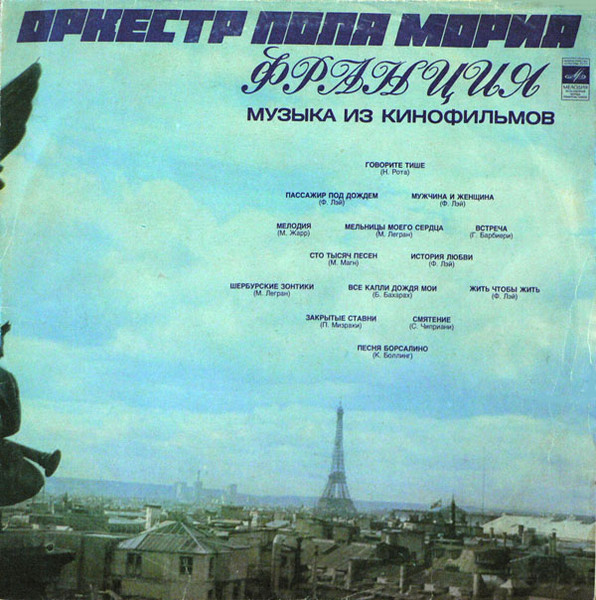
| Les Grandes Musiques de Films par l’Orchestre de Paul Mauriat | Оркестр Поля Мориа Музыка из кинофильмов |
|---|---|
Side A
|
1 сторона
|
Thursday, 8 December 2022
PlayTime
a film by Jacques Tati
A futuristic absurdist comedy predating Monty Python, Playtime is considered one of the greatest films of all time. In my opinion, it could have been even greater if it was shorter. The Royal Garden sequence (one hour of screen time) has its highlights but quickly grows too predictable.
Sunday, 11 September 2022
El hombre que plantaba árboles
by Jean Giono
translated by Palmira Feixas
illustrated by Simona Mulazzani
preface by José Saramago
afterword by Joaquín Araújo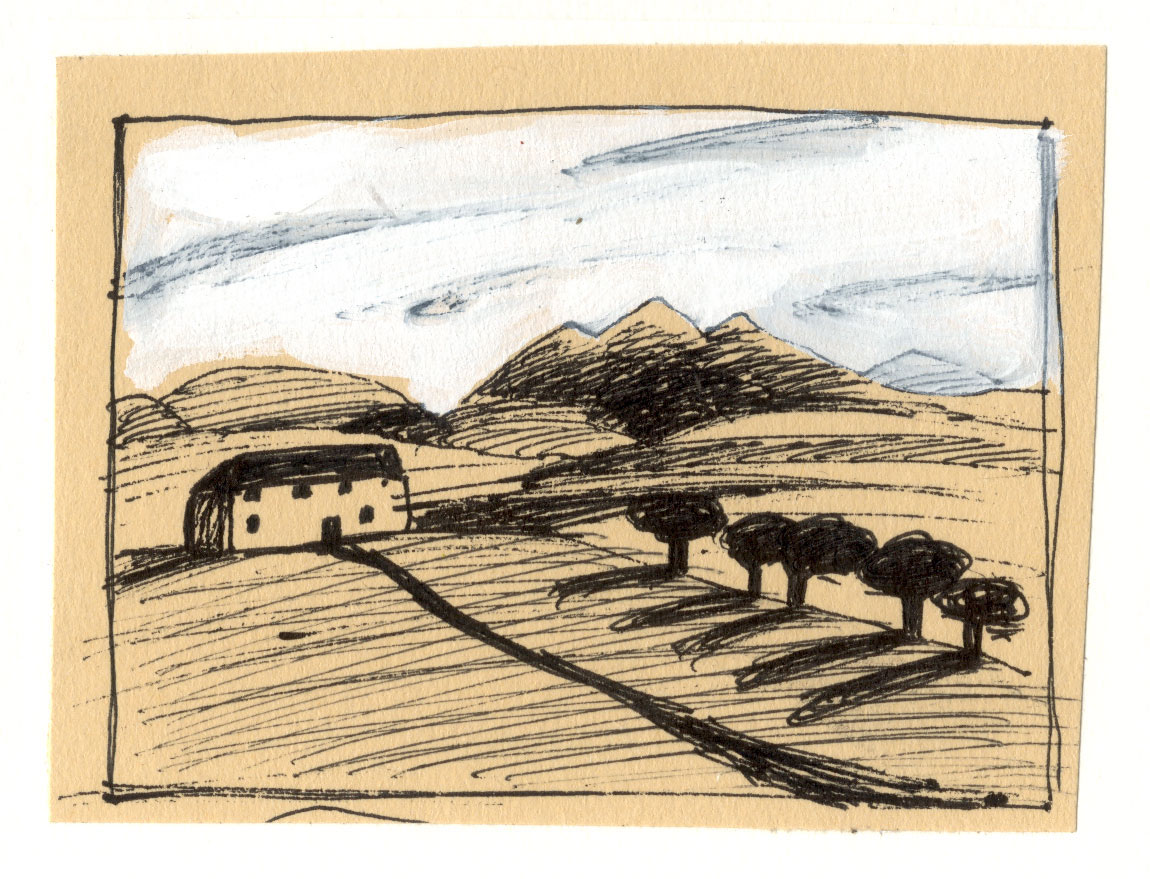
translated by Palmira Feixas
illustrated by Simona Mulazzani
preface by José Saramago
afterword by Joaquín Araújo

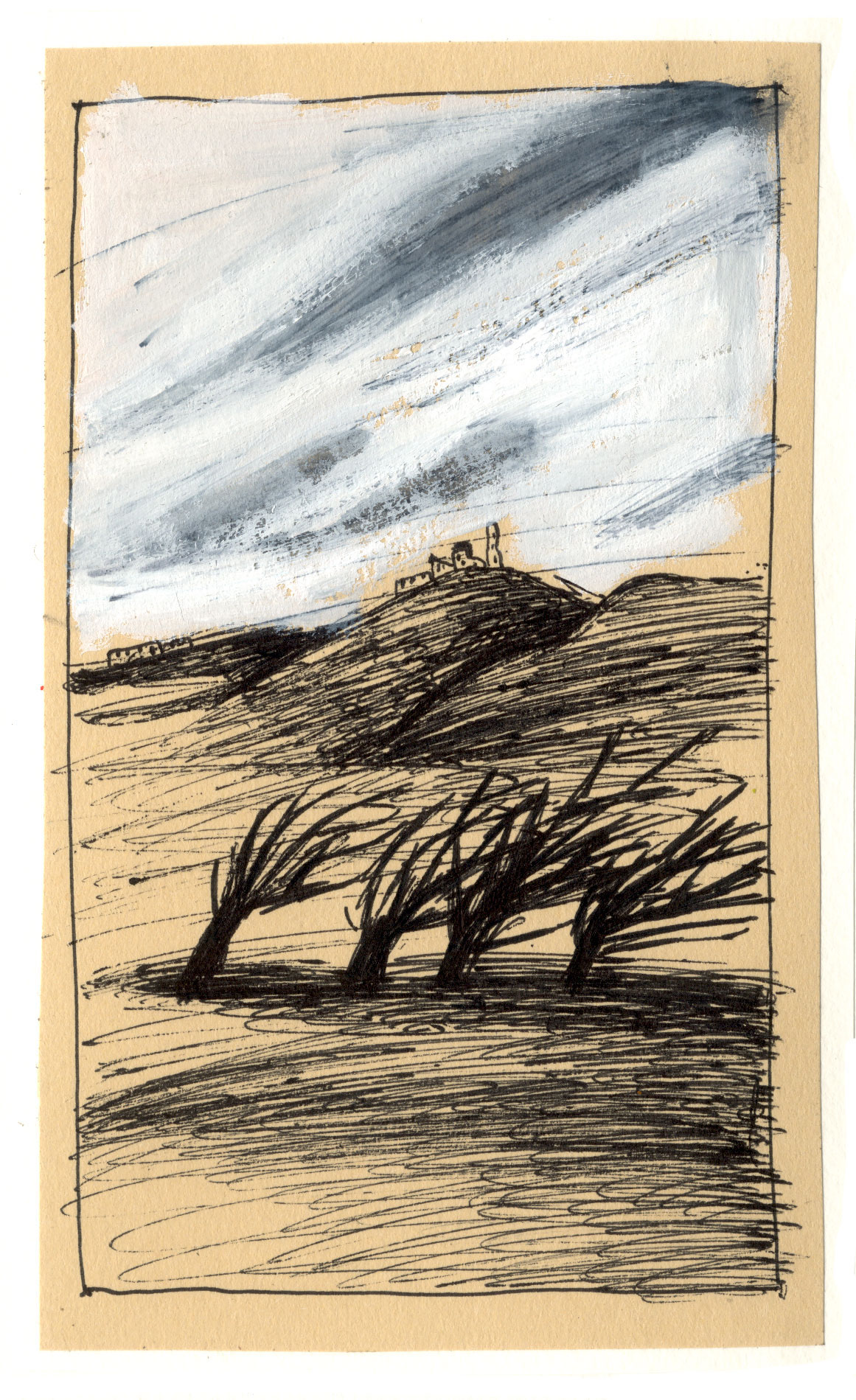
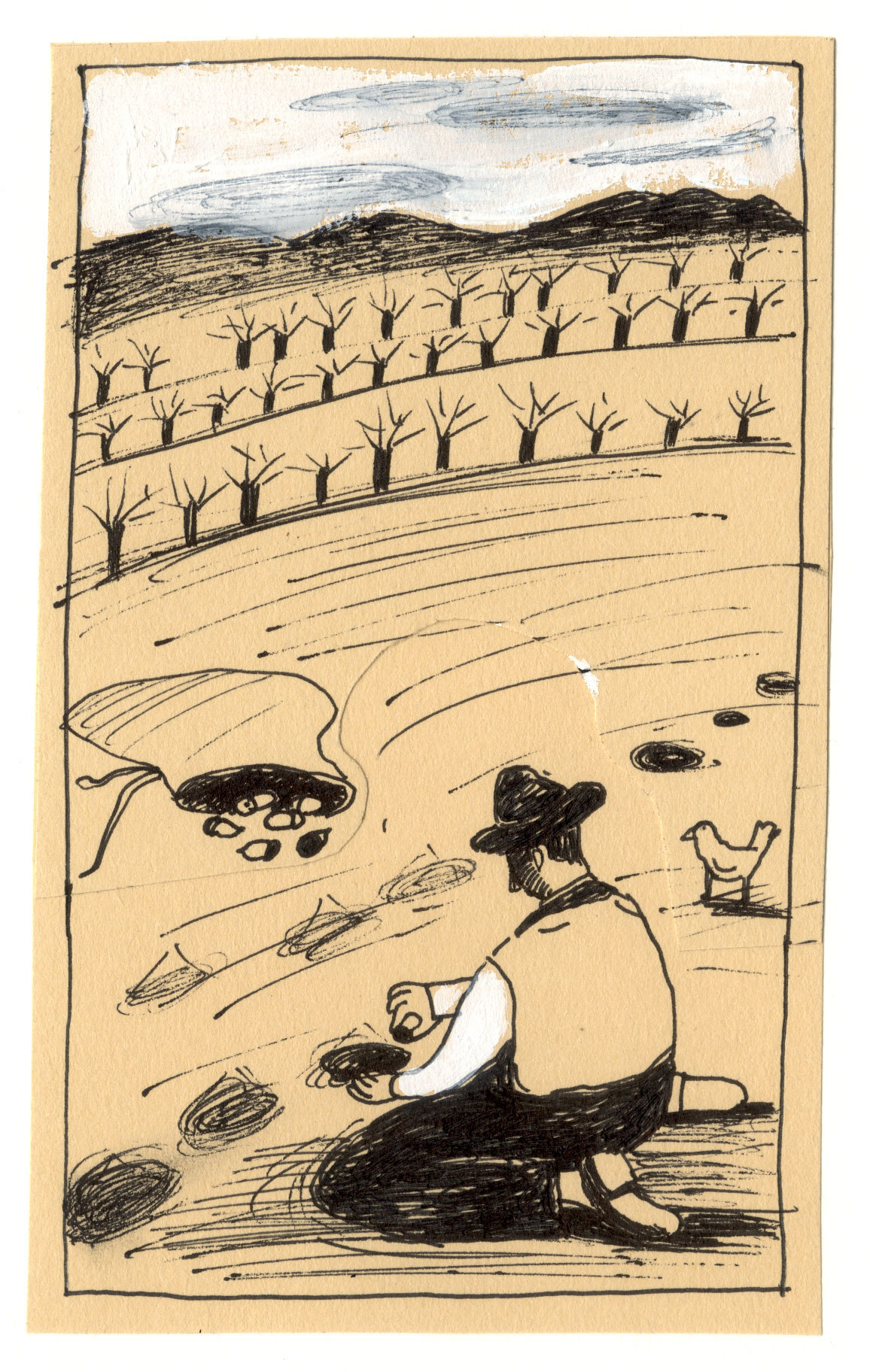
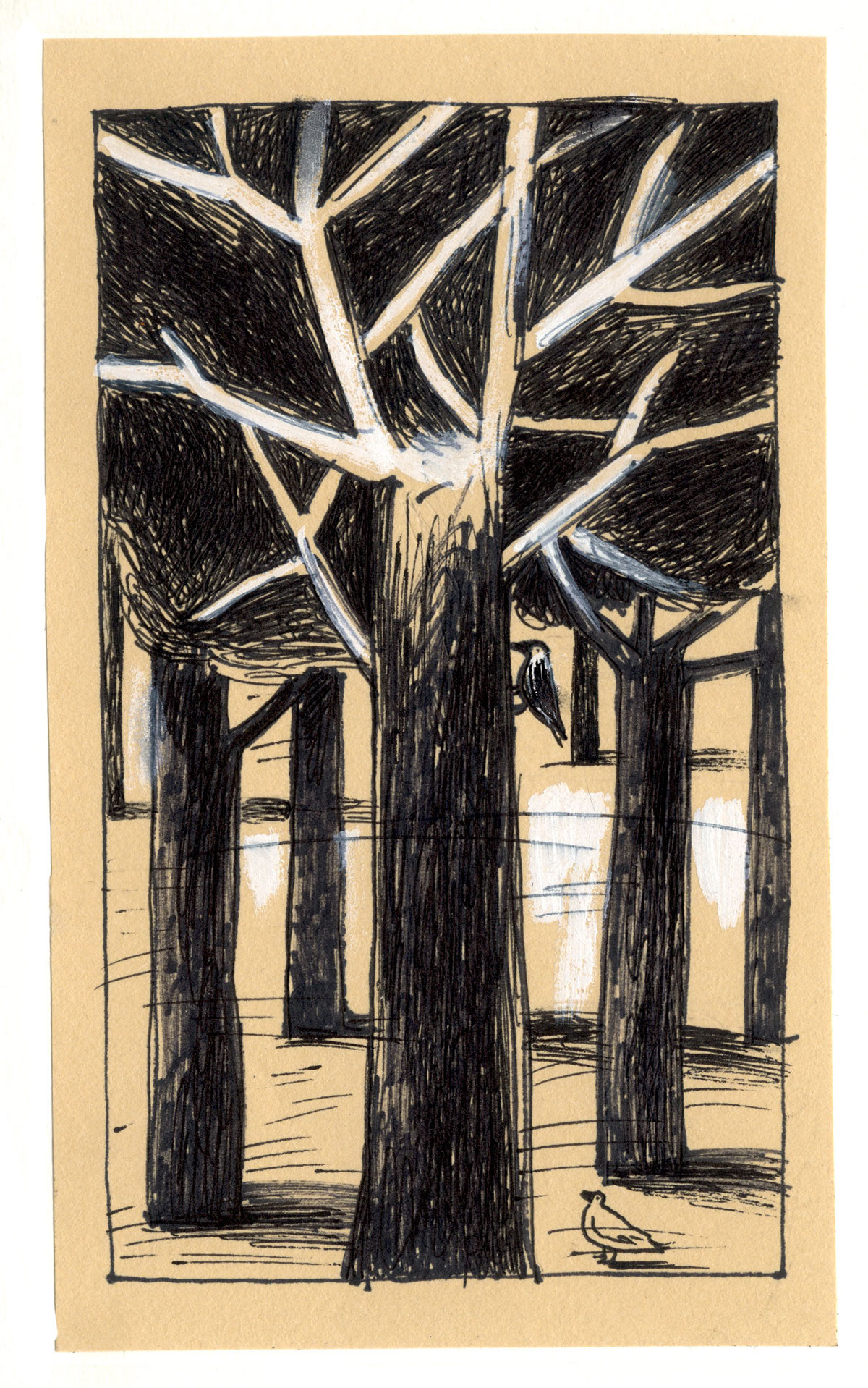
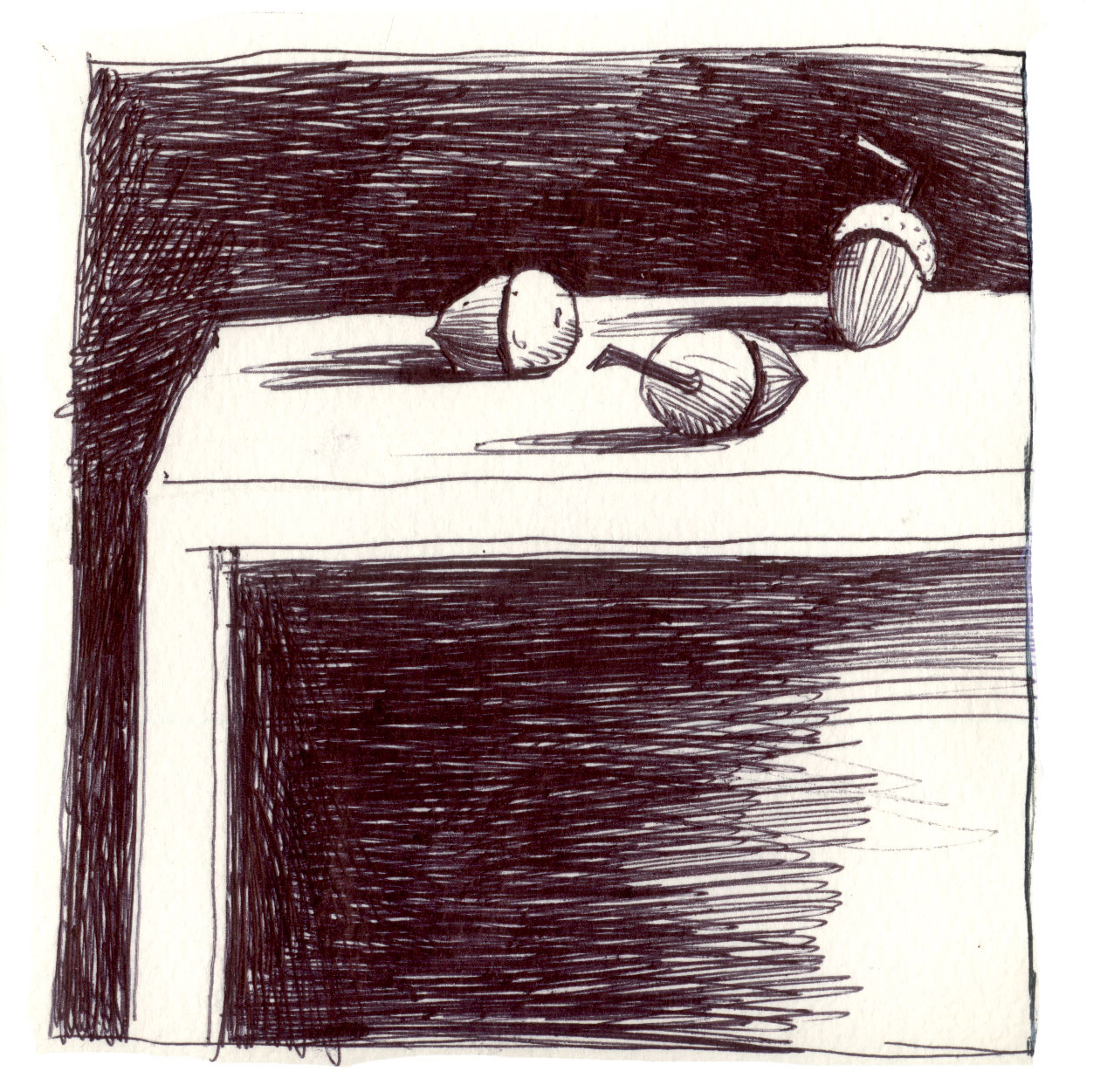
According to Wikipedia, The Man Who Planted Trees is Jean Giono’s best-known work outside France. Maybe because it was first published in English even though originally written in French. I myself read it in Spanish, in a form of a precious little hardback by Duomo Ediciones with illustrations by Simona Mulazzani.
A deeply touching story that might make you quit your job and dedicate the rest of your life to something useful, like planting acorns. The passage about the state functionaries paying visit to Elzéard Bouffier in order to protect the “natural forest” is priceless.
Rather fittingly, I thought, at the end of the book there was a note:
Este libro está impreso con el sol. La energía que ha hecho posible su impresión procede exclusivamente de paneles solares. Grafica Veneta es la primera imprenta en el mundo que no utiliza carbón.
Thursday, 11 August 2022
An American in Paris
a film by Vincente Minnelli
music by George Gershwin
music by George Gershwin
Another 1951 classic, starring Gene Kelly, Leslie Caron, Oscar Levant — man, this guy really could play piano! —, Nina Foch and Georges Guétary. And, of course, Gershwin’s music. Who could ask for anything more? Personally, I could do with a little less tap dance.
Check this out:
According to Leslie Caron in a 2009 interview on Paul O’Grady’s interview show the film ran into controversy with the Hays Office over part of her dance sequence with a chair; the censor viewing the scene called it “sexually provocative”, which surprised Caron, who answered “What can you do with a chair?”
Friday, 4 February 2022
Fragmentos de feminidad
by Olivier Pont
coloured by Laurence Croix
translated by Ana Isabel Pérez Ocaña
coloured by Laurence Croix
translated by Ana Isabel Pérez Ocaña
Not exactly a graphic novel but rather a collection of seven graphic short stories, each named after its protagonist: Chloe, Mathilde, Alison, Sylvia, Faith, Elikya and Fleur. The story of Faith touched me the most; and Fleur provided the well-needed happy end for the whole book.
Tuesday, 25 January 2022
La fin du bal / Il volo interrotto / Прерванный полёт
a song by Vladimir Vysotsky
French lyrics by Maxime Le Forestier
Italian lyrics by Sergio Secondiano Sacchi
French lyrics by Maxime Le Forestier
Italian lyrics by Sergio Secondiano Sacchi
Unbelievably, until now I was not aware of this version sung by the author in French.
The (Russian-language) original was composed by Vysotsky for the 1975 sci-fi drama The Flight of Mr. McKinley (Бегство мистера Мак-Кинли) but was left out of the movie. The widely accepted name Прерванный полёт appears to be a back-translation of Le Vol Arrêté, the title of the song on the 1977 French LP Vladimir Vissotsky and the 1981 (posthumous) album Le Vol Arrêté; Vysotsky himself used to announce the song as Недолюбил. The phrase “прерванный полёт” does not appear anywhere in the lyrics.
According to Russian Wikipedia, the author was not quite satisfied with Le Forestier’s translation. (Yes it’s far from being true to the letter; for one, the words “la fin du bal” do not correspond to anything in the Russian text.) But here it is, arguably the most popular Vysotsky song among the Francophone performers. Its Italian counterpart, Il volo interrotto, translated by Sergio Secondiano Sacchi, has been interpreted by the likes of Franchesco Guccini and Eugenio Finardi. I’m sure Vladimir Semyonovich would approve of this wonderful “acquired in translation” bit:
Он начал робко — с ноты «до», |
Ed intonò la voce in “la” |
It probably won’t surprise you that my favourite interpretations of the Russian original is the one by Alexander Gradsky who sadly passed away last year.
Sunday, 16 January 2022
Au revoir là-haut
a film by Albert Dupontel
I missed the beginning of this period drama shown on the telly last night, but what I’ve seen was great. Slightly shorter than Un long dimanche de fiançailles (is it a pun?), it shares with the latter a number of themes and two good actors. The costume design by Mimi Lempicka is stunning. Highly recommended.
Wednesday, 25 March 2020
Miles en París
by Salva Rubio and Sagar

One day in April 1949, a 22-year-old trumpeter called Miles Davis received an unexpected phone call. His friend Kenny Clarke invited him to play at the Paris International Jazz Festival. After initial reluctance Miles, who had never been abroad before, accepted the invitation. In Paris he met the actress and singer Juliette Gréco and... Did I say too much?
How come that two Spaniards authored and published this book first in French, as Miles et Juliette, and the Spanish version second, I wonder. The dialogue in the “original” must be in Franglais because in Miles en París it is in Spanglish, or even Franglañol. So what?

Monday, 8 April 2019
Pascin
by Joann Sfar
translated by Ana Millán


translated by Ana Millán
How come I never heard of Julius Mordecai Pincas, aka Jules Pascin (1885—1930), the “Prince of Montparnasse”, before? Nor of Chaim Soutine, for that matter. One day, going out of the library, I took a book from the shelf (of the new or recently retuned items), randomly opened it and saw this (except it was in Spanish):

Which is surprising on itself, given that almost every other page shows its protagonist accompanied by ladies in varying degrees of nudity, the painter’s favourite subject.
When I went to see Lulu femme nue in Monopol last week, I had the book with me. There was still about ten minutes until the start of the movie, so I just sat there browsing it. Three French-speaking ladies made their way to the row before me. One of them turned around and, with charming directness, addressed her companions: “Regardez, Pascin!” — luckily, they ignored that, it wouldn’t be very comfortable if all of them indeed started looking. From which I conclude that the comic must be famous in France.
I would have come across the name of Pascin if I ever read A Moveable Feast, which I didn’t. As it happened, I first learned about Pascin meeting Hemingway in Paris from Sfar’s comic (pp. 181—182), then I found a blog post describing this very encounter (from where I borrowed two pages reproduced below), and then I finally moved on to Hemingway’s own account. I find Sfar’s version funnier, not to mention shorter.


Another celebrity encounter, between Pascin and Claude McKay, takes place on pp. 163—165, and the dialogue, at least in the Spanish version (I’m sure it’s the same in the original French edition), goes on in English. (During this dialogue, Pascin teaches McKay to curse in Yiddish.) I bet the whole thing loses something in English translation.
The author takes care to note that the events decribed in the comic are fictitious and it is not the biography of real Julius Pincas. The book consists of the seven episodes originally published between 1997 and 1999 in the comic magazine Lapin. I understand that they appear in the book in order of publication and, as such, indeed do not present any continuous narrative. But who cares. I’d like to see the follow-up.
Sunday, 5 March 2017
Paris, Encore!
by Zaz
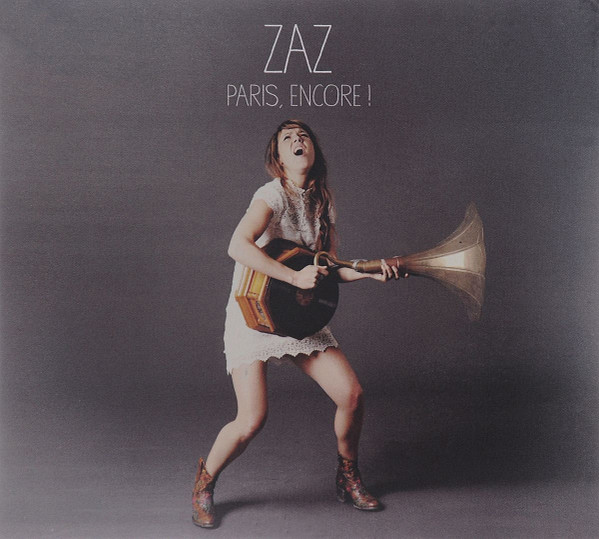
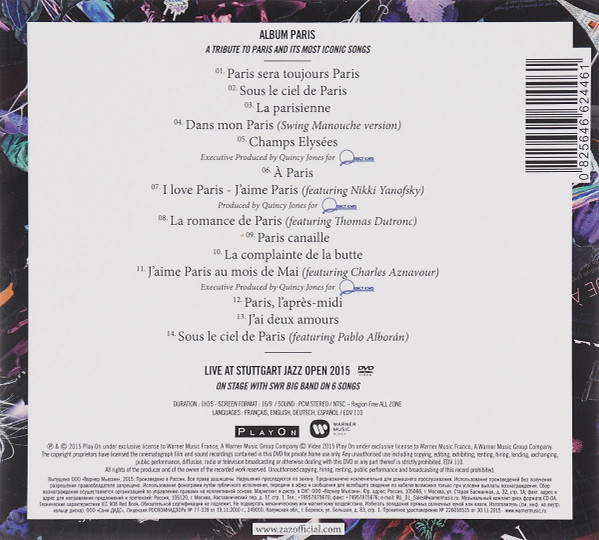
A French chanteuse, cheerfully singing covers of famous songs about Paris. Sounds dreadful, you’d think. Like I did. Now when Ms Geffroy sings not one or two but a whole album of such covers and, on top of that, names it Paris, it feels — and sounds — like the most natural thing in the world. I’ll tell you more: Paris by Zaz (not to be confused with Parises by Paris, Supertramp, The Cure, Paris Hilton, etc.) is a definitive one. It should have been named The Paris. I say, one has to wait another fifty years before undertaking anything as Parisian again.
The audio CD of Paris, Encore! is the same as Paris plus a bonus track, yet another beautiful version of Sous le ciel de Paris featuring Pablo Alborán. The DVD is a live recording of Zaz performing at Stuttgart Jazz Open 2015, with her own band and, on the last six tracks, with SWR Big Band, playing mostly Paris material but also a few hits from the singer’s debut album. The musicians and music are excellent; the production and sound quality, considering that it is 2015... well, will do. A duet of Zaz and Rhiannon Giddens (of Carolina Chocolate Drops) is the absolute highlight, I’d love to hear more of this pair.
Wednesday, 19 August 2015
El increíble viaje del faquir que se quedó atrapado en un armario de Ikea
by Romain Puértolas
translated by Romain Puértolas and Patricia Sierra Gutiérrez


translated by Romain Puértolas and Patricia Sierra Gutiérrez
I thought Amor en tiempos de Ikea had exhausted all possible IKEA-related jokes in 30 minutes. Then I saw this book in the library and realised that I ain’t heard nothing yet.
L’Extraordinaire Voyage du fakir qui était resté coincé dans une armoire Ikea hit the bookshelves in 2013 and, apparently, became an international “soon to be a major motion picture” bestseller I never heard before. It was also published in English as The Extraordinary Journey of the Fakir who got Trapped in an Ikea Wardrobe, but I happened to come across the Spanish version. The author shares translation credit with his wife Patricia Sierra Gutiérrez, and I think it’s a good translation.
The protagonist, Dhjamal Mekhan Dooyeghas (pronounced “Llámame cuando llegues” — the book is full of these pronunciation tips), aka Ajatashatru Lavash Patel in original French, reminded me of The Great Combinator Ostap-Suleyman-Berta-Maria-Bender-bey, albeit lacking the latter’s organisational talents. At some point, rather predictably, he comes to realise that being a (rich) writer in Paris is better than to be a (poor) fakir in India. With this moral transformation of a professional swindler to a honest and generous person Dhjamal started to lose his charm for me. Luckily, he still needs his fakir skills to survive, and in the (happy, happy) end it does not look like he’s going to abandon them altogether. This restores my faith in humanity.
Y así es como he acabado en su baúl, señora — concluyó Dhjamal con media sonrisa.
Desaparecer en el fondo de una maleta en Barcelona para reaparecer en Roma era, de lejos, el mejor truco de magia que había hecho en su vida. Houdini no lo hubiera hecho mejor.
La bella joven de ojos verdes y pelo color avellana lo miraba fijamente, entre sorprendida, escéptica y asustada, lo cual era preferible a la crisis de histeria que la había asaltado cuando lo había descubierto al abrir el baúl. Dejó en su sitio la lámpara de la mesilla de noche que había cogido como arma. La historia no parecía tener mucho sentido, cierto, pero había algo, algo verdadero, algo sincero, en el tono de voz del hombre. Además, ¿cómo podría haberse inventado una mentira tan grande?
Saturday, 29 November 2014
The Buttshakers live
With so much free live music going on in Santander, you must be really good if you want people to shell out for the tickets. Well when I first saw the poster advertising The Buttshakers, I instantly knew that I have to see them. A band with a name like that simply has to be good. “Good, old fashioned THE”, in words of Jimmy Rabbitte. Even so, I did look them up on YouTube (yes!!! I knew it!!!) before heading to El Almacén de Little Bobby to buy my own ticket. In advance. I am that organised.

The band were organised too. They even started on time. OK quarter an hour late, but who would seriously expect the show to begin at 20:30? Ridiculous. And what an absolutely fabulous, ground-breaking, butt-shaking show it was. All way down from Lyon, France, The Buttshakers delivered 110% of the promised “hot, wet and raw” rhythm and blues and soul. Their frontwoman is a beautiful, charismatic and super-energetic Ciara Thompson from St. Louis, Missouri. She started to dance the minute she entered the room, lost her shoes on the second song, and by the end of the concert even made some santanderinos to shake their butts. (Not me though. I was lucky to find a good seat and spent all my time sitting there, probably open-mouthed.) At one point, she sang from the bar top. Imagine what she could do in Andalucia! And what a voice she has. Yes, THE voice. The voice soul should be sung with. They also had shown off their jazzy side playing a couple of instrumentals while Ciara was dancing away. I was especially impressed by duelling trombone (Guilhem Parguel) and baritone sax (Jérôme Bartolome). It’s a real stuff, man, I am telling you. Catch them live if you can.
Next month, The Buttshakers tour take Germany.
Friday, 10 December 2010
Zaz
by Zaz

I, for once, want to say something good about Ryanair. And what is that? They have really informative flight magazine. (Unfortunately, nowadays you have to ask them to hand you one. And then they have a cheek to collect them back. Doesn’t it say “Your Free Copy” on the cover?) Last time I was flying with them, I read a feature about Paris. And there (wait, let me consult my free copy... here: Ryanair Magazine 2010, issue 44, page 55), in section “On the Ground”, they recommend Zaz, the album by Zaz (never heard of her before), “the 21st century’s Piaf”, as one of five things one must buy in Paris. No offence but the other four did not excite me at all.
When back to reliable internet connection, I went to check this album on the web. Wow. (Or should I say, Ouah?) It is wonderfully upbeat and happy album. My favourites, for now, are Dans Ma Rue, Le Long De La Route, Les Passants and Ni Oui Ni Non but there are no dull songs at all. And, with all due respect to the French cultural icon, I daresay Zaz sings better than Piaf.
Friday, 2 July 2010
Fauteuils d’orchestre
a film by Danièle Thompson
I did not know about Mozart connection of Twinkle Twinkle Little Star until I watched Orchestra Seats. Nor did its charming heroine, Jessica (Cécile De France) until Jean-Francois Lefort (Albert Dupontel) told her.
If it has to be called a “romantic comedy”, so be it. You won’t be exactly roaring with laughter but it’s guaranteed to make you smile and feel good in the end. There is no violence or anything sinister whatsoever (now how on earth did they manage to do that?) We are never to hear the story of Jessica’s life before she came to Paris, not in any details anyway. Jessica may be too sweet and optimistic for everyone’s taste, but she is never over the top. Even the love scene between Jessica and Frédéric (Christopher Thompson) is brief and understated. The actors are all great. My favourite character is Claudie (Dani), the retiring concierge lip-synching to her favourite chansonniers, some of whom she claims to know intimately. And — did I mention it before? — it’s Paris! How is that for a cliché?
The film is dedicated to Suzanne Flon, who played Jessica’s grandma, her last cinema role.
Subscribe to:
Posts (Atom)


