Showing posts with label novel. Show all posts

Saturday, 22 August 2026

The Girl on the Train

by Paula Hawkins

Just like it was the case with Rosalía, I learned about this book from one of my students, who was reading it at the time, during a “one-to-one” session.

“Would you recommend it?”, I asked. “I don’t know yet”, she said, “I’ve only started. I started reading in on the train while travelling here. But I can’t put it down.”

Eight years after that conversation, I finally read it. Probably after everybody else read it, but still. I can confirm its utter unputdownability. (Why, it kept Stephen King up most of the night, or so he says.) And not only that. It’s a great story, exceptionally well written, deliciously noir with quite a few twists, including that of a corkscrew. And how couldn’t you fall in love with its unreliable, alcoholic, mentally unstable, etc. heroine, the titular girl on the train?

Some fun facts about geography of the novel. Both Ashbury and Witney are in Oxfordshire. (There are a few more Ashburys but they are even further away from London.) There are no trains serving either of them. So no way to commute to Euston in “one hour and one minute”. Ashbury, Oxfordshire is a historic village dating from the 9th century with about 500 inhabitants, not “a 1960s new town, spreading like a tumour over the heart of Buckinghamshire”. Witney is a market town, not a “village-on-the-edge-of-London”. The author studied at Oxford and perhaps wanted to transplant these names closer to the capital. The other mentioned places, such as Holkham, seem to be realistically located.

Saturday, 13 July 2013

Morning

I know without looking at a clock that it is somewhere between seven forty-five and eight fifteen. I know, from the quality of the light, from the sounds of the street outside my window, from the sound of Cathy vacuuming the hallway right outside my room. Cathy gets up early to clean the house every Saturday, no matter what. It could be her birthday, it could be the morning of the Rapture — Cathy will get up early on Saturday to clean. She says it’s cathartic, it sets her up for a good weekend, and because she cleans the house aerobically, it means she doesn’t have to go to the gym.
It doesn’t really bother me, this early-morning vacuuming, because I wouldn’t be asleep anyway. I cannot sleep in the mornings; I cannot snooze peacefully until midday. I wake abruptly, my breath jagged and heart racing, my mouth stale, and I know immediately that’s it. I’m awake. The more I want to be oblivious, the less I can be. Life and light will not let me be. I lie there, listening to the sound of Cathy’s urgent, cheerful busyness, and I think about the clothes on the side of the railway line and about Jess kissing her lover in the morning sunshine.
The day stretches out in front of me, not a minute of it filled.
I could go to the farmer’s market on the Broad; I could buy venison and pancetta and spend the day cooking.
I could sit on the sofa with a cup of tea and Saturday Kitchen on TV.
I could go to the gym.
I could rewrite my CV.
I could wait for Cathy to leave the house, go to the off-licence and buy two bottles of Sauvignon Blanc.

Wednesday, 22 July 2026

Before the Coffee Gets Cold

by Toshikazu Kawaguchi
translated by Geoffrey Trousselot

According to Wikipedia, this short novel spawned no less than five sequels. It’s difficult to say why, as the first book is not particularly well-written. The clumsy translation does not help:

‘OK then, here you go,’ Kumi said, and she quickly pulled out two notes from her purse.
Kei took the notes and counted them efficiently. ‘Receiving eleven thousand yen,’ she said, and again she punched the keys of the cash register.

How efficient you have to be to count two banknotes?

But I suspect even the best translation wouldn’t cure the novel of its annoying verbosity. And do we really need to know exactly how its characters are dressed each time they are mentioned? Now if the text was reduced to a twenty-page short story, I most probably would enjoy it. I find the idea of being able to travel to the past knowing that, no matter how hard you try, you couldn’t change it, strangely comforting.

Wednesday, 17 December 2025

The Young Lions

a film by Edward Dmytryk
based on a novel by Irwin Shaw

This 1958 film may be (considered) a classic and an epic but it didn’t age well. Maybe it wasn’t that good to start with. Marlon Brando as a blonde German officer speaking (even to other Germans) in English with fake German accent is an embarrassment. Ditto the other protagonists. The only believable character, in my view, is cool and cynical Frau Hardenberg portrayed by May Britt.

The Young Lions (El baile de los malditos) was shown as part of the cycle 90 años de la 20th Century Fox organised by Asociación de Cine Vértigo.

Wednesday, 29 October 2025

An Artist of the Floating World

by Kazuo Ishiguro

Ishiguro’s second novel is not a follow-up, but is in a similar vein to A Pale View of Hills. The narrator, a retired painter Ono, could be considered a development of Ogata-San. The title, as I just learned, is based on the literal translation of Ukiyo-e, “picture of the floating world”. Once again, the characters seem to be permanently embarrassed about practically everything.

This childlike aspect of Shintaro has frequently been a source of entertainment for Mrs Kawakami, who has a somewhat wicked side to her. One night recently, for instance, during a rainstorm, Shintaro had come running into the little bar and begun squeezing his cap out over the doormat.
‘Really, Shintaro-san!’ Mrs Kawakami had shouted at him. ‘What terrible manners!’
At this, Shintaro had looked up in great distress, as though indeed he had committed an outrageous offence. He had then begun to apologize profusely, thus leading Mrs Kawakami on further.
‘I’ve never seen such manners, Shintaro-san. You seem to have no respect for me at all.’
‘Now stop this, Obasan,’ I had appealed to her after a while. ‘That’s enough, tell him you’re just joking.’
‘Joking? I’m hardly joking. The height of bad manners.’
And so it had gone on, until Shintaro had become quite pitiful to watch. But then again, on other occasions, Shintaro will be convinced he is being teased when in fact he is being spoken to quite earnestly. There was the time he had put Mrs Kawakami in difficulties by declaring cheerfully of a general who had just been executed as a war criminal: ‘I’ve always admired that man since I was a boy. I wonder what he’s up to now. Retired, no doubt.’
Some new customers had been present that night and had looked at him disapprovingly. When Mrs Kawakami, concerned for her trade, had gone to him and told him quietly of the general’s fate, Shintaro had burst out laughing.
‘Really, Obasan,’ he had said loudly. ‘Some of your jokes are quite extreme.’

Tuesday, 26 August 2025

The Unconsoled

by Kazuo Ishiguro

This is the third and so far the most difficult novel of Ishiguro I read. It took me about six weeks to finish it.

If comic episodes and repetitive dialogues of A Pale View of Hills are charming, here they take most of the space — and become tiresome. Was it really necessary to include everything the most mediocre characters say? Ishiguro himself provides great examples of how to deal with that: “For a while he went on uttering such empty phrases” or “continued in this vein for a while longer, but I had stopped listening”. The book ended just as I started to enjoy it. Bother.

The Unconsoled was published 30 years ago and, according to Wikipedia, was not received very well at the time. Now it is considered to be a masterpiece. I hope to re-read it a few years from now, perhaps even at a slower pace.

As I started to read the book during the Women’s Euro 2025, which I followed closely, the story of Number Nine — a favourite toy football player of Boris, the protagonist’s stepson — resonated with me.

‘Number Nine’ belonged to Boris’s very favourite team, and was by far the most gifted of the players. However, for all his immense skill, Number Nine was a highly moody personality. His position in the team was somewhere in midfield, but often, for long stretches of a match, he would sulk in some obscure part of the pitch, apparently oblivious of the fact that his team was losing badly. Sometimes, Number Nine would continue in this lethargic manner for over an hour, so that his team would go four, five, six goals down, and the commentator — for indeed there was a commentator — would say in a mystified voice: ‘Number Nine so far just hasn’t found his form. I don’t quite know what’s wrong.’ Then, perhaps with twenty minutes remaining, Number Nine would finally give a glimpse of his true ability, pulling back a goal for his side with some fine piece of skill. ‘That’s more like it!’ the commentator would exclaim. ‘At last, Number Nine shows what he can do!’ From that moment on, Number Nine’s form would grow steadily stronger, until before long he would be scoring one goal after another, and the opposing team would be concentrating entirely on preventing at virtually any cost Number Nine receiving the ball. But sooner or later he would, and then, no matter how many opponents stood between him and the goalmouth, he would manage to find a way through to score. Soon the inevitability of the outcome once he had received the ball was such that the commentator would say: ‘It’s a goal,’ in tones of resigned admiration, not when the ball actually went into the net, but at the moment Number Nine first gained possession — even if this occurred deep within his own half.

Incidentally, Spain’s own Number Nine, Esther González, with four goals, won the Top Scorer award of the tournament.

Saturday, 17 May 2025

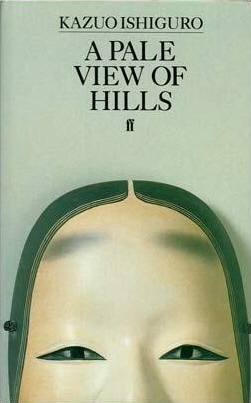
A Pale View of Hills

by Kazuo Ishiguro

Upon finishing Ishiguro’s last novel, I borrowed, as it turned out, his first.

A Pale View of Hills is very different from Klara and the Sun but equally enjoyable. The narrator, Etsuko, moves between “now” (unspecified year) of England and “then” (unspecified year) of post-war Nagasaki. The dialogues in “then” Japan are invariably repetitive and are bound to get on some reader’s nerves. I loved them. They add, dare I say, authenticity. (I have no clue how they talked in post-war Japan but, in general, people repeat themselves all the time.) Etsuko’s conversations with her father-in-law, Ogata-San, are the best.

A little later that morning, Ogata-San emerged from his room dressed in his jacket and tie.
“Are you going out, Father?” I asked.
“I thought I’d just pay a visit to Dr Endo.”
“Dr Endo?”
“Yes, I thought I’d go and see how he was keeping these days.”
“But you’re not going before lunch, are you?”
“I thought I’d better go quite soon,” he said, looking at his watch. “Endo lives a little way outside Nagasaki now. I’ll need to get a train.”
“Well, let me pack you a lunch-box, it won’t take a minute.”
“Why, thank you, Etsuko. In that case I’ll wait a few minutes. In fact, I was hoping you’d offer to pack me lunch.”
“Then you should have asked,” I said, getting to my feet. “You won’t always get what you want just by hinting like that, Father.”
“But I knew you’d pick me up correctly, Etsuko. I have faith in you.”
I went through to the kitchen, put on some sandals and stepped down to the tiled floor. A few minutes later, the partition slid open and Ogata-San appeared at the doorway. He seated himself at the threshold to watch me working.
“What is that you’re cooking me there?”
“Nothing much. Just left-overs from last night. At such short notice, you don’t deserve any better.”
“And yet you’ll manage to turn it into something quite appetizing, I’m sure. What’s that you’re doing with the egg? That’s not a left-over too, is it?”
“I’m adding an omelette. You’re very fortunate, Father, I’m in such a generous mood.”
“An omelette. You must teach me how to do that. Is it difficult?”
“Extremely difficult. It would be hopeless you trying to learn at this stage.”

Monday, 28 April 2025

Klara and the Sun

by Kazuo Ishiguro

I first spotted the name of Kazuo Ishiguro on the back cover of Homo Deus. I had no idea who he was, so I looked him up. Wow.

Next thing, I went to the library in search of his books. And there they were. I picked this one, read the first page and took it with me.

The mildly dystopian society of the novel is dystopian only mildly because it’s pretty much like the present, at least in the West. (Replace “lifted” with “priveleged”, “oblong” with “smartphone”, and “The Yard” with “nursing home”.) The protagonist, Klara the Artificial Friend, religiously follows the First Asimov’s Law — to the degree of self-sacrifice. And how do the humans repay her, the ungrateful monkeys they are? (Jessie the cowgirl of Toy Story springs to mind.)

...Manager placed a hand on my shoulder and said, in a quieter voice than before:
‘Let me tell you something, Klara. Children make promises all the time. They come to the window, they promise all kinds of things. They promise to come back, they ask you not to let anyone else take you away. It happens all the time. But more often than not, the child never comes back. Or worse, the child comes back and ignores the poor AF who’s waited, and instead chooses another. It’s just the way children are. You’ve been watching and learning so much, Klara. Well, here’s another lesson for you. Do you understand?’

I like the way Ishiguro writes. As far as I know, his other works are not narrated by intelligent gynoids, so I don’t expect to find this particular style there. Off to the library to check out the next novel.

Sunday, 19 January 2025

La clase de griego

by Han Kang
translated by Sunme Yoon

I never heard about this writer until she won last year’s Nobel Prize in Literature. I certainly didn’t expect to see any of her books in our library. And there it was, on the New Arrivals shelf by the entrance to the reading room. I picked it up to leaf through. Suddenly, a middle-aged man, who also was browsing next to me, said: “It’s a good book. Take it.”
“Have you read it?” I asked, a bit suspiciously. I am not used to strangers giving me reading advice.
“Yes. It’s great.”

And he was absolutely right. It’s a beautiful novel.

I read Greek Lessons in Spanish translation. I hope the English one is equally good.

Saturday, 17 August 2024

Record of a Spaceborn Few

by Becky Chambers

I enjoyed The Long Way to a Small, Angry Planet and A Closed and Common Orbit. With this sidequel of sorts, though, I was up to disappointment.

Like CCO, the novel is written as a series of short unnumbered chapters named after their (recurring) protagonists. So all of them are called either Eyas or Isabel or Kip or Sawyer or Tessa. Great for navigating. In the first half of the book, there is practically no connection between the five plotlines; also, no plotlines to speak about. It doesn’t help that all five characters are dull as ditchwater.

The language irritates me no end. The use of politically correct “xe/xyr” pronouns started grating on my sensory organs in the first two books already. Here, the abuse of monosyllabic vocabulary (cred, hex, hud, kick, mek, scrib, sim, vid, vox, etc.) makes the text ridiculously reminiscent of Joey’s “sup with the whack” classic — except it is meant to be serious. Every time a character says “stars” (Exodan equivalent of “heavens to Murgatroyd”), which happens roughly every other page, you’ll want to roll your eyes. As if this wasn’t enough, RSF will drain the life out of you with its endless moralising.

Let’s be fair: it is not all bad. The best bit is a chapter called Eyas where — guess who? — a woman called Eyas goes to one of the tryst clubs, which apparently are part of Exodan welfare system. I liked it. I think everybody would be better off if the author wrote a whole book just about that.

Monday, 1 July 2024

La vida anterior de los delfines

by Kirmen Uribe
translated by Kirmen Uribe and José María Isasi Urdangarín

This is the case of a book where I liked the opening paragraphs a hundred times more than the rest of it.

Según las creencias de los primeros vascos, quienes se enamoraban de las lamias, seres mitológicos de aspecto similar al de las sirenas, se convertían en delfines. Ese era el precio que debían pagar los amantes de las lamias por su atrevimiento: su transformación en una criatura marina de una apariencia opuesta a la humana, tan diferente como cabe imaginar e inmersa en un hábitat desconocido y alejado de la superficie terrestre. Un cambio radical que acontecía de la noche a la mañana, como el inicio de un viaje, quizá una odisea adversa, quizá una aventura favorable, en todo caso un viaje ajeno a cualquier rutina, como una expedición a un destino incierto. Lo que aguardaba a las personas reencarnadas en delfines nadie lo sabía, pero, fuera felicidad o melancolía, lo importante es que no había marcha atrás. El cambio era definitivo e irremediable.
Según me contó Nora, las lamias sabían comunicarse en su propio idioma. Naturalmente conocían el euskera, pero les gustaba inventarse palabras, convertir la lengua en un juego, como hacen los niños y niñas demasiado inteligentes cuando no encuentran en los diccionarios las palabras que reflejan lo que imaginan o lo que les sucede y crean su propio vocabulario. Así, llamaban izurdau («adelfinar») a enamorar a alguien; la definición de una metamorfosis — castigo o bendición — que convertía a hombres y mujeres en sus amantes marinos.

I read them and instantly got hooked. (Izurdau = adelfinar = “to dolphinise”, meaning “to fall in love with somebody”, how cool is that?) Upon reaching the end though, I felt disappointed, even deceived.

If the author confined himself to writing a novel about Rosika Schwimmer — that’s what he’s got a grant for! — that would be fine. If he wrote a book of short stories about his youth in the Basque Country, that would be fine too. Even describing his not-that-exciting but sometimes amusing adventures in New York would do. Making a mishmash of these things, however, or perhaps just commiting to paper a mishmash in his head, is not fine at all. Drawing parallels between Schwimmer and certain Kirmen Uribe... well... a bit ridiculous really. And nothing more was said about dolphins.

Tuesday, 18 June 2024

So Well Remembered

a film by Edward Dmytryk
based on a novel by James Hilton

An idealistic goodie George (John Mills) falls in love with Olivia (Martha Scott) who, surprise surprise, turns out to be a baddie. Bad daughter, bad mother, bad woman in general — fair play to her, in theory. The problem is, she sucks at being bad. Asking for hot milk instead of tea, what’s that? Annie (Beatrice Varley) saw through her in a trice. Scott and Richard Carlson stick out like two sore thumbs among the mostly British cast, the best of whom is Trevor Howard as George’s alcoholic doctor friend.

A flawed but engaging and well-crafted drama, So Well Remembered — oh, the irony! — was pretty much and inexplicably forgotten. I still don’t understand how come that the film reel disappeared after its first screening in 1947 to be unearthed in 2004 somewhere in Tennessee. With a budget of $1.5 million, it was quite expensive product at the time to have just one copy, right?

This film closed the James Hilton cycle by Asociación de Cine Vértigo.

Monday, 13 May 2024

Solo quería bailar

by Greta García
Скучно вам, серые? Щас я накапаю
Правду на смирные ваши мозги!

How come that just after watching Darling I went to the library and randomly picked up the book whose protagonist is, once again, a classical ballet dancer? Really, I am not that interested in ballet. Good news: turns out, the novel is not about ballet at all. It is about a classical ballet dancer turned terrorist — not a very successful one, much to her and my regret.

A little spoiler here.

Monday, 8 January 2024

Трудно быть богом / Hard to be a God

by Arkady and Boris Strugatsky
translated by Olena Bormashenko
foreword by Hari Kunzru
afterword by Boris Strugatsky

I first read «Трудно быть богом» in the mid-Seventies, by way of my brother who borrowed it from a classmate. He kept doing it every year till he finished the school. Later, the pattern repeated with his university mate, a lucky owner of a different edition. Naturally, I carried on re-reading the novel.

Even though literary-wise it’s not at the level of its predecessor, Escape Attempt, I loved it. Not as much  sci-fi as a swashbuckler, set in some mediaeval quasi-Hispanophone kingdom, both revolting and fascinating — light-years away from a desolate world of Saula. For me, Anton aka Don Rumata, “our man in Arkanar”, was an almost perfect hero: part Aramis, part Stierlitz. His best friend Baron Pampa was, of course, 100% Porthos. The immortal formula «не вижу, почему бы благородному дону не...», “I see no reason why a noble don shouldn’t...” (© Don Sera), became an integral part of our discourse, as it surely did for a major part of our generation. And the previous generation. And the following one.

I said “almost perfect” because with each reading the naïveté of the protagonist and his (incidentally, Russian-speaking) colleagues irritated me more and more. It’s as if they never read Escape Attempt.

Хорошо бы всё-таки ввести в моду нижнее бельё, подумал Румата. Однако естественным образом это можно было сделать только через женщин, а Румата и в этом отличался непозволительной для разведчика разборчивостью.
Насколько было проще с носовыми платками! На первом же балу Румата извлёк из-за обшлага изящный кружевной платочек и промакнул им губы. На следующем балу бравые гвардейцы уже вытирали потные лица большими и малыми кусками материи разных цветов, с вышивками и монограммами. А через месяц появились франты, носившие на согнутой руке целые простыни, концы которых элегантно волочились по полу.
It really would be good to bring underwear into style, thought Rumata. However, the only natural way to do so would involve the ladies, and in this respect Rumata happened to be unforgivably picky for an operative.
It had been so much simpler with the handkerchiefs! At his very first ball, Rumata extracted an elegant lace handkerchief from his sleeve and dabbed his lips with it. At the next ball, dashing guardsmen were already wiping their sweaty faces with pieces of embroidered and monogrammed cloth of various sizes and colors. And in a month, there was a spate of dandies sporting entire bedsheets draped over an arm, the tails of which dragged elegantly across the floor.

The story of the book didn’t end with its publication, or with lives of its authors. For instance, the novel quotes just the first line of the farewell sonnet of Zuren the Truthful: «Как лист увядший падает на душу» (“As a wilted leaf falls on my soul”). It was my late friend Sergey Valkov who told me about myriads of fan-versions of this poem*. Sergey himself wrote a song to the version of Kir Abramovich (Кир Абрамович).

Hard to Be a God was published in 1964. Is it still relevant? Why, very much so. If we ignore for a moment the world of triumphant communism, that is. I said, for a moment. Cutting to the chase: do I concur with Don Condor that our eagle Don Reba should have been — has to be — “removed”? Totally. Would it help? Rumata was not sure, neither am I. That would be a good start though. In any case, it’s not up to Rumatas but to the good citizens of Arkanar. I don’t hold my breath.

According to Wikipedia, the first English translation of Hard to be a God, by Wendayne Ackerman (1973), was made from a German one. Thanks to the Internet Archive, I was able to read the excellent 2014 translation by Olena Bormashenko. The afterword by Boris Strugatsky sheds some light on the history of the writing. How come that I didn’t know until now that Don Reba originally was to be named Don Rebia, a too transparent anagram of Beria?


* See, for example, here, here and here.

Wednesday, 27 December 2023

The Telling

by Ursula K. Le Guin
“We’ll be making love on a world nobody even knows the name of now, a thousand years from now!”

If this book was written by anybody else, it would likely be considered pretty good or at least promising. Compared though to the Earthsea cycle or, say, The Dispossessed, The Telling comes out as weak and, worse, unnecessary.

I liked the story. This is what it really should have been: a short story. As a novel, it doesn’t work for me. The characters are two-dimensional at best and one can see how it’s gonna end miles ahead. Cut, cut, cut. And yet... I feel that the subplot of Pao and Sutty could have been developed (was developing?) into something interesting. Something truly big. Alas, Ursula Le Guin is no longer with us so we’ll probably never know.

Pao had tried on Sutty’s old grey-and-silver saree once, to entertain Sutty while she was convalescing, but she said it felt too much like skirts, which of course she had been forced to wear in public all her life because of the Unist clothing laws, and she couldn’t get the trick of securing the top. “My tits are going to pop out!” she cried, and then, encouraging them to do so, had performed a remarkable version of what she called Indian classical dance all over the futons.

Sunday, 8 October 2023

Kudryavka (perra de pelo rizado)

by Xenia García

How would you react to the news that the one whom you wished to be dead — ojalá te mueras! — actually is dead? Your ex; your abuser; and, as you’ll learn a bit later, not only yours. So?

I am one of those who judges a book by its cover, and the cover of this one, let’s be honest, is not the best. The only reason I took it from the shelf in the library was a word on its cover. No, I didn’t know that Kudryavka (Кудрявка), “Curly”, was the original name of Laika. Poor Laika. The book is not really about the dog, but I read a couple of pages and got hooked.

Xenia García’s debut novel is not an easy reading. It asks many questions; no answers are provided. It may keep you awake in the middle of the night. Also, it’s extremely well written. I look forward to read more from her.

La primera vez que te vi, acabé bailando desnuda bajo la lluvia. Fuera diluviaba, diluvia, pero nosotros nos resguardamos en el Citroën gris de tu padre donde muy pronto arañaremos nuestras horas y tú te harás río. Hay mañanas en las que soy río bajo la tierra, me dijiste, me dices, me dirás luego, me dirás siempre, aunque no esa primera vez, de esa primera vez solo recuerdo un aguacero luminoso tras los cristales empañados cuyo único objetivo fue hacer de nuestra primera vez el relato de nuestra primera vez, ese que recrearemos en cada ocasión a lo largo de nuestro tiempo juntos, engalanándolo con detalles de los que ni tú ni yo estamos seguros, porque contar es vivir dos veces, me dijiste una noche de tormenta en la que comenzamos a ser nostalgia de lo que fuimos.

Wednesday, 16 August 2023

Piranesi

by Susanna Clarke
‘It’s all in the book I wrote. I don’t suppose you happen to have read it?’
‘No, sir.’
‘Pity. It’s terribly good. You’d like it.’
Susanna Clarke, Piranesi

It took ten years for Susanna Clarke to write her debut masterpiece. Another sixteen years passed before she published her second novel. And it was totally worth the wait. Because, you see, Ms Clarke has written a book that’s even better than Jonathan Strange & Mr Norrell. That’s what I call quality.

I don’t think the sixteen year gap was deliberate but the number 16 seems to be important to the author. As in the name of one of the characters. Or the number of etchings in Imaginary Prisons by Giovanni Battista Piranesi (2nd edition; the first edition contained 14). Anyway, it’s a good number.

‘I was the greatest scholar of my generation. Perhaps of any generation. I theorised that this ...’ He opened his hands in a gesture intended to indicate the Hall, the House, Everything. ‘ ... existed. And it does. I theorised that there was a way to get here. And there is. And I came here and I sent others here. I kept everything secret. And I swore the others to secrecy too. I’ve never been very interested in what you might call morality, but I drew the line at bringing about the collapse of civilisation. Perhaps that was wrong. I don’t know. I do have a rather sentimental streak.’

Monday, 24 July 2023

La Isla del Doctor Schubert

by Karina Sainz Borgo
illustrated by Natàlia Pàmies

Do we have to compare the writer’s style with that of others? One can say It’s tempting to say I was about to say that Karina Sainz Borgo writes as concisely as Borges and as poetically as Márquez... But no, that would be denying the author her own style. I don’t know how proficient she is in Dragon but sometimes she writes in what must be close to the tongue of true mages, in Le Guin’s sense*. I say “sometimes”, for the book published entirely in that language won’t be readable by most humans. Sainz Borgo is well aware of it. In fact, this novel (novella, fable, chronicle, whatever you call it) refers to another book called La isla del doctor Schubert, the real one:

La intérprete dejó por escrito la vida del navegante educado por un centauro, el último secesionista berlinés, expedicionario y cirujano que zarpó sin argonautas de un portal de la calle Lagasca. Encuadernada en silencio, La isla del doctor Schubert es la bitácora de un paraíso... para quienes consiguen soportarlo. Sus páginas están escritas contra el viento, y si los renglones a veces se quiebran es porque la prosa se marea cuando alguien la recita en tacones.

So it is not magical realism: it is magic, with no need for realism whatsoever. Doctor Schubert himself, ex-surgeon of the Kaiser, appears to be a nice guy, a powerful if a bit absent-minded wizard à la Magician from An Ordinary Miracle. And the story of two Juanas is a pure genius.

La isla del doctor Schubert is not especially difficult reading but it is intense. It took me about a month to finish the book — every evening I could read no more than one chapter. That’s magic for you. Be warned.

Al tercer día de su llegada a la capital alemana, el doctor Schubert halló una nota manuscrita en su buzón que alertaba sobre la desaparición del retrato que pudo pasar por un Modigliani. Cuando subió para comprobar si era cierto lo que afirmaba ese papel, encontró un trozo de pared limpia que señalaba su ausencia. Desorientado y confuso, convocó al jurado de la Secesión, pero todos habían muerto tras su última visita.
🐉
Tras sorber la primera cucharada, los hombres más fuertes de la isla se desplomaron como naipes. Despertaron confusos, con la mente en blanco. El bebedizo había borrado los tatuajes y las arrugas que surcaban sus pieles e hizo retroceder sus recuerdos. Con el paso de las semanas, perdieron los dientes cubiertos de sarro y en su lugar renacieron otros de leche. De su rostro áspero y barbudo una piel lisa e inédita. El doctor Schubert intentó perfeccionar su receta durante treinta cenas más.
🐉
El doctor Schubert suele perdonar la vida a los pasajeros de los barcos de recreo: criaturas alimentadas con col agria que una vez al año viajan por el mundo convirtiéndolo en un lugar peor. Justamente porque jamás aprenden de sus errores, quiso diseñar para ellos un castigo ejemplar, pero le fallaba la concentración.
🐉


* Speaking of dragons: I didn’t know until now that there are only two surviving artifacts featuring the phrase “hic svnt dracones”. Apparently, mediaeval cartographers preferred more reasonable if a tad pedestrian “hic svnt leones”. Another day, another bit of knowledge. In any case, dragons were not the top of Doctor Schubert’s concerns.
“The dragons do not dream. They are dreams. They do not work magic: it is their substance, their being. They do not do; they are.” — Ursula K. Le Guin, The Farthest Shore.

Monday, 19 June 2023

Fair Play

by Tove Jansson
translated by Thomas Teal
introduction by Ali Smith

Not much is going on in this short book (subtitled “a novel” but more like a short story collection), and at the same time a lot is going on. Mari and Jonna — quite obviously based on Jansson herself and her partner, Tuulikki Pietilä — are two artists in their seventies who live on a small island. Quite apart from their creative work, they are busy letting out, after all these years together, some things about their mothers (One Time in June, Fog) and fathers (Viktoria); getting jealous (Jonna’s Pupil, Stars); and starting new friendships (In The Great City of Phoenix). Wise, touching and at times hilarious. Love isn’t mentioned often but it’s there, all over the place.

The opening and closing chapters, Changing Pictures and The Letter, nicely bookend the collection; the rest could be (re)read in any order.

He leaped up and began striding back and forth across the room with long, almost dancing steps. “No, say nothing. What is it I have found? I have found a glass shard of what I call the Finnish legend, a shard of a clumsy fairy tale, and I have made this glass shard sparkle like a diamond! Is there any more tea?”
“Not at the moment,” Mari replied rather coldly.
“You should use a samovar.”
Mari filled the saucepan and turned on the hotplate. “It will take a while,” she said.
Wladyslaw said, “I don’t like your tone.”
Wladyslaw
“But you don’t have to get meals for her, I hope.”
“No, no, I told you. Just coffee.”
Once, when Mari went over to Jonna’s on the wrong day to borrow a pair of pliers, she walked right into a coffee break. There were two kinds of salad, Camembert, and small pasties. And the beef that Mari and Jonna were supposed to have the next day had been cut into elegant strips and decorated with parsley. On top of it all, Jonna had lit a candle on the table. They all had coffee. Demonstratively, Mari ate nothing.
Jonna’s Pupil
Jonna said, “I’m not talking about your father. I’m talking about mine. He used to tell us about his trips. You never knew what he was making up and what really happened.”
“Even better,” Mari said.
“No, wait... They were awful, terrifying things, including storms, although he’d never been to sea.”
“But that can make them even better,” Mari said.
“You’re interrupting. And when he was talked out and didn’t know how to end it, he’d just say, ‘And then it started to rain and everyone went home.’”
“Excellent,” Mari said. “Wonderful. Endings can be really hard.”
Viktoria

Friday, 11 November 2022

Dos vidas

by Emanuele Trevi
translated by Juan Manuel Salmerón Arjona

From an Italian writer I never heard about comes this homage to his friends, two other Italian writers I also never heard about. It may not sound terribly exciting, but the book it totally worth reading. For those who hates biographies: it’s not a biography. (Ditto for those who loves biographies.) A memoir? An essay? A novel? Who cares? I got intrigued with the protagonists, Rocco Carbone and Pia Pera — no, these are not made-up names. Especially with the latter, who translated to Italian works of Pushkin, Lermontov, Chekhov and even protopope Avvakum, among others, and whose Lo’s Diary is now on my to-read (when?!) list.

Tendría que haberme apresurado a tomar notas, a retener algo antes de que fuera demasiado tarde. Como flores de manzano que la brisa se lleva, también los requerdos de las personas a las que conocimos tan bien que la costumbre se volvió un reflejo condicionado vuelan y se alejan con una rapidez inconcebible. Pensamos que hemos acumulado muchos, que son tan numerosos y vívidos que no se extinguirán nunca, y de pronto vemos que no nos queda en la mano más que un revoloteo de imágenes inciertas y fugitivas. Formas de memoria tan insignificantes y menudas que equivalen al olvido.

Friday, 1 April 2022

El viaje de las palabras

by Clara Usón

“Did you know that Chekhov had a pet mongoose named Svoloch?”, asked Tamara one day.

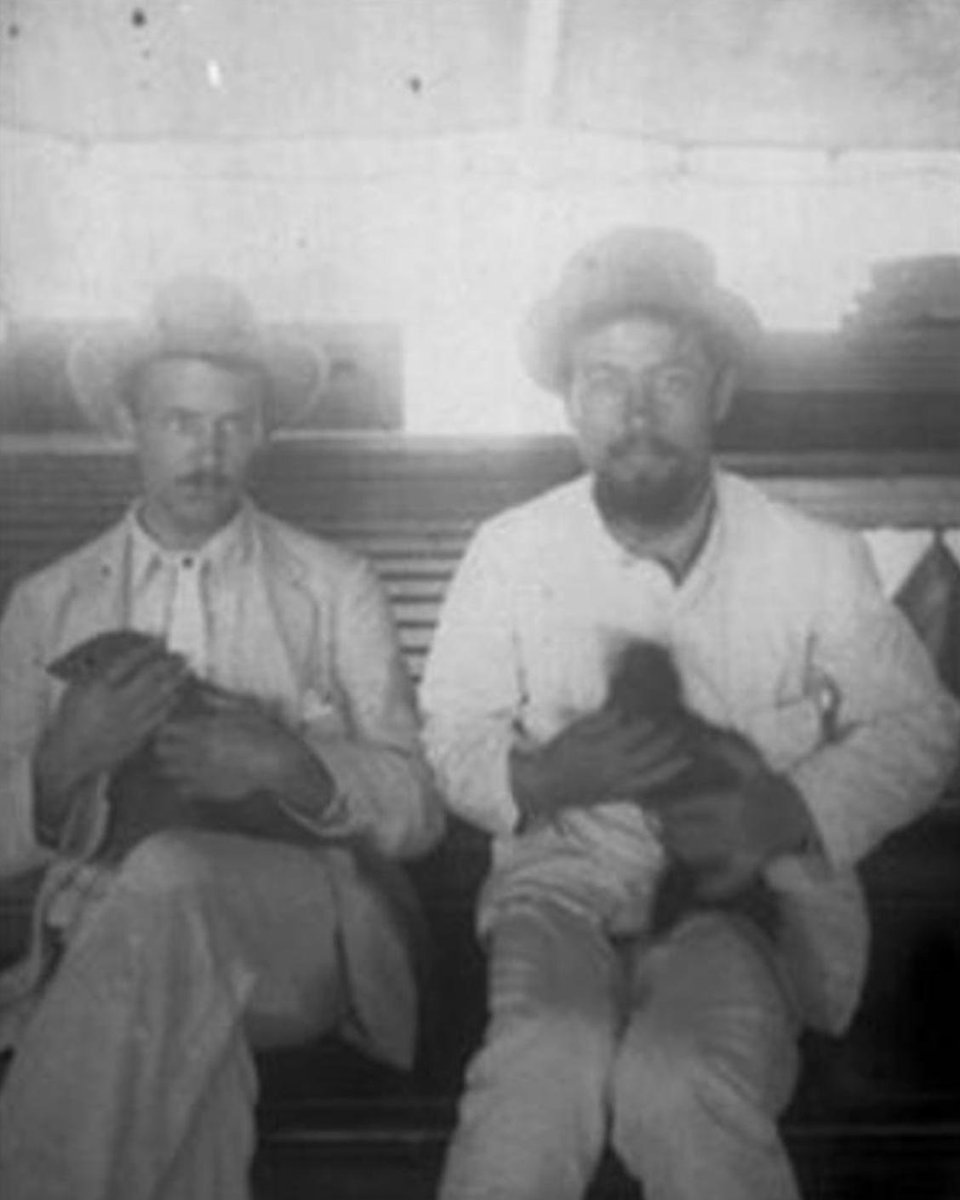
No, I didn’t. The whole story sounded just like one of those spoof literary anecdotes attributed to Kharms: “Once, when travelling in Ceylon, Chekhov bought himself a mongoose that he christened Svoloch”. A quick Internet search brought numerous confirmations of this factoid, always accompanied by the same grainy photograph: that of Chekhov and another guy, said to be midshipman Glinka, sitting on a bench and petting a rat-like creature each. One does not have to own a mongoose to take a photo like that.

OK, heard, researched (kind of), forgotten. Now I wouldn’t be surprised if Google started to spoil me with stories about Svoloch on regular basis. But no. The pesky mongoose appeared, à la Borgesian hrön, in a physical book that I already had with me.

Miss Lucía Almandoz (apparently, an alter ego of the author), licentiate in Spanish philology working on her Ph.D. thesis about Chekhov, is inexplicably transported from 1987 Barcelona to the writer’s estate of Melikhovo in 1892. There, as countess Lucía Rodolfovna Almandozovna, she finds herself vying for the famous writer’s attention with Lika Mizinova and another — clearly fake — countess, one Klara Mamuna; bathing in the river; treating the Chekhovs to caviar and salmon; singing Yellow Submarine; finding and losing a fictional lover; and yes, taking Svoloch for a walk.

As one could expect, meddling in the past brings about zero changes, desirable or otherwise: everything goes exactly as it was described in Chekhov’s biographies so familiar to Lucía. Well, she tried her best. I found it especially commendable that she attempted to prevent Anton Pavlovich from writing his world-famous and dead boring plays — maybe her motivation was a bit selfish, but still.

El viaje de las palabras was first published in 2005. A bit late then to point out a few word choices that are bound to grate on a Russian ear. I’ll do it anyway.

  • “¡Queridos Pavel Egorovich y Evgenia Iakovlevna, queridísimos Batiushka y Manushka...!” (p. 35*): Lucía, who speaks fluent Russian, addresses the parents of Anton Pavlovich as if they were her own father and mother, respectively. The correct Russian word for mum is matushka (матушка), not manushka.
  • Batiushka —le dijo a Evgenia, cogiéndola familiarmente del brazo—” (p. 37): here, for some reason, Lucía calls Chekhov’s mother batiushka (батюшка), “father”.
  • Lucía says “mi nombre completo es Lucía Almandoz Quesada (en ruso Lucía Rodolfovna, ése es mi patronímico, porque mi padre se llama Rodolfo)” (p. 42). Fair enough, but a full Russian name contains just one patronymic while “Lucía Rodolfovna Almandozovna” appears to have two. A more Russian-sounding surname would be “Almandozova”. Mind you, “condesa Almandozovna” could have been introduced for comical effect; cf. Countess Alexandrovna in Woody Allen’s Love and Death.
  • Throughout the text, “Lucioshka” is employed as a diminutive of Lucía: “Lucioshka (¿por qué no conseguía que los Chéjov la llamaran así?, ¡sonaba tan cariñoso!... En las novelas rusas a las Veras se las llama Veroshka; a las Sonias, Soniechka; ¿por qué no podían llamarla a ella «Lucioshka»?” (p. 69). The short answer to Lucía’s question is that no Russian would ever say “Lucioshka”. They’d rather make use of the existing names like Lucichka (Люсичка) or Lucen’ka (Люсенька), both diminutives of the unrelated female name Liudmila (Людмила).
  • “No me han costado nada, me las ha regalado Gavrila, su mujer, ¿para qué las quiere ella, si su Nikolai ha muerto?” says Agafia referring to Nikolai’s widow (p. 133). Gavrila (Гаврила), however, is a variant of the male name Gavriil (Гавриил); it sounds weird applied to a woman.
  • “Ha llegado un hombre santo al pueblo, un stranniki” (p. 233): stranniki (странники) is plural of strannik (странник), so one of them should be “un strannik” or “el strannik”. Curiously, the footnote on the same page consistently refers to stranniki in plural: “Los stranniki o errantes eran miembros de una secta religiosa disidente que predicaba la ruptura con las ataduras del Estado y la sociedad, para ellos la encarnación del reino del Anticristo, y vagaban como «espíritus libres» por las tierras de Rusia, viviendo de la mendicidad.”

These puzzling blunders aside, the novel is practically perfect: well-researched, well-written, inventive, at times hilarious, and a joy to read. One of the rare cases when I’d like the book to last longer.

Chéjov, por su parte, no hablaba con nadie, estaba de un humor melancólico y hacía bolitas de pan en silencio, mientras, a su derecha, Lika Mizinova le contaba algo a Vania con aire de conspiradora y Evgenia, que había sentado a su lado a la falsa condesa, no cesaba de agasajarla. «¿Quiere un poquitín más de caviar, Excelencia?», le preguntaba, cuando si algo había hecho Clara Mamuna en esa cena era comer caviar, la que más. En cambio Lucía, a quien todos debían esas abundantes reservas (aunque ningún Chéjov tuvo la delicadeza de mencionarlo), apenas lo había probado, porque le quedaba muy a trasmano. Antes de que la Mamuna acabara con todo, le pidió a Masha que, por favor, le acercara el caviar, pero Masha no la escuchó o, si la oyó, no le hizo caso, y la condesa Lucía Rodolfovna en persona tuvo que levantarse de su silla para, pasando una mano audaz sobre la cabeza de Evgenia, capturar a tiempo la fuente de caviar que la falsa condesa ya estaba atacando otra vez con una cuchara. Y, de repente, se produjo una situación muy tensa: todos callaron. De pie, la condesa Almandozovna con la mano derecha blandía en el aire la fuente de caviar y, sentada, dándole la espalda, la condesa Mamuna empuñaba la cuchara. Lucía se sintió a punto de explotar: «¡Este caviar es mío y yo ni lo he probado, todo se lo ha comido esta señora!» (eso hubiera querido decir), pero su exquisita educación se lo impidió.
— ¡Oh, perdona, Clara!, no me he dado cuenta de que te ibas a servir — le ofreció con la voz más forzada, al tiempo que le presentaba la fuente.
Y Clara Mamuna se sirvió, dejó la fuente limpia.

* Page numbering as in: Clara Usón, El viaje de las palabras, Seix Barral, Barcelona, 2021.