Sunday, 30 June 2024

Free live music and stuff in Las Palmas and around, June 2024

This is what we’ve seen in June. Sketches by Tamara.

  • 1 June: Paco Perera @ Auditorio José Antonio Ramos, Parque Doramas, Las Palmas de Gran Canaria
      A folk-jazz-rock fusion collective featuring Paco Perera (vocals, electric bass, whistle), Jacqueline García Álamo (laúd, timple, vocals), Kimberly Hernández (bandurria, vocals), Chago Miranda (electric uitar), Luis Sánchez Guerra (keys), Rayco Gil (percussion, samplers) and Carlos Pérez Peñalver (drums). The last Musicando concert this season.

  • 5 June: «Tránsito» @ Palacete Rodríguez Quegles, Calle Benito Pérez Galdós, 4
      A percussion recital by Paco Navarro and David Hernández (bongos, congas, drums, marimba, vibraphone).

  • 12 June: Encuentros con grabadores: Gabriel Ávalos @ Casa de Colón, Calle Colón, 1
      A presentation by the Mexican engraver Gabriel Ávalos.

  • 14 June: Pregón de las Fiestas Fundacionales de Las Palmas de Gran Canaria 2024 @ Plaza de Santa Ana
      The official opening of Fiestas fundacionales 2024, with a short introduction by the mayor, Carolina Darias, and not-so-short talk (30+ minutes!) by Flora Pescador. Naturally, I came there for something else: a concert of the Banda Sinfónica Municipal de Las Palmas de Gran Canaria & Banda Juvenil de Música de Firgas, conducted by Pilar Rodríguez.

  • 15 June: XVI Noche de Boleros @ Plaza de Santa Ana
      Featuring Margot García, Manuel Estupiñán, Los que no escarmientan and Luis Villa with Trío Estelar.

  • 18 June: Luis Alejandro García «Ensueño» @ Casa de Colón

  • 19 June: Cuarteto Vivaldianas @ Palacete Rodríguez Quegles
      With Anabel Estévez Acosta (violin), Gema Barragán Pulido (violin), Óscar Guerra Suárez (violin) and Marisa Roda Pujol (cello).

  • 19 June: «Tinder» @ Teatro Guiniguada, Plaza F. Mesa de León
      Based on the play by Xavi Morató and interpreted by Comi-K Teatro (Lanzarote). Actors: Begoña Cedrés, Aytami Mesa, Yurena Martín, Matías Di Candia, Sara Fernández. Directed by Alby Robayna. This was the first of the three amateur theatre performances hosted by Teatro Guiniguada.

  • 21 June: «Música en el corazón de Vegueta» @ Vegueta, various locations
      We went to see Leçons de tenebres feat. Magdalena Padilla (soprano), David Batista (countertenor), Yurena Darias (viola da gamba) and Vicent Bru (harpsichord) in Patio de los Naranjos; Mónica Santana band in Casa de Colón; and Puertas al Sur feat. Beatriz Alonso and Miguel Manescau in Patio de Colegio de abogados, Plaza de San Agustín.

  • 22 June: Nabucco @ Plaza del Tenor Stagno
      I have to confess that I was not even aware of this opera until now. Featuring Ariunbaatar Ganbaatar (Nabucco), Ekaterina Semenchuk (Abigaille), Fleuranne Brockway (Fenena), Fabián Lara (Ismaele), Abramo Rosalen (Zaccaria), Eduvigis Sánchez (Anna), Jeroboám Tejera (High priest of Bel) and Gabriel Álvarez (Abdallo).
      This was first time ever we went to see the live screening of the opera at the back of the Teatro Pérez Galdós, although they do it every year, about this time. It’s a nice initiative called «Ópera para todos». There’s no pleasing some people: one guy complained on Facebook that this freebie is unfair towards those who paid loads of dough to get inside the theatre. Maybe he was right: we saw on the screen the close-ups, the orchestra pit and Spanish subtitles; I’m not sure you can see that in the theatre. The opera lasts some 3 hours, so when we got tired, we just went home. Again, I doubt that people who paid €100 for a ticket would do that. So unfair.

  • 26 June: «Van der Does y Cairasco de Figueroa: entre holandeses y grancanarios, 425 años» @ Plaza Santa Ana
      A night walk commemorating the 1599 attack by the Dutch fleet led by Pieter van der Does. With participation of La Asociación para la Divulgación de la Historia de Canarias (ADHICA).
  • 29—30 June: «Recreación histórica de la Batalla del Batán» @ Finca El Galeón, Santa Brígida
      Continuing with history of the 1599 Dutch attack: a reenactment of the Battle of Batán (3 July 1599) in Santa Brígida, organised by ADHICA.

And exhibitions:

  • 16 May — 1 September: «Creando Colección» @ Casa de Colón
      Acquisitions for the Museums of the Cabildo of Gran Canaria.

  • 6 June — 19 July: «Arraigos» @ Centro Cultural CICCA, Alameda de Colón, 1
      Paintings by Mercedes Mariño (Mirazo).

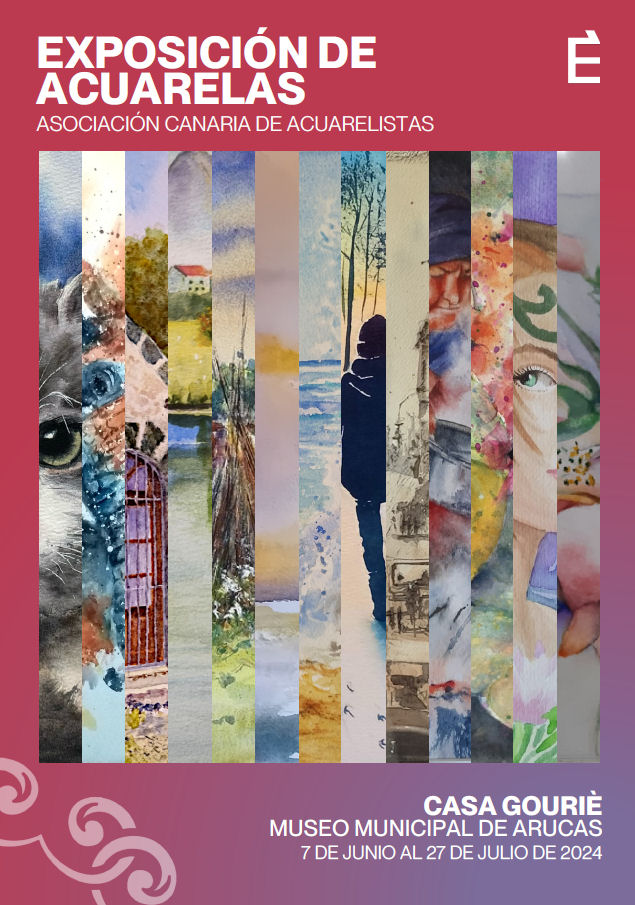
  • 7 June — 27 July: La exposición de acuarelas @ Casa Gourié, Museo Municipal de Arucas, Arucas
      Watercolours by la Asociación Canaria de Acuarelistas, with two works by Tamara.
Saturday, 29 June 2024

Chega de Saudade

a film by Laís Bodanzky

In spite of its title, the film — just like the bossa nova that gave it the name — is full to the brim with the very saudade, that is, nostalgia, longing, blues, etc. it says to be “no more”. For saudade is its motor, as it is for old-timers filling the ballroom.

Chega de Saudade reminded me strongly of, and probably was influenced by, Ettore Scola’s Le Bal. A stellar cast including the great late Elza Soares. Watch it.

Friday, 28 June 2024

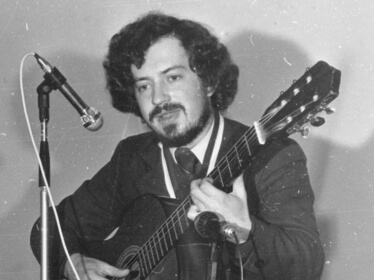
Сергей Вальков (1964—1997)

He would have turned 60 today.

Years ago, I wrote a post on the occasion of the 20th anniversary of Sergey’s death. What changed since then?

OK, I fixed a couple of dead links in the Russian Wikipedia article. I couldn’t find any “new” photos of Sergey. Apart from the image from the said article, there’s nothing on the web. Nada. How could that be? Repeats of the same bio, repeats of “download all songs of Sergey Valkov”, more dead links.

And then — suddenly! — this. One photo more!

But wait. A few months ago, I came across some posts by the LiveJournal user electrik-220. And from these... links to the audio archives! Several concerts of Sergey, some from as early as 1982. Plus a memorial concert in 2001. Plus some other discoveries. This is new stuff: all these archives were uploaded in 2023*. The sound quality of most of them leaves much to be desired. There’s nothing we can do about it. This is history.

Now, that I sat down to listen, time rewinds. Seryozha, still in his twenties, steps into the room, takes out his trusty Resonata and starts to sing. More like, talk to me.

I’m grateful to all the people (I don’t know any of them) who made this encounter possible. Thank you for keeping the memory and music of Sergey alive.

electrik-220 posts

Archives

Сергей Вальков (Лещина) / Sergey Valkov (Leshchina): himself, solo

Other recordings


* The password to open any rar archive is electrik.
The East German Musima Resonata, which, in the 1980s, was the best classical guitar I could dream of. Sergey bought it second-hand ca. 1980 for a princely sum of 50 roubles.
Some of these archives overlap. «Посвящение Каю» is marked as recorded on 05—06.11.1990. «Песни Кая» includes songs recorded both on 05—06.11.1990 and 16.05.1993. Two archives «из фонотеки Ю. Дёмина» also contain songs from these dates.

Wednesday, 26 June 2024

Une vie comme une autre

a film by Faustine Cros

If Faustine’s father appears to be obsessive in his constant filming of his family, what will today’s babies say about their parents in 30 years time? That they were busy documenting the minutiae of their children’s lives, filling the Internet with petabytes of videos, sharing them with mostly random viewers? And letting the very lives to slip by, seen by many but as quickly forgotten.

So Jean-Louis, in his quest to preserve the moments of happiness for posterity, failed — or maybe refused — to see how deeply unhappy Valérie was. Taking a break in her career of a make-up artist (she used to earn more than her cameraman husband) for the sake of kids, being unable to find a full-time job afterwards. Sounds familiar?

In the end, Jean-Louis’s home videos turned out to be useful, albeit not in the fashion he envisioned. Faustine made a film about her mum whose life, despite all, is anything like any other.

Monday, 24 June 2024

Sapiens: A Brief History of Humankind

by Yuval Noah Harari

I wish I read Sapiens before I did The Dawn of Everything, for the latter book refers to and criticises the Yuval’s work. So every now and then I was catching myself agreeing with Graeber and Wengrow’s critique and musing if I would read Sapiens with different eyes, say, ten years ago. Of course I would.

The book is very well written — you can’t take that away from Harari.

There is some evidence that the size of the average Sapiens brain has actually decreased since the age of foraging. Survival in that era required superb mental abilities from everyone. When agriculture and industry came along people could increasingly rely on the skills of others for survival, and new ‘niches for imbeciles’ were opened up.

Closer to our times, the book grows less interesting (for me) and more erratic. It looks as if the author was in a hurry to finish it. This is what Harari writes about the end of Soviet Union (which happened not in 1989 but in 1991):

The Soviet collapse in 1989 was even more peaceful, despite the eruption of ethnic conflict in the Balkans, the Caucasus and Central Asia. Never before has such a mighty empire disappeared so swiftly and so quietly. The Soviet Empire of 1989 had suffered no military defeat except in Afghanistan, no external invasions, no rebellions, nor even large-scale Martin Luther King-style campaigns of civil disobedience. The Soviets still had millions of soldiers, tens of thousands of tanks and aeroplanes, and enough nuclear weapons to wipe out the whole of humankind several times over. The Red Army and the other Warsaw Pact armies remained loyal. Had the last Soviet ruler, Mikhail Gorbachev, given the order, the Red Army would have opened fire on the subjugated masses.
Yet the Soviet elite, and the Communist regimes through most of eastern Europe (Romania and Serbia were the exceptions), chose not to use even a tiny fraction of this military power. When its members realised that Communism was bankrupt, they renounced force, admitted their failure, packed their suitcases and went home. Gorbachev and his colleagues gave up without a struggle not only the Soviet conquests of World War Two, but also the much older tsarist conquests in the Baltic, the Ukraine, the Caucasus and Central Asia. It is chilling to contemplate what might have happened if Gorbachev had behaved like the Serbian leadership — or like the French in Algeria.

And a bit later:

Today humankind has broken the law of the jungle. There is at last real peace, and not just absence of war. For most polities, there is no plausible scenario leading to full-scale conflict within one year.

The book was originally published in Hebrew in 2011; this English translation appeared in 2014. There was no way for the author to know what’s coming for Crimea, but he should have been aware of Abkhazia, South Ossetia and Transnistria.

Tuesday, 18 June 2024

So Well Remembered

a film by Edward Dmytryk
based on a novel by James Hilton

An idealistic goodie George (John Mills) falls in love with Olivia (Martha Scott) who, surprise surprise, turns out to be a baddie. Bad daughter, bad mother, bad woman in general — fair play to her, in theory. The problem is, she sucks at being bad. Asking for hot milk instead of tea, what’s that? Annie (Beatrice Varley) saw through her in a trice. Scott and Richard Carlson stick out like two sore thumbs among the mostly British cast, the best of whom is Trevor Howard as George’s alcoholic doctor friend.

A flawed but engaging and well-crafted drama, So Well Remembered — oh, the irony! — was pretty much and inexplicably forgotten. I still don’t understand how come that the film reel disappeared after its first screening in 1947 to be unearthed in 2004 somewhere in Tennessee. With a budget of $1.5 million, it was quite expensive product at the time to have just one copy, right?

This film closed the James Hilton cycle by Asociación de Cine Vértigo.

Sunday, 16 June 2024

La realidad no es lo que parece

by Carlo Rovelli
translated by Juan Manuel Salmerón Arjona

At 260+ pages, this is the longest book by Rovelli I’ve read (the other two are Siete Breves Lecciones de Fisica and El orden del tiempo) and the least satisfactory one. Maybe it is translation (the other two were translated by Francisco J. Ramos Mena), maybe repetitiveness, or maybe the contrast between well-explained and left-pretty-much-unexplained. For instance: Rovelli says, half-jokingly, that a theory is not credible if its equations don’t fit on a T-shirt. Fair enough. I like that. Then he puts the equations of loop quantum gravity theory on an image of a T-shirt (Fig. 7.7) without explaining anything about these equations. Not fair at all, and not even funny. In fact, Reality (2014) precedes The Order of Time (2017) and I have an impression that in the latter book Rovelli was able to address the shortcomings of the former.

Still, Reality is a fascinating read. I might not care that much about spin foam but I loved the historical bits, especially those on Dirac, Matvei Bronstein, and Rovelli’s recurring theme, Democritus.