Showing posts with label Africa. Show all posts

Thursday, 31 October 2024

Live music and stuff in Las Palmas and Santander, October 2024

This is what I’ve seen in October:

  • 1 October: «Bach & Rameau» @ Casa de Colón, Calle Colón, 1, Las Palmas de Gran Canaria
      Capilla de Santa Anna featuring Vicent Bru (harpsichord), Yurena Darias (viola da gamba) and Anabel Estévez (Baroque violin). The programme included:
      • Johann Sebastian Bach: Sonata in G major for violin and basso continuo BWV 1021
      • Jean-Philippe Rameau: Pièces de clavecin en concerts: III concert
          La Lapoplinière
          La timide: 1er Rondeau, 2e Rondeau
          Premier tambourin, Deuxième tambourin en Rondeau
      • Bach: Sonata in G major for viola da gamba and harpsichord BWV 1027
          Adagio
          Allegro ma non tanto
          Andante
          Allegro moderato
      • Rameau: Pièces de clavecin en concerts: V concert
          La Forqueray: Fugue
          La Cupis
          La Marais

  • 3 October: «Trayectoria del polvo VII» @ Casa África, Calle Alfonso XIII, 5
      The opening performance of the Masdanza 2024 festival. Featuring Nshoma Nkwabi (dance, vocal) and Anahi Acuña (violin, vocal); directed by Aïda Colmenero Dïaz. The programme included projection of four short films from the cycle Ella Poema directed and choreographed by Dïaz: Éxodo, Abismo, El Quitador de Miedos and Cicatriz de Luz.

  • 3—31 October: Exposición de Acuarelas @ La Casa de la Cultura, Villa de Moya, Gran Canaria
      Watercolours by la Asociación Canaria de Acuarelistas, with a work by Tamara.

  • Goodbye Las Palmas, hello, Santander!

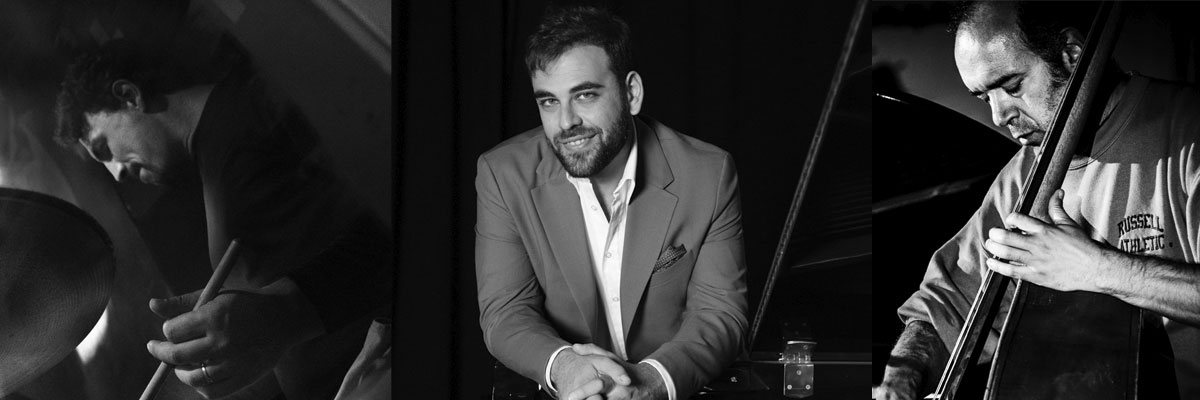
  • 11 October: Luca Filastro Trio @ El Centro Botín, Muelle de Albareda, Santander
      An evening of stride jazz featuring Luca Filastro (piano, vocals), Vincenzo Florio (double bass) and Andrea Nunzi (drums).
This year, I managed to see all (four) plays of the XIV Festival de Teatro Amateur organised by Federación de Grupos de Teatro Aficionado de Cantabria (FETEACAN). As in other years, it took place at Paraninfo de Las Llamas de la Universidad Internacional Menéndez Pelayo (Avenida de los Castros, 42).

  • 19 October: «La Visita»
      A play by Javier García-Mauriño performed by Carpe Diem Teatro (Tomelloso, Ciudad Real); directed by Miguel Ángel Berlanga.

  • 20 October: «La Ratonera»
      Agatha Christie’s The Mousetrap (with a twist!) performed by Itxartu Antzerki Taldea (Getxo).
  • 26 October: «Los locos de Valencia»
      A rather silly farce by Lope de Vega, performed by UGTeatro (Murcia). Directed by David Terol and Mariángeles Rodríguez.

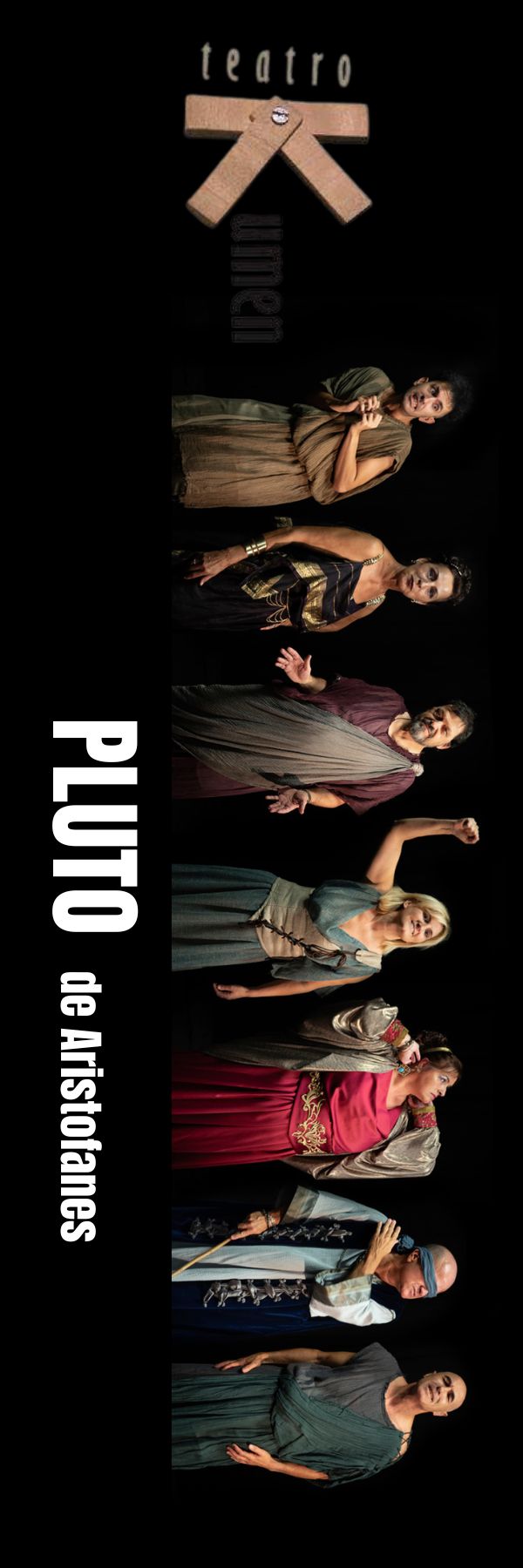
  • 27 October: «Pluto. Dios de la riqueza»
      A comedy by Aristophanes, performed by Teatro Kumen (Asturias). Directed by José Ramon López Menéndez.

More exhibitions in Santander:

And that was it for October.

Wednesday, 22 May 2024

Mambar Pierrette

a film by Rosine Mbakam

Never underestimate the power of the label. Say you watch a drama, and all of it rings true, so you think it may be based on a true story. You are impressed with acting and generally like it. Or you watch a documentary and lots of things seem staged, so you feel cheated. But it could be the same film!

Yesterday, I went to see our traditional Documental del Mes. As long as the film was revolving around Mambar the seamstress and her clients, it was fine. Banter, bargaining, complaining about the absentee fathers of their children, this kind of stuff. But when a series of unfortunate events unfolded, I started to suspect the creators of tweaking the reality. By the time Mambar was mugged on-screen, the supposed documentary had lost all credibility. So disappointing.

Back home, I looked Mambar Pierrette up. Turns out, it is not a documentary but a narrative film, although most of the (amateur) actors portray themselves. Apart from the robbers, that is. Now I think it wasn’t bad at all.

Thursday, 18 April 2024

Bushman

a film by David Schickele
Truth was not stranger than fiction, just a little faster.
David Schickele

Is it a biopic? Docudrama? Docufiction? Mockumentary? That’s what I was thinking while watching this 1971 movie starring Paul Eyam Nzie Okpokam and Elaine Featherstone for whom, as for most of actors here, Bushman was their only cinematic appearance. I don’t want to give any spoilers. Please don’t read reviews beforehand; go and see this “lost and found”, newly restored feature and discover for yourself.

Friday, 5 August 2022

The African Queen

a film by John Huston

What not to love about The African Queen? Humphrey Bogart and Katharine Hepburn are wonderful throughout, while the Germans, of course, are villainous and not too bright. Special effects — all-over-the-place rear projection and especially the attack of the greyish blobs — are so bad, even by the 1951 standards, they are actually good.

Tuesday, 31 May 2022

Live music and stuff in Santander and Las Palmas, May 2022

Ah, the merry month of May!

  • 1 May: Jazz Jam @ Rvbicón, Calle del Sol, 4, Santander
      Unusually, the base band of Toño Gutiérrez (bass), Rodrigo Irizábal (drums), Rafa Santana (piano) and Chisco Villanueva (tenor sax) opened the set with four originals. Later, the familiar faces joined for not-so-standard selection of jazz standards: Manuel Cavero (bass), Javier San Miguel (saxophones), Manuel San Emeterio (guitar) and others.
  • 4 May: Astrid Canales and Juan Sebastián Vázquez @ Rvbicón
      The duo of Astrid Canales (vocals) and Juan Sebastián Vázquez (piano) played a charming mixture of standards and originals in this acoustic set. Watch the full concert here.

A week in Las Palmas...

  • 13 and 14 May: La Noche Europea de los Museos @ Museo Castillo de Mata, Calle Domingo Guerra del Río, 147, Las Palmas de Gran Canaria
      Three years later, the European Night of Museums returns to Castillo de Mata. Featuring performances by Senny Camara, Kiki Violán, Javier Infante and Brothers Thioune, among others, plus the exhibition «Máscara migrante».

  • 14 May: Maruja Limón @ Auditorio José Antonio Ramos, Parque Doramas
      A fabulous performance of the Barcelonese band featuring Esther González and Sheila Quero (vocals), Vicky Blum (guitar), Elisenda Fàbregas (drums, percussion), Mila González (trumpet) and Carla Gonzàlez Ferrer (bass).

Back to Santander:

  • 20 May: Chebú @ Café de Las Artes Teatro, Calle García Morato, 4
      Chebú presented their brand new album (titled simply Chebú, so far only in form of a pen drive) in this intimate show. Featuring Zhenya Popova (vocals), Nahúm Cobo (piano, guitar), Iván Velasco (guitar), Dani Simons (bass), Miguel San Emeterio (cello) and “Charly” Pérez (drums), with a special guest Fernando Macaya (pedal steel guitar).
  • 22 May: Pez Mago @ Rvbicón
      I first saw Pez Mago seven years ago, also at Rvbicón. This time it was just Lucas Álvarez de Toledo himself (vocals and guitar) with a little help of the audience; Vicky Gastelo joined for two songs. Watch the full concert here.

  • 25 May: The New World Quartet @ Rvbicón
      With Sean Clapis (guitar), Daniel Juárez (tenor sax), Miquel Álvarez (double bass) and Naíma Acuña (drums). The full concert is available here.

  • 28 May: Amonite @ Cafe/Bar Bolero, Calle San Celedonio, 35
      Despite my best efforts to avoid watching the Champions League Final (Real Madrid—Liverpool), I ended up doing exactly that with a soundtrack of the “psychedelic hard blus” (sic). Neither the game nor the music on their own were particularly exciting; consumed together, they turned out to be rather agreeable.

Bring on June, I say.

Tuesday, 22 March 2022

Kili Big

a film by Ida Joglar

The first feature of the Puerto Rican director Ida Rodríguez Joglar, Kili Big, shown here under very “Spanish” title Curvy Crew (!), tells the amazing story of the Curvy Kili Crew, a group of 20 plus-sized larger unapologetically fat and beautiful women who took on Mount Kilimanjaro in 2019. It’ll make you laugh, it’ll make you cry, it’ll make you put Kili on your bucket list, and it has an Angélique Kidjo song in it. Highly recommended.

Thursday, 27 January 2022

Huellas: Manifestaciones Rupestres de las Islas Canarias

a film by Tarek Ode

I quite enjoyed watching this documentary about prehistoric rock art in the Canary Islands. It would be much more convincing though if they lost the embarrassing scenes featuring the “aborigines” (just arrived from Africa, you understand, that’s why they don’t look like aborigines) and “conquistadors”.

Wednesday, 24 March 2021

The Letter

a film by Maia Lekow and Chris King

Witch-hunt? We associate this term with something that was taking place in “the Middle Ages” of common parlance, although in fact mostly in the early modern period, but still, long time ago. Of course, the phrase has been used and abused by many, such as the ex-POTUS who has tweeted “WITCH HUNT!” about once every three days during his presidency, but even he didn’t use it in a literal sense.

The horrible truth is that witch-hunts are happening now, just as you are reading this post. For example, in Kenya the elders accused of witchcraft are being persecuted and lynched. Behind the superstition and/or pseudo-spiritual talk there are purely materialistic interests: takeover of the land and property of the “witches”.

Slow-moving at first (and at second), The Letter nonetheless contains enough life and hope and even comedy that help you to sit through the film. You can’t help to fall in love with Karisa’s granny. The music is beautiful. And (sorry for a spoiler) there is a redeeming ending.

Thursday, 22 February 2018

Black Panther

a film by Ryan Coogler

Yesterday, Timur and I went to see Black Panther. It was released last Friday and already broke all kinds of records and earned a lot of acclaim. Not just because it is a black film, but because it is a damn good film. Certainly the best superhero movie I’ve seen. But, of course, it is a black film. (And why it shouldn’t be, for vibranium’s sake, if Wakanda is in Africa!) It’s written and directed by African-Americans and starring black actors from all over the place. They even speak Xhosa in Wakanda. True, there is a minor white goodie (Bilbo Baggins) and a secondary white baddie (Gollum); both of them, however, were meant to be outsiders.

Although we watched the Spanish-dubbed version, not only the name of the movie was left as is (not Pantera Negra), they also use the expression “Black Panther” throughout as the king’s title. (I know, I know, it’s Marvel Universe, nobody should really translate Spider-Man as Hombre Araña either, although they do.) Could it also be because pantera is feminine and doesn’t sound right applied to a male? And here’s the problem: T’Challa can only survive because he is surrounded and helped by smart and ass-kicking women. I mean, he is the king all right, I don’t mind him, it’s just “his” (they are not his) women are so much better. Why can’t Wakanda be ruled by a woman, or, better still, by women?

Monday, 3 March 2014

The Girl Who Married a Lion

by Alexander McCall Smith

This is an odd collection of folk tales from Zimbabwe and Botswana re-told by Alexander McCall Smith (with a foreword by Mma Ramotswe). Of them, I liked Brave Hunter, Children of Wax and Sister of Bones the most — my kind of fairy tales. Some others are a bit weird; and a few are rather too violent for bedtime children’s stories (although not nearly as violent as the brothers Grimm). And yet some others are worth reading if only for their deadpan endings.

The elders were surprised that such a short boy could be so brave but they remembered their promise and agreed to make him chief.
Later, when he was chief, the short boy grew taller.
Great Snake
🐾 🐾 🐾 🐾
The aunt was very quiet during the journey back home. The next day she was quiet as well, and she never shouted at the boy again. Being swallowed by a strange animal had taught the aunt not to waste her time shouting; now, all that she wanted to do was to sit quietly in the sun.
The boy was very happy.
Strange Animal
🐾 🐾 🐾 🐾
The following night, many people came to see that family to help them eat the elephant meat. They ate many pumpkins too.
Pumpkin
🐾 🐾 🐾 🐾
“Your sons are not lions,” the uncle said to the boys’ mother.
“I am glad,” she said.
The Girl Who Married A Lion
🐾 🐾 🐾 🐾
Hare did not return. The girl who caught him was praised by all the animals, and was allowed to share their water. This made her happy too.
Tremendously Clever Tricks Are Played, But To Limited Effect

Sunday, 8 December 2013

The Kalahari Typing School for Men

by Alexander McCall Smith

Mma Ramotswe has a reason to worry: a rival detective agency is set up in town. A younger apprentice of Mr J.L.B. Matekoni finds the Lord. In the meantime, Mma Makutsi opens her phenomenally successful Typing School for Men — so successful, she almost gets a boyfriend.

That afternoon, when Mma Makutsi had been dispatched to the births, deaths, and marriages registry to pursue some routine enquiries on behalf of a client, Mma Ramotswe was visited, unannounced, by a woman whose view of the Satisfaction Guaranteed Agency and its boastful proprietor was quite the opposite of the view held by the apprentice. She arrived in a smart new car, which she parked directly outside the agency door, and waited politely for Mma Ramotswe to acknowledge her presence before she entered the office. This always pleased Mma Ramotswe; she could not abide the modern habit of entering a room before being asked to do so, or, even worse, the assumption that some people made that they could come into your office uninvited and actually sit on your desk while they spoke. If that happened to her, she would refrain from speaking at all but would look pointedly at the bottom planted upon her desk until her disapproval registered and it was removed.

Friday, 20 September 2013

African Textiles Today

by Chris Spring
The history of indigenous African art has been misdirected by Western aesthetic preferences, which give an undue pride of place to figural or abstract sculpture (a pre-eminently patriarchal art) and less visibility to the role of textiles, decorative arts and performance arts (pre-eminently matriarchal arts) in the construction of indigenous identity.
Sylvester Okwunodu Ogbechie

There is no question that humans came out of Africa. Naturally, human culture came out of Africa too, but we Westerners tend to ignore this fact. The West, above all, values literature, painting and sculpture, while Africans are more concerned with oral tradition and the subject of this book: cloth.

Cloth in Africa is much more than “just” a material for clothing. Cloth served as a currency until minted coins replaced it in the last century. Protective gowns or shirts may be decorated with Quran inscriptions, or have numerous charms sewn into them, or both. The kanga, which often bears subtle (or not so subtle) slogans in Kiswahili, is a powerful communication instrument. Cloth is also a means of declaring the social status:

Sometimes the only true measure of a man’s status in life is revealed after his death, as is still the case among the Kuba people of the Kasai region of the southern Congo Basin, where the fine cloth which a chief or high-ranking official has accumulated throughout his life is shown to a wider public for the first time at his funeral.

Last but not least, textiles serve as historical documents. In short: if you want to understand anything at all about African culture, you’d better have a serious look at the African textiles.

On more than one occasion, the author points out that the indigenous-ness of any tradition is not a particularly helpful concept. I like the story told in Chapter 3: in the 19th century, the Dutch embarked on producing the printed cloth imitating Javanese batiks. The textile proved to be not too popular in Indonesia but appealed to Ghanaian soldiers employed by the Dutch. Then a Scotsman sets up a company in Glasgow and pirates the Dutch, um, imitations. In the post-colonial times, textile factories were established in West African countries, but now the production is threatened by cheap Chinese copies of... the “West African” designs!

The author, Chris Spring, is a curator at the British Museum; the book is published by The British Museum Press. Perhaps unsurprisingly, most of the beautiful textiles illustrated in the book are from the British Museum collection. African Textiles Today also includes shots of artistic installations, for example Nike v Adidas by Hassan Hajjaj and Space Walk by Yinka Shonibare, as well as documentary and street photography. The last chapter shows textiles through the eyes of African photographers such as Seydou Keïta, Oumar Ly, Malick Sidibé and Jacques Touselle.

Wednesday, 8 May 2013

In the Company of Cheerful Ladies

by Alexander McCall Smith

The head of No. 1 Ladies’ Detective Agency does not get to solve many mysteries in this book. It’s not that she is going on vacations. In fact, a bit too much is happening. Thankfully, Mma Makutsi and Mma Ramotswe’s new employee are doing excellent detective work of their own, while our traditionally built heroine confronts her past.

Mma Ramotswe liked to walk in her garden in the evening, taking care to move slowly and with firm tread; those whose crept about at night risked stepping on a snake if they were not careful, as snakes move out of our way only if they feel vibrations in the ground. A light person — a person of non-traditional build, for example — was at far greater risk of being bitten by a snake for that very reason. That was another argument, of course, for maintaining traditional build — consideration for snakes, and safety too.

Mma Ramotswe was well aware of the difficulties now faced by traditionally built people, particularly by traditionally built ladies. There was a time in Botswana when nobody paid much attention to thin people — indeed thin people might sometimes simply not be seen at all, as they could so easily be looked past. If a thin person stood against a background of acacia trees and grass, then might he not either merge into the background or be thought to be a stick or even a shadow? This was never a danger with a traditionally built person; such a person would stand in the landscape with the same prominence and authority as a baobab tree.

There was no doubt in Mma Ramotswe’s mind that Botswana had to get back to the values which had always sustained the country and which had made it by far the best country in Africa. There were many of these values, including respect for age — for the grandmothers who knew so much and had seen so much hardship — and respect for those who were traditionally built. It was all very well being a modern society, but the advent of prosperity and the growth of the towns was a poisoned cup from which one should drink with the greatest caution. One might have all the things which the modern world offered, but what was the use of these if they destroyed all that gave you strength and courage and pride in yourself and your country? Mma Ramotswe was horrified when she read of people being described in the newspapers as consumers. That was a horrible, horrible word, which sounded rather too like cucumber, a vegetable for which she had little time. People were not just greedy consumers, grabbing everything that came their way, nor were they cucumbers for that matter; they were Batswana, they were people!

Wednesday, 26 December 2012

The No. 1 Ladies’ Detective Agency

by Alexander McCall Smith, illustrated by Iain McIntosh

An absolute classic. How come I didn’t read it until now?

This special edition hardback (no. 126 of 1200), with black-and-red illustrations by Iain McIntosh, is a beauty. Maybe one day there will be such thing as an e-book signed by both the author and illustrator. Maybe. I don’t care really. I prefer the real thing.

She knew the railway station slightly. It was a place that she enjoyed visiting, as it reminded her of the old Africa, the days of uncomfortable companionship on crowded trains, of slow journeys across great plains, of the sugar cane you used to eat to while away the time, and of the pith of the cane you used to spit out of the wide windows. Here you could still see the station — or a part of it — here, where the trains that came up from the Cape pulled slowly past the platform on their journey up through Botswana to Bulawayo; here, where the Indian stores beside the railway buildings still sold cheap blankets and men’s hats with a garish feather tucked into the band.
Mma Ramotswe did not want Africa to change. She did not want her people to become like everybody else, soulless, selfish, forgetful of what it means to be an African, or, worse still, ashamed of Africa. She would not be anything but an African, never, even if somebody came up to her and said, ‘Here is a pill, the very latest thing. Take it and it will make you into an American.’ She would say no. Never. No thank you.

Monday, 23 July 2012

African Healing Dance

with Wyoma and the Dancers and Drummers of Damballa
First published 23 July 2012 @ zumbafuerteventura

Of my small collection of dance fitness videos, this one is perhaps the most enjoyable. Wyoma must be a brilliant teacher. The programme was recorded in 1997 but it does not look dated in any way. The picture quality, however, is not that great. The whole DVD appears to be little more than a direct transfer of the original VHS tape. But don’t let this spoil your experience.

Also, don’t be confused or annoyed by the word “healing”. No matter what your relationships with African deities are, the dances are guaranteed to make you feel better.

The body teaches. The more you learn about your own natural body rhythms, the healthier you can be.

The workout is fun. It starts with Wyoma teaching some body isolations. Then she proceeds to show — and explain the origin of — the traditional African dance moves: imitation of animals such as snake, elephant, birds; the elements (air, fire, water and earth); and daily routines (picking berries, grinding grains and so on). The warm-up is just the right length and effort level. In the DVD booklet (a nice touch, by the way) it is explained that the warm-up is not traditionally done in Africa as the “dancers there have already spent much of the day walking miles to gather food or water or to attend school, so their muscles are typically loose and ready for the joys of more rigorous movement”. Then we are taught the real African dances.

The African-Caribbean Dances section includes only two dances, both of them are loa dances of Haiti, of Benin origin. I was especially impressed by Yonwalu. On the video, it is danced first at slower pace, with Wyoma breaking down the moves, then at the faster tempo.

The Healing Journey is some sort of free-style dance/meditation:

Bring your curiosity, freedom from judgement, and sense of play to the dance floor... Dance a dream or fantasy, or dance with no thought at all.

Oh, did I mention the open-air setting and live drumming? It’s all there too!

Finally, in the very end of a short cool-down, Wyoma encourages you to take whatever you’ve learned and share it with someone. Isn’t it wonderful?

African Healing Dance

  • Dance as a means of healing body, mind, and spirit
  • Body Isolations
  • Animal-based movement
  • Dance based on everyday movements
  • Dance based on the four elements
  • The warm-up
  • Traditional African Dances
    • Sowu — “The Dance of Life” (Ghana)
    • Gbêgbé — Journey to find a new home (The Ivory Coast)
    • Focodoba — Post-initiation basket dance (Guinea)
    • Umoya — Bringing energy from heaven and earth (South Africa)
  • African-Caribbean Dances
    • Nago — The warrior dance (Haiti)
    • Yonwalu — Dance for Damballa, the Serpent Deity (Haiti)
  • Improvisation: The Healing Journey
  • The cool down

The Dancers

  • Nii Armah Sowah
  • k. osiris wade
  • Lisa Wittner

The Drummers

  • Clifton Robinson
  • Heidi Alina
  • Eric Robnett
  • Saphyre

Thursday, 19 May 2011

The Last Brother

by Nathacha Appanah
translated by Geoffrey Strachan

Inspired by a little-known page of history but deeply personal tale of a brief childhood friendship, told by a man in his seventies. (How, may I ask in parentheses, could this young author write as if she grew during the Second World War and lived a long life after that?) Profoundly moving book, sympathetically translated by Geoffrey Strachan.

I pictured her back in our house in the forest, her shoulders hunched, as if forever prepared to receive blows, I pictured her with her mixtures, her potions and her magic formulas. I pictured her falling over, battered by my father, and I felt the sudden weight of her in my hands. I pictured her with the red parakeet and I heard her burst of laughter at David. I thought about those long months when every morning and every evening she massaged my legs to heal me. And there, this little scrap of a woman, smiling on the balcony, in full, bright sunlight, this was her and at the same time it was not her, and, on the return journey I always ended up in tears over it, this illusory happiness at the end, over all the things that had come much too late to erase everything else.

Saturday, 26 February 2011

On Black Sisters’ Street

by Chika Unigwe

This book traces the stories of four African prostitutes working in the Antwerp’s red light district. It has everything that Bonjour Tristesse does not: real women (that I end up liking, not just sympathising), real life, real sadness. (You understand, the only reason to oppose these two books here is that I happened to read one after another. Sorry, Ms. Sagan.) And, to quote the oldest of the “sisters”, Efe, ‘it make me tink’.

The three women laugh.

At the end of it a thoughtful silence swallows them up again. When it spits them out, it is to hear Efe say that she always wanted to be a writer.

‘It was my biggest dream. I was going to write books and become famous.’ She laughs. ‘At school na so so cram I dey cram my literature books.’ She stands up and begins to give a performance.
It was the best of times, it was the worst of times, it was the age of wisdom, it was the age of foolishness, it was the epoch of belief, it was the epoch of incredulity, it was the season of Light, it was the season of Darkness, it was the spring of hope, it was the winter of despair, we had everything before us, we had nothing before us, we were all going direct to Heaven, we were all going direct the other way — in short, the period was so.
‘I like the way incredulity and epoch dey drip commot from the mouth. I like the way things wey dey opposite, salt and pepper, dey side by side. Best of times. Worst of times. Light and Darkness. It make me tink. Tink say how dat for happen? And when I read am, I jus’ wan’ write like dat. Words wey fine so like butterfly, fine sotay person go wan’ read am again and again and again.’ Her voice dims and she sighs. ‘But dat one no go happen now.’

Saturday, 28 August 2010

My Father’s Wives

by José Eduardo Agualusa
translated by Daniel Hahn

Here’s one more book which I picked up in the library solely because I liked the cover art. The drawing of a black man hugging a double bass. This is Faustino Manso, the “father” of the title. I never heard about this novel (or its author) before. And a good thing too: if anyone were trying to explain me what it is about, I would choose something else for my summer reading. The truth is, it is easier to read than summarise. I’ll try anyway.

Like Maja, the heroine of The Opposite House, Laurentina endeavours to visit her native country in search of her roots. Unlike Maja, she actually does it. Her boyfriend Mandume is not so keen on the idea.

Right away Laurentina got into her hard head the idea that she had to meet her biological parents. I was horrified when she told me she meant to go back to Africa.
‘Have you gone mad? What are you going to look for in Africa?’
Roots. She wanted to look for roots.
‘Roots are what trees have,’ I shouted to her, ‘neither one of us is African.’

Still, Mandume follows Laurentina to Angola and even suggests to make a documentary about her reunion with the family. The story (or stories) are told, in turns, by Laurentina herself, Mandume, her newly-found nephew Bartolomeu, and Albino Amador, aka “Pouca Sorte”, the mysterious driver of Malembemalembe. Following the trail (of numerous wives and children) left by Manso, the four embark on an epic journey from Luanda to Namibia to South Africa to Mozambique and back to Angola. The short chapters are interspersed with the author’s notes which are not chronologically ordered. You see, the author is also travelling throughout the southern Africa in search of his heroes.

Miraculously, this seemingly convoluted structure is a joy to read. The novel is full of warmth, love and gentle humour. And there are a few surprises in the end. But does Laurentina learn the truth about her parents? In words of Faustino Manso’s widow, Dona Anacleta, ‘The truth is a recourse for people with no imagination’. A masterful work by Agualusa and his translator, Daniel Hahn.

‘You know I nearly died here in ’99? It was this baobab that saved me.’
‘You would have died in an ambush?’
‘No ma’am, it was my wife who almost killed me.’
‘Your wife?’
‘Affirmative. I was inside the car fooling around with a Benguela girl called Mil Flores — a thousand flowers — a fair mulatta girl... like this girl here... I was already completely — how should I put it — fully operational, when my wife appeared. As I learned later the person who’d given us away was another girlfriend of mine, severely afflicted by jealousy, by the name of Anunciação. Maria Rita, my wife, appeared armed with a katana. I didn’t see her coming. I only realised she was there when the driver’s-side window smashed. Mil Flores opened the door on the other side and ran off, stark naked — a lovely sight to see — towards Lobito. God made me as you see me now — thin and agile — like a little goat, but I’m old, my wife is much younger, not so quickly out of breath, and it was only a matter of time before she caught me. And if she caught me — yikes! — there I was, unarmed, so I climbed the baobab.’
‘It’s not possible! How did you do it?’
‘How do cats fly?’
‘Cats don’t fly!’
‘They don’t fly over there in Europe, miss. Here they do fly! Put a greyhound behind a cat and see if it doesn’t fly.’

Friday, 4 December 2009

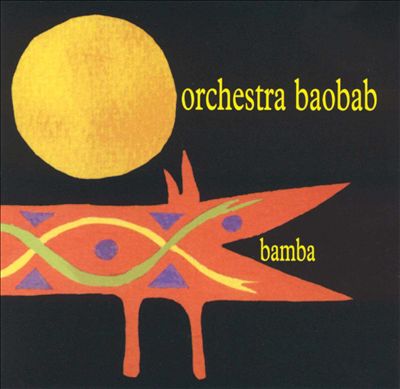
Bamba

by Orchestra Baobab

Bamba was the first record of Orchestra Baobab I came across — in Saffron Walden library of all places. I never heard any Senegalese music before that and had a very vague idea where Senegal was. But I liked the name of the band, and a picture of a strange fox-like creature.

Bamba is a re-release of two records of Orchestra Baobab on one CD: Mouhamadou Bamba (1980) and Sibou Odia (1981). Now I got about half dozen of Orchestra Baobab albums, but if you want to invest in just one, this is the one.

Friday, 30 October 2009

Pohjan Laulu in Cape Town

A little more than a year ago (24 October 2008, to be precise), I and my friends spent a great evening at the Finnish Consulate in Cape Town. There was a double bill of Pohjan Laulu from Oulu, Finland, and Capetonian Pro Cantu Youth Choir. Now I am not a big fan of choral music. When Minna first told me about this event, I thought, man, it will be boring. What could be exciting about Finnish all-male choir, dressed in white tie, with most singers in their 50s? I couldn’t be more wrong. Both choirs were excellent, but I was more impressed with Finns (in white tie and in their 50s). Another prejudice gone.

After all the encores, even after Pohjan Laulu sang Finlandia (which, I was told, means no more encores), and after a few more drinks, something amazing happened: four Finns performed The Lion Sleeps Tonight. As they did so, they mocked the tricks employed by Pro Cantu (overtone singing, clapping and imitation of sounds of the forest). Luckily, I had my camera so I can share this gem with you.