Showing posts with label sexuality. Show all posts

Thursday, 18 June 2026

Carol

a film by Todd Haynes
based on a novel by Patricia Highsmith
screenplay by Phyllis Nagy
There’s not an ounce of guilt, there’s not an ounce of regret, over the nature of their attraction for each other. I also found Highsmith’s notions of what makes a good mother to be quite radical — the choices that people have to make in order to make the lives of their children better <in 1952> seemed really fresh, and radical. And still do, to this day, actually.

A beautifully atmospheric and stylish drama starring Cate Blanchett as Carol and Rooney Mara as Therese. According to Wikipedia, it took about 19 years to make this movie (1996 through 2015) while actual “filming was completed after 34 days”; it was shot on Super 16 mm film.

Carol continues the cycle Diversidad, Igualdad y Cultura by Filmoteca Canaria and Instituto Canario de Desarrollo Cultural.

Sunday, 14 June 2026

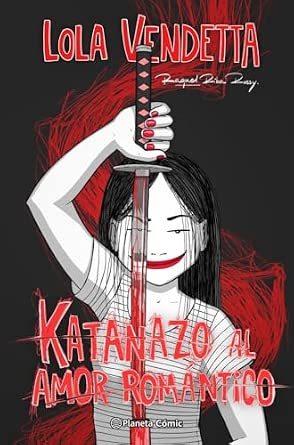
Katanazo al amor romántico

by Raquel Riba Rossy

Didn’t I tell you that Lola’s katana won’t stay in its cabinet for long? Well, it depends what one means for “long”. Five years including pandemic could be an awfully long time. By 2023, Lola was back with the first part of Katanazo. In the 2026 follow-up, the sword was finally used to Lola’s (and my) satisfaction.

Katanazo is perhaps the darkest of Lola Vendetta comics. First introduced in Una Habitación Propia, Death, God and Pepito the dog return to provide much-needed comic relief. No spoilers but look for those QR codes!

Wednesday, 3 June 2026

Orlando, ma biographie politique

a film by Paul B. Preciado

According to Wikipedia,

ARTE France reached out to Preciado in hopes of producing a documentary focused on his work as a philosopher. Preciado rejected the idea and instead jokingly suggested that the film should be an adaptation of Virginia Woolf’s Orlando: A Biography in an attempt to shut down the conversation. To his surprise, ARTE France agreed and asked Preciado to make the film.

And good thing they did. The film is neither a documentary nor adaptation nor, despite the name, biography, but a process, metamorphosis, transition — like those of the film’s many intelligent, charming, and funny protagonists. And yes, it’s political. Enough said. Watch it. Enjoy it.

Orlando, mi biografía política opens the fifth cycle Diversidad, Igualdad y Cultura organised by Filmoteca Canaria and Instituto Canario de Desarrollo Cultural.

Saturday, 28 February 2026

Lo normal

a play by Menudas Pájaras
interpreted by Núria Cano Cano

I saw this event advertised simply as “obra teatro” to take place in the Civic Centre of Nanclares de la Oca. By what theatre? Anyway, I was intrigued: finally, something cultural is happening in Nanclares! Great or awful, I was determined to see it.

Thankfully, I was not alone: the auditorium was optimistically half-full. I’m glad that I came to the show. It’s clever, it’s funny, and it’s necessary. Núria Cano, a clown and a sexologist (that’s right), engaged the audience in unusual ways but, as I don’t want to spoil a surprise, I’ll say no more.

Saturday, 10 January 2026

Three Women

by Lisa Taddeo

Yet another “international No. 1 bestseller” totally not worth the hype. Probably bought in some British airport and then donated to our library after not finishing it. I myself almost gave it up halfway through.

“This is a work of nonfiction”, says the Author’s Note. “Almost all quotes come from legal documents, emails, letters, recordings, and interviews with the women and other individuals in the book.” If you haven’t read the Author’s Note though, you wouldn’t know. The true stories of, well, three women are fictionalised here to the degree of softcore, and at times hardcore, porn. I find this disrespectful towards the titular women. At least, towards Maggie and Lina. I can’t be sure about the third woman — the fictionalised Sloane, together with her voyeuristic husband, might even find it arousing, but I seriously doubt that the real Sloane would. Personally, I prefer either dry, matter-of-fact style in non-fiction, or the direct speech of protagonists*. In this way, the characters appear real, as they should. In case of this book, sorry, they do not.


* Mujeres que follan by Adaia Teruel (reviewed on this blog) is a brilliant example of this latter.

Friday, 13 June 2025

Burning Your Boats

by Angela Carter
foreword by Salman Rushdie
I started to write short pieces when I was living in a room too small to write a novel in.
Afterword to Fireworks

I was so impressed with Fireworks (also with myself, for finishing it), that I decided to read all of Angela Carter’s short fiction. So I acquired this collection and... nothing happened for the next few years. Last summer, I finally dug it out. It took me about nine months to read it, with breaks.

The book contains four previously published collections, including Fireworks, plus six other stories. Of collected works, The Bloody Chamber is the most conceptually and stylistically coherent one, all that Gothic horror stuff with an exception of more, um, light-hearted Puss-in-Boots. Black Venus is rather uneven. The best stories there are Our Lady of the Massacre, Peter and the Wolf and The Kitchen Child, this latter providing much-needed comic relief. It looks like Ms. Carter was fascinated with wolves: the real ones, were-ones and feral children. I like that.

American Ghosts and Old World Wonders is another mixed bag, redeemed by the tasty Text-Mex-Western Gun for the Devil and delightfully Borgesian The Merchant of Shadows (it made me reach for Internet to check if Hank Mann was really born Heinrich von Mannheim: of course not, and he never made a movie called Paracelsus with Charles Laughton).

While I researched my thesis, I was rooming back there in the city in an apartment over a New Age bookshop-cum-healthfood restaurant with a science fiction freak I’d met at a much earlier stage of studenthood during the chance intimacy of the mutual runs in Barcelona. Now he and I subsisted on brown rice courtesy of the Japanese waitress from downstairs, with whom we were both on, ahem, intimate terms, and he was always talking about aliens. He thought most of the people you met on the streets were aliens cunningly simulating human beings. He thought the Venusians were behind it.
He said he had tested Hiroko’s reality quotient sufficiently and she was clear, but I guessed from his look he wasn’t too sure about me.
The Merchant of Shadows

Monday, 17 March 2025

Magical Caresses

a series of short films by Lori Malépart-Traversy
animation by Keyu Chen and Lori Malépart-Traversy

From the director of Le clitoris comes this charming “animated documentary series based on Caresses Magiques, a book series written and edited by Sarah Gagnon-Piché and Sara Hébert” (I took this quote from the end credits). The “animated documentary series” is really a mini-series, of five animated shorts no longer than 4 minutes each; and the “book series” was just two volumes, now out of print. The first of the films is narrated in English by Ms Malépart-Traversy herself; the other four feauture the voices of, I suppose, some of the book’s heroines (in French, with English subtitles). You can watch all the films on the National Film Board of Canada web site or on Vimeo (scroll down to the embedded videos).

Saturday, 15 March 2025

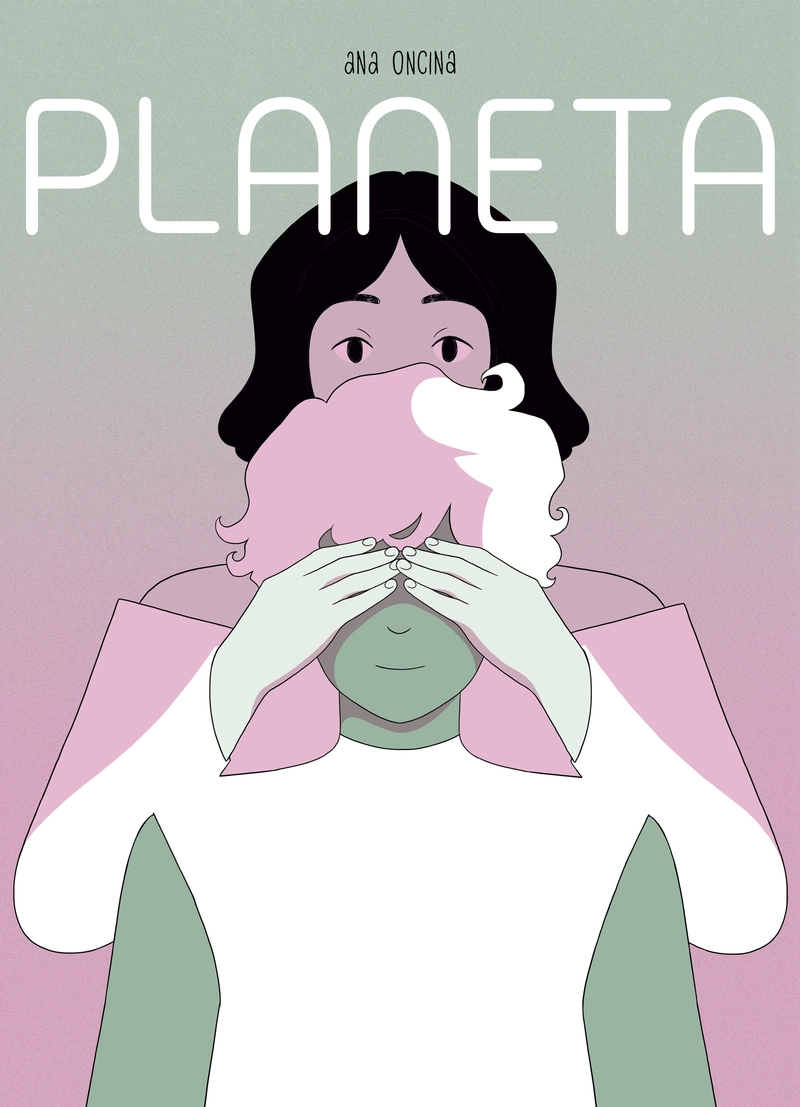
Planeta

by Ana Oncina

From the author of Croqueta y Empanadilla comes something completely, utterly different. Also, profoundly beautiful. And as much unsettling. You’ll feel unsettled if you couldn’t figure out what is reality (F, “forest”) and what is dream (P, “Planeta”), especially when in P you also dream about F. As Valentina does. On top of that, in P all human communication, apart from that with live-in partner, happens in virtual reality (V).

Sunday, 9 February 2025

El París de los Dragones

by Tony Sandoval and Joann Sfar
translated by Lorenzo Díaz Buendía

Confused plot and too many dead or wounded dragons for my liking. It’s the romance between a Hawaiian strongwoman princess and a pansexual mermaid, coupled with a wicked sense of humour, that makes this comic worth checking out.

Monday, 2 December 2024

Scener ur ett äktenskap

a film by Ingmar Bergman

I had a dilemma: either to rush after work to watch almost three hours of Scenes from a Marriage, with a distinct possibility to fall asleep, or to give it a pass and just have a proper nap. As you may have guessed, my craving for cinema won.

This 1974 film is a theatrical release of a 1973 miniseries of the same name. If the first chapter/episode has a rather extended cast, by Bergman standards anyway, in the last four chapters “only” the protagonists, portrayed by Liv Ullmann and Erland Josephson, remain. It’s long but never boring, and even has a kind of wabey-sabey happy ending: Marianne and Johan evolve from meh spouses to pretty good lovers.

Sunday, 10 November 2024

Viskningar och rop

a film by Ingmar Bergman

How come I never watched Cries and Whispers before? This almost unbearably stylish film centers on four women, gorgeously portrayed by Harriet Andersson, Kari Sylwan, Ingrid Thulin and, of course, Liv Ullmann. On the contary, the men, even David (the great Erland Josephson), are entirely disposable.

Wednesday, 28 August 2024

Todo eso que no sé cómo explicarle a mi madre

by Sandra Bravo

I truly wanted to love Todo eso. Starting with the title and the phrase in its very beginning [1, p. 11]:

Si «cisgénero» te suena a chino, «poliamor» a orgías de pervertidos o eres mi madre, consulta el glosario que encontrarás al final de este libro.

I was looking forward to a blast of a book.

“But,” interrupts the perspicacious reader. “I can distinctly hear ‘but’. You wanted to love it but.”

The thing is, during the past few years, I read and enjoyed a number of books on the topic [26], some of them good and some others pretty damn good. Perhaps inevitably, I judge Todo eso against a rather high standard. So let me continue, and you’ll see if there’s a ‘but’.

We read for different reasons. One of them is to increase our knowledge. In this sense, there was little new for me to be learned from this book. (This is not the author’s fault.) For sure, there were new names, new books, a couple of concepts that I never read about in Spanish before, etc. etc. However, talking about genuinely new (for me) ideas, I would name one, coming from Luce Irigaray [1, p. 64 and clarified in the footnote 54]: Amo a te / J’aime à toi / Amo a ti, awkwardly translated to English as “I Love to You”.

Another reason is to see the author’s perspective and check how much (or how little) we have in common. I found myself agreeing with many of Sandra’s opinions — say, on homonormativity or sex work — and was glad to encounter references to familiar works, e.g. Yes, we fuck! [1, p. 115].

Yet one more reason to read is simply to take pleasure in it. Todo eso, in part, fulfilled the promise to be a fun read. Of course, it could be that this promise was imagined by me. I enjoyed the Chapter 2, Confesiones a la Virgen de una desvirgada, the most.

It’s OK to cherrypick. This is not a novel, not a prog-rock album, not a “take it or leave it” menú del día.

Now what could have been done better?*

  • Citations, citations and more citations. Sandra quotes profusely from a variety of (mostly feminist) writers. Sometimes the passages take more than a half of page, sometimes more than two pages [1, pp. 52—54, 102—104, 111—113]. What for? In many cases, they are long-winded and boring bits of text, clearly meant to support the author’s arguments. As it happens, these latter are enunciated much better, in short sentences and a lively language.
  • Solution: I’d say, ditch most of the quotes, shorten the essential ones, leave the references in the footnotes (as they currently are) and let the reader decide if they want to dig deeper. Naturally, the book will be twice as short then, about 100 pages. Good!
  • For a such a short book it’s quite repetitive. Sandra goes on in loops about her privileges, her sexuality, cisheteropatriarchy and her idea of feminism which is also anti-racist, anti-capacist and anti-capitalist. No matter how important these issues are to the author, repeating makes them less so to the reader.
  • Solution: saying once is enough; cut the repeats, maybe we’ll have 80 pages or so in the end.
  • In spite of all “own experience” and “being an exhibitionist” spiel, Sandra shares surprisingly little of that experience. For instance, she writes [1, p. 79]:
    He tenido sexo con centenares de hombres cis, y no muchos me han sorprendido. En cambio, mujeres sexualmente desinhibidas, aunque inferiores in cifra, eran mucho más abiertas, creativas y libres de complejos.
    Hundreds of men, what a perseverance! I guess most would give up after the first half dozen of them. Still, at least some of those cis men must have surprised the author, why not to tell us? And what about those “lower in quantity”, higher quality women? Alas, she doesn’t go much beyond generalisations like above.
  • Solution: a few real-life anecdotes to illustrate the author’s points will do wonders as well as pad the book up. Spare us the graphic details; these examples don’t even have to be about sex. Check out Más peligroso es no amar [3] and Mujeres que follan [6] for inspiration.
  • Now we are coming to the most cringeworthy part: Chapter 7, Y lo más importante de todo, ¿cómo le explico yo esto a mi madre?, in particular Carta a mi madre. This last chapter confirms my worst fears: Ms Bravo indeed has no clue how to explain the titular “all this” to her mum. Why on earth did she choose the open letter form then? It’s painfully embarrassing to read. How about just talk to her mum or, failing that, write a normal (closed, personal) letter?
  • Solution: do us a favour, lose Carta a mi madre.
  • Finally, the bit that was in fact promised: the Glossary. What a disappointment! Typically, authors include glossaries to provide the reader with definitions in order to avoid terminological confusion. Here it seems to exacerbate the confusion. The terms patriarchy and queer, Sandra says, are difficult to define. Instead of explaining attachment in her own words, she “clarifies” it with yet another abstruse quote which actually describes attachment theory (without defining what attachment is). In the entry for LGTBIQ+, she writes that if you don’t know what a “lesbian” or “gay” is, you’ll have difficulties understanding her book. Family is what a heterosexual couple achieves after practicing intercourse without a condom for a period of time. And so on.
  • Solution: make the definitions clear and concise. (Like the author’s definition of feminism: a fight for the elimination of any kind of oppression. It’s not required that everybody agrees with them.) Define basic concepts such as sex and gender before moving on more complex ones. Avoid emotional comments and finishing sentences with “vamos” — there’s whole book for that kind of thing. Make sure that the use of the terms in the main text is consistent with their definitions.
  • By the way, (ab)using the term “person” and avoiding “woman”, as is done in the Glossary, does a great disservice to feminism. Not that Sandra is unaware of it: elsewhere, she describes how replacing “gender violence” with “domestic violence” is employed by the far right to invisibilise the problem [1, pp. 47—50]. She also emphasises the need of safe places specifically and exclusively for women, not persons [1, pp. 114—115].
  • Solution: the obvious one. Say “man” or “woman” when needed.

See? There are problems; I suggest solutions. And did I use the word “but” (apart from right now, that is)?

I doubt that the author, in the unlikely event of reading this post, would heed my free and disinterested advice. Which is a bloomin’ shame really.


* Everybody has their own criteria of what is “good” (and, by extension, “better”). Some readers might have liked the bits that bothered me the most. As this is my blog, I express here my opinions what is better for the reader.
I wonder if the author is conscious that the sheer length of these citations is stretching the right to quote a tad too far.
Clara Serra explains this brilliantly in her Manual ultravioleta [5, chapter 16].

References

  1. Bravo, S. Todo eso que no sé cómo explicarle a mi madre: (Poli)amor, sexo y feminismo. Ediciones Plan B, 2021.
  2. Casquet, N. and Andyn. Mala mujer: La revolución que te hará libre. Lunwerg, 2020.
  3. Etxebarria, L. Más peligroso es no amar: Poliamor y otras muchas formas de relación sexual y amorosa en el siglo XXI. Aguilar, 2016.
  4. Requena Aguilar, A. Feminismo vibrante: Si no hay placer no es nuestra revolución. Roca Editorial, 2020.
  5. Serra, S. Manual ultravioleta: Feminismo para mirar el mundo. Ediciones B, 2019.
  6. Teruel, A. Mujeres que follan: Historias de sexo real contadas por ellas. Libros del K.O., 2023.

Saturday, 17 August 2024

Record of a Spaceborn Few

by Becky Chambers

I enjoyed The Long Way to a Small, Angry Planet and A Closed and Common Orbit. With this sidequel of sorts, though, I was up to disappointment.

Like CCO, the novel is written as a series of short unnumbered chapters named after their (recurring) protagonists. So all of them are called either Eyas or Isabel or Kip or Sawyer or Tessa. Great for navigating. In the first half of the book, there is practically no connection between the five plotlines; also, no plotlines to speak about. It doesn’t help that all five characters are dull as ditchwater.

The language irritates me no end. The use of politically correct “xe/xyr” pronouns started grating on my sensory organs in the first two books already. Here, the abuse of monosyllabic vocabulary (cred, hex, hud, kick, mek, scrib, sim, vid, vox, etc.) makes the text ridiculously reminiscent of Joey’s “sup with the whack” classic — except it is meant to be serious. Every time a character says “stars” (Exodan equivalent of “heavens to Murgatroyd”), which happens roughly every other page, you’ll want to roll your eyes. As if this wasn’t enough, RSF will drain the life out of you with its endless moralising.

Let’s be fair: it is not all bad. The best bit is a chapter called Eyas where — guess who? — a woman called Eyas goes to one of the tryst clubs, which apparently are part of Exodan welfare system. I liked it. I think everybody would be better off if the author wrote a whole book just about that.

Sunday, 21 July 2024

Cuaderno de agua & Las Hijas

Two Latin American films screened in Casa de Colón last week.

Cuaderno de agua

a film by Felipe Rodríguez Cerda

The notebook of a political prisoner during the Pinochet dictatorship is found 35 years later by his niece.

Las Hijas

a film by Kattia G. Zúñiga

In this not particularly deep but warm and touching coming-of-age film, two teenage sisters travel from Costa Rica to Panama in search of their absentee father. While the meeting with him proves to be anticlimactic, the girls encounter new friends and love(r)s and discover skating. What more do you want?

Wednesday, 3 July 2024

Monday, 13 May 2024

Solo quería bailar

by Greta García
Скучно вам, серые? Щас я накапаю
Правду на смирные ваши мозги!

How come that just after watching Darling I went to the library and randomly picked up the book whose protagonist is, once again, a classical ballet dancer? Really, I am not that interested in ballet. Good news: turns out, the novel is not about ballet at all. It is about a classical ballet dancer turned terrorist — not a very successful one, much to her and my regret.

A little spoiler here.

Sunday, 14 April 2024

Elia

by Fermín Solís

After breaking up with her lover Olga (married, with two children), Elia escapes to a small village in Galicia. Which immediately reminded me of Un amor, and brought about the same thought: moving from the city to the arse end of nowhere in a hope to remake one’s life is the worst idea ever.

In this graphic novel Fermín Solís tackles difficult topics with sensitivity and — shall I say it? — love. The monochrome drawings are simple and expressive; just wait till the page where another colour appears! There are plenty of humourous episodes too. My favourite is the airplane game that Elia and her friend Luis play in the car: taking Buddy Holly, Ritchie Valens and The Big Bopper off that fateful plane and shoving there instead all the singers and bands they hate.

Sunday, 31 December 2023

Mujeres que follan: Historias de sexo real contadas por ellas

by Adaia Teruel

I learned about this book quite by chance, thanks to an excerpt published in Pikara Magazine. Then I forgot all about it. And then I saw it in the library, leafed through it and knew that I had to read it.

The book includes interviews with 26 women in their forties who happen to live in Barcelona, although not all were born there. Plus two “bonus tracks”: Candela, a trans woman of 63, and Iris, a pansexual girl of 33. Single, married, separated, divorced, widowed, with and without children, straight, gay, bi, poly, vanilla, kinky, submissive, dominant, you name it — if you must.

Clasificar la sexualidad en función del estado civil o las preferencias sexuales tiene el mismo sentido que hacerlo en función del color de pelo de las entrevistadas. Si de algo me ha servido entrevistar a estas mujeres es para darme cuenta de que no hay una única manera de practicar sexo, sino tantas sexualidades como personas.

Wednesday, 27 December 2023

The Telling

by Ursula K. Le Guin
“We’ll be making love on a world nobody even knows the name of now, a thousand years from now!”

If this book was written by anybody else, it would likely be considered pretty good or at least promising. Compared though to the Earthsea cycle or, say, The Dispossessed, The Telling comes out as weak and, worse, unnecessary.

I liked the story. This is what it really should have been: a short story. As a novel, it doesn’t work for me. The characters are two-dimensional at best and one can see how it’s gonna end miles ahead. Cut, cut, cut. And yet... I feel that the subplot of Pao and Sutty could have been developed (was developing?) into something interesting. Something truly big. Alas, Ursula Le Guin is no longer with us so we’ll probably never know.

Pao had tried on Sutty’s old grey-and-silver saree once, to entertain Sutty while she was convalescing, but she said it felt too much like skirts, which of course she had been forced to wear in public all her life because of the Unist clothing laws, and she couldn’t get the trick of securing the top. “My tits are going to pop out!” she cried, and then, encouraging them to do so, had performed a remarkable version of what she called Indian classical dance all over the futons.

Tuesday, 25 April 2023

Las hijas de Lilith

by Erika Bornay
introduction by Pilar Pedraza

I honestly wanted to like this book. Now that I finished reading it, I still like the idea of this book: to explore the rise and fall of femme fatale in art of the late 19th to early 20th centuries from the feminist perspective. Not the implementation though.

First, the style. If the author wanted to make a misery of your reading experience, she mostly succeeded. Long and convoluted sentences abound, as does the use of passive voice and first person plural albeit there is only one author*. Like this passage (p. 19):

Otros aspectos cuyos análisis también se echan de menos, y que ya hemos señalado líneas atrás, confluyeron asimismo en el desarrollo y creciente expansión de estas imágenes en la iconoesfera europea, que, si en un principio, en Dante Gabriel Rossetti y Gustave Moreau, fueron producto de eruditas fantasías canalizadoras de oscuras pulsiones sexuales, más adelante, cuando el mito femenino por ellos creado fue recogido por los «baudelerianos», fueron recreadas por estos agregándoles los rasgos de las femmes damnées y las femmes stériles del poeta, conformando una imagen que conectaría con la atmósfera de rechazo hacia el sexo femenino de su entorno social.

The word “perverse” and variations thereof (perverso, perversa, perversidad) are overused to the degree that they lose any meaning. In the chapter about Salome, the author insists on the absurd expression cabeza decapitada, “decapitated head”.

You’d think, once you plough through the text, great intellectual reward awaits. You may be disappointed. The “analysis” (another worn-out word there) of artworks could be boiled down to looking for — and finding — polarising stereotypes: Madonna vs whore and man/God/virtue/soul/spirit/reason/art vs woman/Devil/sin/body/matter/instinct/nature. Of the two dichotomies, the latter trumps the former: Madonna is still a woman and as such is inferior to a man. The recurrent themes are reduced to simplistic formulae such as woman = beast = evil, woman = monster = evil, woman = lust = evil, woman + redhead = evil, woman + power = evil, woman + sterile = evil, woman + homosexual = evil, woman = castrating = evil, woman = child = evil, woman = death = evil... You’ve got the idea.

The book is full of quotes in languages other than Spanish. I attribute this not as much to snobbery as to availability of Spanish translations to the author coupled with good old laziness. For example, on p. 225 Edvard Munch is quoted in Catalan because, the footnote explains, its source was a catalogue of Munch exhibition in Barcelona. Given that not everybody in Spanish-speaking world is fluent in English (French, German, Italian or, for that matter, Catalan), it could be nice to provide the reader with translations.

The volume I took from the library is marked as the 3rd edition (Ediciones Cátedra, 2021, ISBN 978-84-376-4134-8); on the same page, the first edition is said to be 2020. Yet according to Bornay’s bibliography, the first edition of Las hijas de Lilith appeared in 1990. I found what is called the 1st edition (1990) and the 2nd edition (1995) on Internet Archive. A handful of illustrations differ but the text remains essentially the same. Even the phrase “la segunda mitad del pasado siglo” (p. 50), “the second half of the last century”, obviously referring to the 19th century, has not been corrected.

Does it matter? Let’s check out the literature references. In this (2021) edition, the only post-1990 sources cited are Nana, Mito y Realidad (Madrid, Alianza, 1991) by Werner Hofmann, which is a translation of a German book Nana: Mythos und Wirklichkeit (DuMont, Köln, 1973), as well as Bornay’s own La cabellera femenina: un diálogo entre poesía y pintura (Madrid, Cátedra, 1994). The rest of the bibliography seems to be identical to that of the older edition. So we have to take any mention of “new”, “recently discovered”, “in the last years” and so on with a spoonful of salt (and subtract 30 years).

On a positive note, I discovered new (for me) artists. The book is printed on excellent heavy paper and most of the illustations are also of decent quality; it’s a pleasure to hold in hands. For the reasons unknown, several oil paintings are reproduced in black and white. I think it would make a good gift if it were available in hardback.

Now let us look at the pictures.

If the 1st edition (1990) shows a small fragment (just a face) of Judith II by Klimt on its cover, its 1995 follow-up features an illustration by Margarita Suárez Carreño, also of a female face. The cover of the 2021 edition is graced by the nude figure of Lilith (1889) by John Collier. No doubt, calculated to grab attention of a male passer-by like me.