I read the programme of this year’s Ibértigo and decided to watch the two films whose one-line summaries sounded least depressing. I think I made the right choice.
Devenir Rosa
a film by Valeri Hernani
A Peruvian short is a poignant dialogue between generations, that of Valeri and her grandmother Rosa.
Not much happens in this documentary set in Laredo, Texas (not to be confused with real Laredo), and thank goodness for that. Two teenage friends enjoy “doing nothing together”, they know it’s not gonna last, and it’s beautiful.
Ditte (Lene Maria Christensen) faces a trilemma: to have a baby; to move to New York, New York; or to stay in Copenhagen with her terminally ill father, Rikard. There’s nothing particularly gripping about this Danish, um, family drama — as in [Danish (family drama)], or maybe [(Danish family) drama]. Grim outlook and general non-grippedness notwithstanding, it is actually quite watchable and at times even humorous. Although Ditte is meant to be the central character, it’s Jesper Christensen (lot of unrelated Christensens here) as Rikard who dominates the film; he alone makes it worth watching. The movie is spoiled — here comes another spoiler — by its happy sex ending. I mean, happy sex is great, I just don’t believe that Ditte could be back with her Picasso of a boyfriend (Pilou Asbæk).
1963. Anne (Anamaria Vartolomei), finding out that she is pregnant, is desperate for help. Her so-called friends, aware that terminating pregnancy can land Anne in jail*, tell her that it’s not their problem.
Some films provide such obvious American remake fodder that you just want to draw a protective circle around them to ensure that people experience the unassuming charms of the original.
From imaginary and picturesque vikingdom to modern-day Norway: grey, rainy, with the sea nowhere in sight. Norwegians nowadays ain’t no Vikings either: yes they still can shout “Blood and suffering!” but only when playing Warhammer.
I hope this does not discourage you from watching Ninjababy. Who cares about the Vikings anyway?
Based on the graphic novel Fallteknikk (Fall Technique) by Inga Sætre and featuring the latter’s animation, this hilarious and poignant film stars Kristine Kujath Thorp as Rakel, Nader Khademi as Mos, and Arthur Berning as aptly nicknamed Pikkjesus (“Dick Jesus”, or “Jesús de las pollas” in Spanish subtitles); the animated Ninjababy is voiced by Herman Tømmeraas. Watch out for the scene of Rakel posing as Fatima at the pre-adoption meeting for prospective parents.
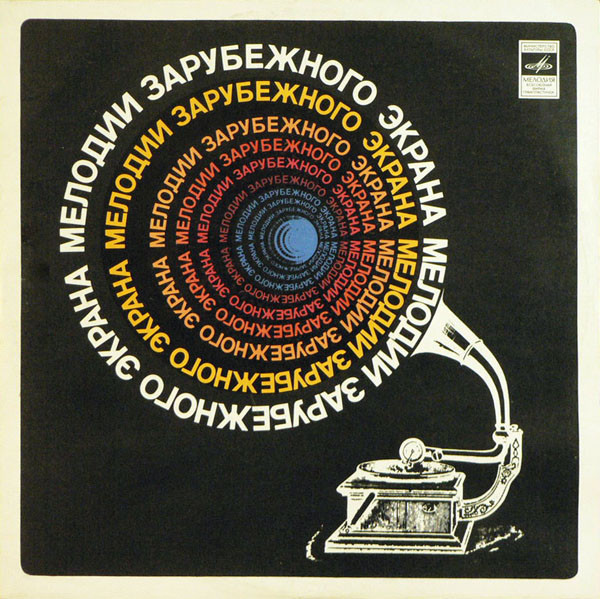
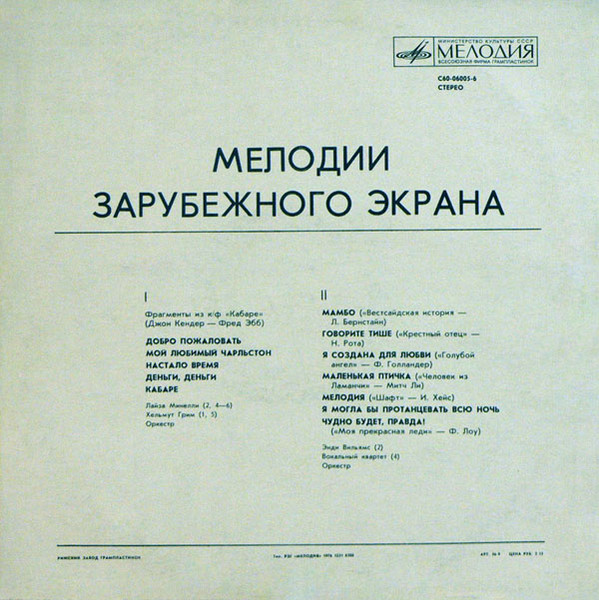
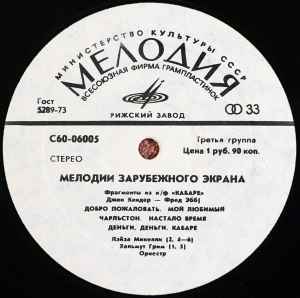
According to Wikipedia, the music video for ABBA 1976 hit Money, Money, Money “was inspired by the film Cabaret, showing Frida wearing a hat typical of the 1920s”. I didn’t know that until today, which happens to be the 50th anniversary of the film’s release. Back in 1976, I had no idea that this film even existed. One day, I was rummaging through the box of LPs at home and came across one that I’d never listened to before. I suppose the vinyl, unassumingly called «Мелодии Зарубежного Экрана», “Foreign Screen Melodies” (!), was brought by my cousin who at the time was the main provider of the music we listened to. And so there, under the subtitle Фрагменты из к/ф «Кабаре» (“Fragments from the movie Cabaret”), I spied the name «Деньги, деньги» (Money, Money) which I thought was a slightly abbreviated version of ABBA’s title «Деньги, деньги, деньги».
I promptly listened to the song (side A, track 5). What a disappointment and what a discovery at the same time! And the rest of the tracks too! It sounded like a good fun of a movie, it was.
Curiously, the title Mein Herr was translated as «Мой любимый», i.e. “My beloved”; Helmut Griem (as Хельмут Грим), who indeed appears in the movie but does not sing, was credited on tracks 1 and 5 instead of Joel Grey. At least
Liza Minnelli was mentioned. No such luck for the performers of assorted “foreign screen melodies” on the side B, like Mambo from West Side Story or Theme from Shaft.
It was not until 1988 that I watched the film. (Suddenly, somebody somewhere up there realised that a bisexual protagonist — a goodie! — and a treesome were not too much for Soviet viewers. I’d like to express my gratitude to that person.) Thankfully it was not a dub but a voice over by the great Victor Tatarsky. In my view, some parts of that translation are superior to the original — cf. «Моё тело не пробуждает в тебе дикую страсть? Не пробуждает?» and “Doesn’t my body drive you wild with desire? Doesn’t?”.
The film has aged surprisingly well. The songs are fantastic. The choreography is stunning. Young Liza is beautiful. The girls are beautiful. Even the orchestra is beautiful. And the anti-fascist message is as actual now as it was fifty years ago, or even more so.
There is no such thing as gender violence. There is domestic violence.
Neither male chauvinism nor feminism. The world needs humanism.
Women have greater emotional intelligence.
Inclusive language is redundant/ungrammatical/ridiculous.
We have equal rights now. Why do we still need feminism?
We hear or read nonsense like this on a daily basis. In her book, Clara Serra does an excellent job debunking common myths (or, rather, flagrant lies) and doubts about feminism patiently, in an accessible language and with watertight logic. Ah, if only voters cared for logic. Or read books, for that matter.
Quite unlike the books I reviewed here last month, viz. Mala mujer and El Placer, this one has no illustrations at all, save the cover art. But what a treasure it is!