Showing posts with label LGBTQ. Show all posts

Thursday, 18 June 2026

Carol

a film by Todd Haynes
based on a novel by Patricia Highsmith
screenplay by Phyllis Nagy
There’s not an ounce of guilt, there’s not an ounce of regret, over the nature of their attraction for each other. I also found Highsmith’s notions of what makes a good mother to be quite radical — the choices that people have to make in order to make the lives of their children better <in 1952> seemed really fresh, and radical. And still do, to this day, actually.

A beautifully atmospheric and stylish drama starring Cate Blanchett as Carol and Rooney Mara as Therese. According to Wikipedia, it took about 19 years to make this movie (1996 through 2015) while actual “filming was completed after 34 days”; it was shot on Super 16 mm film.

Carol continues the cycle Diversidad, Igualdad y Cultura by Filmoteca Canaria and Instituto Canario de Desarrollo Cultural.

Wednesday, 3 June 2026

Orlando, ma biographie politique

a film by Paul B. Preciado

According to Wikipedia,

ARTE France reached out to Preciado in hopes of producing a documentary focused on his work as a philosopher. Preciado rejected the idea and instead jokingly suggested that the film should be an adaptation of Virginia Woolf’s Orlando: A Biography in an attempt to shut down the conversation. To his surprise, ARTE France agreed and asked Preciado to make the film.

And good thing they did. The film is neither a documentary nor adaptation nor, despite the name, biography, but a process, metamorphosis, transition — like those of the film’s many intelligent, charming, and funny protagonists. And yes, it’s political. Enough said. Watch it. Enjoy it.

Orlando, mi biografía política opens the fifth cycle Diversidad, Igualdad y Cultura organised by Filmoteca Canaria and Instituto Canario de Desarrollo Cultural.

Wednesday, 22 October 2025

Devenir Rosa & Hummingbirds

I read the programme of this year’s Ibértigo and decided to watch the two films whose one-line summaries sounded least depressing. I think I made the right choice.

Devenir Rosa

a film by Valeri Hernani

A Peruvian short is a poignant dialogue between generations, that of Valeri and her grandmother Rosa.

Hummingbirds

a film by Silvia del Carmen Castaños and Estefanía “Beba” Contreras

Not much happens in this documentary set in Laredo, Texas (not to be confused with real Laredo), and thank goodness for that. Two teenage friends enjoy “doing nothing together”, they know it’s not gonna last, and it’s beautiful.

Tuesday, 29 July 2025

Five short films

by Alán González

Screened this Monday in Casa de Colón as a part of the cycle «Miradas audiovisuales. Pensar y comprender América». Presented by the director himself and followed by a colloquium, but I did not stay.

La profesora de inglés (2015)

Written and directed by Alán González. Starring Coralia Veloz, Héctor Echemendía and Roque Moreno.

El hormiguero (2017)

Written and directed by Alán González. Starring Grisell Monzón, Marybel García Garzón, Carlos Peña and Reynier Morales. Watch here.

Los amantes (2019)

Screenplay by Nuri Duarte and Alán González. Directed by Alán González. Starring Lola Amores and Noslén Sánchez.

La muchacha de los pájaros (2021)

Screenplay by Nuri Duarte and Alán González. Directed by Alán González. Starring Arlettis González, Omar Rolando González and Maggie Mateo.

Azul Pandora (2024)

Screenplay by Nuri Duarte. Directed by Alán González. Starring Lady Chiv, Mateo Menéndez, Eduardo Martínez and Yaité Ruiz.

Thursday, 3 July 2025

Love Lies Bleeding

a film by Rose Glass

Time: the news of the fall of the Berlin Wall are on the telly. Place: in the middle of nowhere. Well, somewhere in New Mexico, which is the same thing.

Starring Kristen Stewart, Katy O’Brian and Ed Harris, this Tarantinesque neo-noir thriller / Western / black comedy has got everything: lesbian romance, gruesome murders, bodybuilding competition in Las Vegas, you name it. Also, a couple of the most gross scenes I wish to unsee. All in all, pretty good stuff. Shame about the title though: couldn’t they think of something more unique? I prefer the Spanish Sangre en los labios, as corny as it is.

Love Lies Bleeding was shown as a part of the cycle Diversidad, Igualdad y Cultura by Filmoteca Canaria.

Tuesday, 25 March 2025

The Birdcage

a film by Mike Nichols
screenplay by Elaine May

Like Heaven Can Wait, this comedy is a remake. Which proves the point that a remake also could be fun — especially when (re)made by the great Nichols and May. Unencumbered by comparisons with the French movie, I enjoyed The Birdcage on its own right. Starring Robin Williams, Nathan Lane, Gene Hackman, Dianne Wiest, Christine Baranski and Hank Azaria.

Monday, 17 March 2025

Magical Caresses

a series of short films by Lori Malépart-Traversy
animation by Keyu Chen and Lori Malépart-Traversy

From the director of Le clitoris comes this charming “animated documentary series based on Caresses Magiques, a book series written and edited by Sarah Gagnon-Piché and Sara Hébert” (I took this quote from the end credits). The “animated documentary series” is really a mini-series, of five animated shorts no longer than 4 minutes each; and the “book series” was just two volumes, now out of print. The first of the films is narrated in English by Ms Malépart-Traversy herself; the other four feauture the voices of, I suppose, some of the book’s heroines (in French, with English subtitles). You can watch all the films on the National Film Board of Canada web site or on Vimeo (scroll down to the embedded videos).

Saturday, 15 March 2025

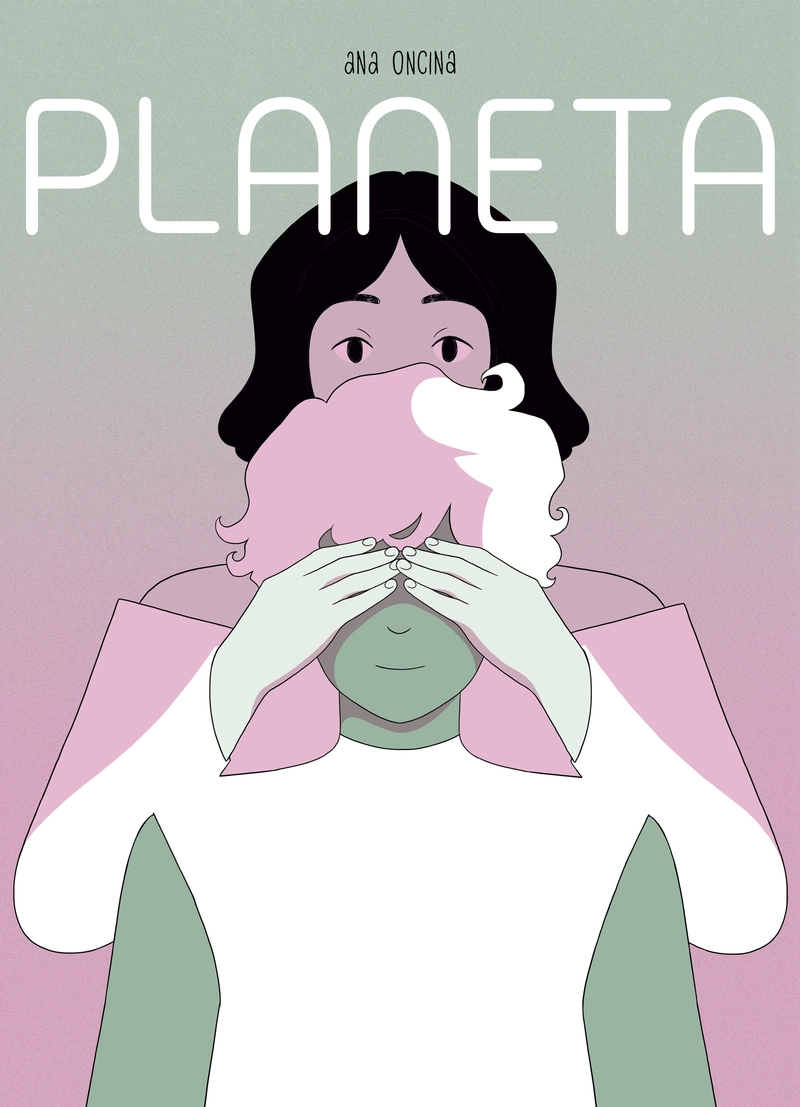
Planeta

by Ana Oncina

From the author of Croqueta y Empanadilla comes something completely, utterly different. Also, profoundly beautiful. And as much unsettling. You’ll feel unsettled if you couldn’t figure out what is reality (F, “forest”) and what is dream (P, “Planeta”), especially when in P you also dream about F. As Valentina does. On top of that, in P all human communication, apart from that with live-in partner, happens in virtual reality (V).

Sunday, 9 February 2025

El París de los Dragones

by Tony Sandoval and Joann Sfar
translated by Lorenzo Díaz Buendía

Confused plot and too many dead or wounded dragons for my liking. It’s the romance between a Hawaiian strongwoman princess and a pansexual mermaid, coupled with a wicked sense of humour, that makes this comic worth checking out.

Thursday, 14 November 2024

Daughters of the Dust

a film by Julie Dash
music by John Barnes

Strange, beautiful, confusing and compelling, Daughters of the Dust is quite unlike of any film I’ve seen. I have to confess that I wasn’t quite able to follow its meandering in circles plot, dozing off on acouple of occasions — or maybe more, as on waking up to another déjà vu made me unsure if I was really awake. So more reasons to watch it again.

Wednesday, 28 August 2024

Todo eso que no sé cómo explicarle a mi madre

by Sandra Bravo

I truly wanted to love Todo eso. Starting with the title and the phrase in its very beginning [1, p. 11]:

Si «cisgénero» te suena a chino, «poliamor» a orgías de pervertidos o eres mi madre, consulta el glosario que encontrarás al final de este libro.

I was looking forward to a blast of a book.

“But,” interrupts the perspicacious reader. “I can distinctly hear ‘but’. You wanted to love it but.”

The thing is, during the past few years, I read and enjoyed a number of books on the topic [26], some of them good and some others pretty damn good. Perhaps inevitably, I judge Todo eso against a rather high standard. So let me continue, and you’ll see if there’s a ‘but’.

We read for different reasons. One of them is to increase our knowledge. In this sense, there was little new for me to be learned from this book. (This is not the author’s fault.) For sure, there were new names, new books, a couple of concepts that I never read about in Spanish before, etc. etc. However, talking about genuinely new (for me) ideas, I would name one, coming from Luce Irigaray [1, p. 64 and clarified in the footnote 54]: Amo a te / J’aime à toi / Amo a ti, awkwardly translated to English as “I Love to You”.

Another reason is to see the author’s perspective and check how much (or how little) we have in common. I found myself agreeing with many of Sandra’s opinions — say, on homonormativity or sex work — and was glad to encounter references to familiar works, e.g. Yes, we fuck! [1, p. 115].

Yet one more reason to read is simply to take pleasure in it. Todo eso, in part, fulfilled the promise to be a fun read. Of course, it could be that this promise was imagined by me. I enjoyed the Chapter 2, Confesiones a la Virgen de una desvirgada, the most.

It’s OK to cherrypick. This is not a novel, not a prog-rock album, not a “take it or leave it” menú del día.

Now what could have been done better?*

  • Citations, citations and more citations. Sandra quotes profusely from a variety of (mostly feminist) writers. Sometimes the passages take more than a half of page, sometimes more than two pages [1, pp. 52—54, 102—104, 111—113]. What for? In many cases, they are long-winded and boring bits of text, clearly meant to support the author’s arguments. As it happens, these latter are enunciated much better, in short sentences and a lively language.
  • Solution: I’d say, ditch most of the quotes, shorten the essential ones, leave the references in the footnotes (as they currently are) and let the reader decide if they want to dig deeper. Naturally, the book will be twice as short then, about 100 pages. Good!
  • For a such a short book it’s quite repetitive. Sandra goes on in loops about her privileges, her sexuality, cisheteropatriarchy and her idea of feminism which is also anti-racist, anti-capacist and anti-capitalist. No matter how important these issues are to the author, repeating makes them less so to the reader.
  • Solution: saying once is enough; cut the repeats, maybe we’ll have 80 pages or so in the end.
  • In spite of all “own experience” and “being an exhibitionist” spiel, Sandra shares surprisingly little of that experience. For instance, she writes [1, p. 79]:
    He tenido sexo con centenares de hombres cis, y no muchos me han sorprendido. En cambio, mujeres sexualmente desinhibidas, aunque inferiores in cifra, eran mucho más abiertas, creativas y libres de complejos.
    Hundreds of men, what a perseverance! I guess most would give up after the first half dozen of them. Still, at least some of those cis men must have surprised the author, why not to tell us? And what about those “lower in quantity”, higher quality women? Alas, she doesn’t go much beyond generalisations like above.
  • Solution: a few real-life anecdotes to illustrate the author’s points will do wonders as well as pad the book up. Spare us the graphic details; these examples don’t even have to be about sex. Check out Más peligroso es no amar [3] and Mujeres que follan [6] for inspiration.
  • Now we are coming to the most cringeworthy part: Chapter 7, Y lo más importante de todo, ¿cómo le explico yo esto a mi madre?, in particular Carta a mi madre. This last chapter confirms my worst fears: Ms Bravo indeed has no clue how to explain the titular “all this” to her mum. Why on earth did she choose the open letter form then? It’s painfully embarrassing to read. How about just talk to her mum or, failing that, write a normal (closed, personal) letter?
  • Solution: do us a favour, lose Carta a mi madre.
  • Finally, the bit that was in fact promised: the Glossary. What a disappointment! Typically, authors include glossaries to provide the reader with definitions in order to avoid terminological confusion. Here it seems to exacerbate the confusion. The terms patriarchy and queer, Sandra says, are difficult to define. Instead of explaining attachment in her own words, she “clarifies” it with yet another abstruse quote which actually describes attachment theory (without defining what attachment is). In the entry for LGTBIQ+, she writes that if you don’t know what a “lesbian” or “gay” is, you’ll have difficulties understanding her book. Family is what a heterosexual couple achieves after practicing intercourse without a condom for a period of time. And so on.
  • Solution: make the definitions clear and concise. (Like the author’s definition of feminism: a fight for the elimination of any kind of oppression. It’s not required that everybody agrees with them.) Define basic concepts such as sex and gender before moving on more complex ones. Avoid emotional comments and finishing sentences with “vamos” — there’s whole book for that kind of thing. Make sure that the use of the terms in the main text is consistent with their definitions.
  • By the way, (ab)using the term “person” and avoiding “woman”, as is done in the Glossary, does a great disservice to feminism. Not that Sandra is unaware of it: elsewhere, she describes how replacing “gender violence” with “domestic violence” is employed by the far right to invisibilise the problem [1, pp. 47—50]. She also emphasises the need of safe places specifically and exclusively for women, not persons [1, pp. 114—115].
  • Solution: the obvious one. Say “man” or “woman” when needed.

See? There are problems; I suggest solutions. And did I use the word “but” (apart from right now, that is)?

I doubt that the author, in the unlikely event of reading this post, would heed my free and disinterested advice. Which is a bloomin’ shame really.


* Everybody has their own criteria of what is “good” (and, by extension, “better”). Some readers might have liked the bits that bothered me the most. As this is my blog, I express here my opinions what is better for the reader.
I wonder if the author is conscious that the sheer length of these citations is stretching the right to quote a tad too far.
Clara Serra explains this brilliantly in her Manual ultravioleta [5, chapter 16].

References

  1. Bravo, S. Todo eso que no sé cómo explicarle a mi madre: (Poli)amor, sexo y feminismo. Ediciones Plan B, 2021.
  2. Casquet, N. and Andyn. Mala mujer: La revolución que te hará libre. Lunwerg, 2020.
  3. Etxebarria, L. Más peligroso es no amar: Poliamor y otras muchas formas de relación sexual y amorosa en el siglo XXI. Aguilar, 2016.
  4. Requena Aguilar, A. Feminismo vibrante: Si no hay placer no es nuestra revolución. Roca Editorial, 2020.
  5. Serra, S. Manual ultravioleta: Feminismo para mirar el mundo. Ediciones B, 2019.
  6. Teruel, A. Mujeres que follan: Historias de sexo real contadas por ellas. Libros del K.O., 2023.

Wednesday, 3 July 2024

Tuesday, 23 April 2024

Adão, Eva e o fruto proibido & La uruguaya

Two South American films screened in Casa de Colón last week, with a surprise appearance of Ana García Blaya, the director of La uruguaya.

Adão, Eva e o fruto proibido

a film by R.B. Lima

A short starring Danny Barbosa, Lay Gonçalves, Manoa Vitorino, Margarida Santos and William Cabral.

La uruguaya

a film by Ana García Blaya

Lucas Pereyra is a moderately successful writer in his mid-forties, married, with a son, and right in the middle of a stereotypical mid-life crisis. He gets infatuated with a much younger woman, the titular “girl from Uruguay” named Guerra. A series of mildly comic mishaps ensue.

The main problem of this film for me is that I don’t find Lucas “mid is his middle name” either likeable or funny or intriguing — quite unlike his romantic interest. Now I didn’t read novel of the same name by Pedro Mairal on which the film is based. I don’t know whether Pereyra is supposed to be that mediocre. If the answer is yes, Sebastián Arzeno does a splendid job portraying him. Luckily, there is no judging or moralising of any sort in the film; still, I couldn’t care less about Pereyra. Which is a shame. Fiorella Bottaioli shines as Guerra: both down-to-earth and full of mystery.

Sunday, 14 April 2024

Elia

by Fermín Solís

After breaking up with her lover Olga (married, with two children), Elia escapes to a small village in Galicia. Which immediately reminded me of Un amor, and brought about the same thought: moving from the city to the arse end of nowhere in a hope to remake one’s life is the worst idea ever.

In this graphic novel Fermín Solís tackles difficult topics with sensitivity and — shall I say it? — love. The monochrome drawings are simple and expressive; just wait till the page where another colour appears! There are plenty of humourous episodes too. My favourite is the airplane game that Elia and her friend Luis play in the car: taking Buddy Holly, Ritchie Valens and The Big Bopper off that fateful plane and shoving there instead all the singers and bands they hate.

Tuesday, 9 April 2024

Lang historie kort

a film by May el-Toukhy

This not-too-romantic romantic comedy provides a refreshing alternative to En familie and its ilk. Long story short: there’s no story as such. Over several years, a group of friends in relationships of many shapes of pear meet at various festive events (eight parts = eight parties). Starring Mille Lehfeldt, Trine Dyrholm, Danica Curcic, Jens Albinus (The Boss of It All, Rosita), Peter Gantzler (Italiensk for begyndere, The Boss of It All), Ola Rapace and many others, including a very large dog.

Friday, 26 January 2024

Fifteen short films

I missed them last January, but this Wednesday, just like year before, and all these years before that, I went to Teatro Guiniguada to see the 15 winning shorts of San Rafael en Corto. I have to say that the quality of the films went up — I liked all of them. My favourites were Araceli by Andrea Gutiérrez, El Alquimista by Oscar Santamaría, Patata by Emilio González and SAI* by Aldo and Celia González.

Proyección del palmarés de la XIX edición de SREC

Teatro Guiniguada, Las Palmas de Gran Canaria
Tuesday, 24 January 2024, 19:30
  1. La Espera by Manel Salgueiro
  2. Araceli by Andrea Gutiérrez García
  3. Allegro (ma non troppo) by Zhana Yordanova
  4. Heroínas by Iris Carballo Déniz
  5. Desmadres by María Sanz Esteve
  6. El Alquimista by Oscar Santamaría
  7. El mejor fruto del huerto by CEIP La Zafra
  8. Volver contigo by Iván Umpiérrez Cañada
  9. Mar & Flor Amazonas by Elena Gracia, Marta Fuenar & Natalia Martínez
  10. La era de Verdugo by Daniel Santana Sosa
  11. Patata by Emilio González
  12. VIh-VIR by Estella Lola Cedrún Lastra & Ana Rosa González
  13. Eco Papa Whisky by Himar Soto Martín
  14. SAI by Aldo González & Celia González
  15. Fría by David Sanz

* SAI stands for Sistema de Alimentación Ininterrumpida (uninterruptible power supply).

Sunday, 31 December 2023

Mujeres que follan: Historias de sexo real contadas por ellas

by Adaia Teruel

I learned about this book quite by chance, thanks to an excerpt published in Pikara Magazine. Then I forgot all about it. And then I saw it in the library, leafed through it and knew that I had to read it.

The book includes interviews with 26 women in their forties who happen to live in Barcelona, although not all were born there. Plus two “bonus tracks”: Candela, a trans woman of 63, and Iris, a pansexual girl of 33. Single, married, separated, divorced, widowed, with and without children, straight, gay, bi, poly, vanilla, kinky, submissive, dominant, you name it — if you must.

Clasificar la sexualidad en función del estado civil o las preferencias sexuales tiene el mismo sentido que hacerlo en función del color de pelo de las entrevistadas. Si de algo me ha servido entrevistar a estas mujeres es para darme cuenta de que no hay una única manera de practicar sexo, sino tantas sexualidades como personas.

Wednesday, 27 December 2023

The Telling

by Ursula K. Le Guin
“We’ll be making love on a world nobody even knows the name of now, a thousand years from now!”

If this book was written by anybody else, it would likely be considered pretty good or at least promising. Compared though to the Earthsea cycle or, say, The Dispossessed, The Telling comes out as weak and, worse, unnecessary.

I liked the story. This is what it really should have been: a short story. As a novel, it doesn’t work for me. The characters are two-dimensional at best and one can see how it’s gonna end miles ahead. Cut, cut, cut. And yet... I feel that the subplot of Pao and Sutty could have been developed (was developing?) into something interesting. Something truly big. Alas, Ursula Le Guin is no longer with us so we’ll probably never know.

Pao had tried on Sutty’s old grey-and-silver saree once, to entertain Sutty while she was convalescing, but she said it felt too much like skirts, which of course she had been forced to wear in public all her life because of the Unist clothing laws, and she couldn’t get the trick of securing the top. “My tits are going to pop out!” she cried, and then, encouraging them to do so, had performed a remarkable version of what she called Indian classical dance all over the futons.

Sunday, 5 November 2023

Madame X — Eine absolute Herrscherin

a film by Tabea Blumenschein and Ulrike Ottinger

There are only two user reviews of this absurdist comedy on IMDb: one reviewer gave Madame X nothing, another 10/10. I found the opening collection of Pythonesque sketches the most entertaining. At 147 minutes, however, it’s way too long and repetitive for the message. In the version screened at Filmoteca, the German dialogue was subtitled while the English one was not; no wonder some people have left half-way through. Then again, when it’s cold and wet outside, I can think of worse options than sitting in a warm cinema, wondering what a lesbian pirate ship’s weird crew will do next.

Monday, 19 June 2023

Fair Play

by Tove Jansson
translated by Thomas Teal
introduction by Ali Smith

Not much is going on in this short book (subtitled “a novel” but more like a short story collection), and at the same time a lot is going on. Mari and Jonna — quite obviously based on Jansson herself and her partner, Tuulikki Pietilä — are two artists in their seventies who live on a small island. Quite apart from their creative work, they are busy letting out, after all these years together, some things about their mothers (One Time in June, Fog) and fathers (Viktoria); getting jealous (Jonna’s Pupil, Stars); and starting new friendships (In The Great City of Phoenix). Wise, touching and at times hilarious. Love isn’t mentioned often but it’s there, all over the place.

The opening and closing chapters, Changing Pictures and The Letter, nicely bookend the collection; the rest could be (re)read in any order.

He leaped up and began striding back and forth across the room with long, almost dancing steps. “No, say nothing. What is it I have found? I have found a glass shard of what I call the Finnish legend, a shard of a clumsy fairy tale, and I have made this glass shard sparkle like a diamond! Is there any more tea?”
“Not at the moment,” Mari replied rather coldly.
“You should use a samovar.”
Mari filled the saucepan and turned on the hotplate. “It will take a while,” she said.
Wladyslaw said, “I don’t like your tone.”
Wladyslaw
“But you don’t have to get meals for her, I hope.”
“No, no, I told you. Just coffee.”
Once, when Mari went over to Jonna’s on the wrong day to borrow a pair of pliers, she walked right into a coffee break. There were two kinds of salad, Camembert, and small pasties. And the beef that Mari and Jonna were supposed to have the next day had been cut into elegant strips and decorated with parsley. On top of it all, Jonna had lit a candle on the table. They all had coffee. Demonstratively, Mari ate nothing.
Jonna’s Pupil
Jonna said, “I’m not talking about your father. I’m talking about mine. He used to tell us about his trips. You never knew what he was making up and what really happened.”
“Even better,” Mari said.
“No, wait... They were awful, terrifying things, including storms, although he’d never been to sea.”
“But that can make them even better,” Mari said.
“You’re interrupting. And when he was talked out and didn’t know how to end it, he’d just say, ‘And then it started to rain and everyone went home.’”
“Excellent,” Mari said. “Wonderful. Endings can be really hard.”
Viktoria