The only record of Peter Gabriel I ever owned on vinyl was manufactured in the USSR and entitled simply «Питер Гейбриэл» (apparently, they weren’t so sure how to translate So to Russian, and the spelling «Гейбриэл» must have looked innocent back then).
I also had a curious double compilation album Greenpeace Breakthrough (1989) which included the So opener «Красный дождь» (Red Rain). I completely forgot that, in addition to Peter Gabriel (now as Питер Гэбриэл), it featured Sting, Grateful Dead (Грейтфул Дэд), Sade (Шаде) and Dire Straits (Дайер Стрейтс)!
About the same time, I first spotted Sledgehammer and Big Time music videos on 2×2, the first commercial TV channel in the USSR. Man I was impressed.
The covers of the So songs abound. I love Sledgehammer by Morgan James...
But nobody makes Peter Gabriel covers better than Gabriel himself, with a little help from his friends. My favourite So re-interpretations are Don’t Give Up as a duet with Tracy Chapman...
...and In Your Eyes with Youssou N’Dour, Angélique Kidjo and Soweto Gospel Choir.
If I had to choose one record from not-that-large Rainbow’s discography, that would be Rising. (Sorry, Difficult to Cure, my first Rainbow love.) I still remember the first time I read about this album («Радуга восходит») in the tremendously popular Soviet magazine Ровесник:
Наверное, это лучшая пластинка Ричи Блэкмора до сих пор. Не то чтобы она содержала какие-нибудь музыкальные откровения (единственное, возможно, исключение — «Старгейзер»; Блэкмор говорит, что первоначально написал ее как пьесу для виолончели). Главное достоинство диска — необыкновенная мощь и динамизм. Образно говоря, он сделан в нокаутирующем стиле, вполне достойном страшного костистого кулака, изображенного на обложке. «Мы записывали этот альбом около десяти месяцев, и у меня нет причин быть им недовольным», — сухо заметил Блэкмор по поводу успеха пластинки.
Even then I couldn’t agree with the author of this publication. What did he mean saying “not that it contained any musical revelations”? Even without Stargazer — oh blasphemy! — there are enough revelations for a dozen of rock albums.
Rising is one of those albums that are best on vinyl. Why? Because there are two sides, that’s why. The epic Stargazer is not the fifth track — it’s the first track on Side B. You can’t really listen to it properly just after Do You Close Your Eyes. You have to flip the record, and, better still, use the intermission to refill your cup/mug/glass. And then, when A Light in the Black is done, flip it back to Side A (refill the cup etc.) and listen to Tarot Woman — another epic. Also, as it is the case of In the Court of the Crimson King, the cover art it totally worth it. That fist, it has to be that big. If I ever own a turntable again, Rising and ITCOTKC will have to come with it.
So far, I didn’t hear any Rising song cover that would beat the original. Still, there are some good ones. My favourite Stargazers are that by Cincinnati Vampires featuring vocals of Melody Cristea and fantastic Kalonica Nicx on drums, and another one by Contra Bass, a kids band from Vinnytsia, Ukraine. It’s nice to see young people playing decent music.
Here’s another LP that my mum often asked “to put on”. I don’t know who and when bought it. By all accounts, it was a weird compilation. Only on five (of 16) tracks the performers were credited, one of them incorrectly; the rest of the songs was played by an anonymous “orchestra”. Some of the titles were translated in a funny way (how A media luz even can be «Твоё имя»?) and some not translated at all (El Choclo = «Эль чокло»). But my mum loved this album and, re-listening it now, I realise that I liked it too. What not to like? After all, it delivers what is says: a waltz after a tango and a tango after a waltz, and comes with a psychedelic cover artwork.
After spending two weeks living in an old and very cold house, this song came to mind, just in time for its author’s 88th birthday. A song about an old house on New Arbat appeared in the 1966 Soviet comedy Саша-Сашенька, of which Vysotsky said that it was “a really bad movie” and that he contributed his song “due to a misunderstanding”. I never watched it. According to Wikipedia, in the film the song was performed by an “unknown actor”. Elsewhere, it is said that the song was ‘written for Tariverdiev’s opera “Who are you?”’ («Кто ты?»). This version on YouTube is that I knew and loved since the 1970s from magnetic tape recordings. Unfortunately I couldn’t find a decent English translation of it.
Владимир Высоцкий
Музыка Микаэла Таривердиева Песня о старом доме на Новом Арбате
Стоял тот дом, всем жителям знакомый,
Его ещё Наполеон застал,
Но вот его назначили для слома,
Жильцы давно уехали из дома,
Но дом пока стоял...
Холодно, холодно, холодно в доме.
Парадное давно не открывалось,
Мальчишки окна выбили уже,
И штукатурка всюду осыпалась,
Но что-то в этом доме оставалось
На третьем этаже...
Ахало, охало, ухало в доме.
И дети часто жаловались маме
И обходили дом тот стороной.
Объединясь с соседними дворами,
Вооружась лопатами, ломами,
Вошли туда гурьбой
Дворники, дворники, дворники тихо.
Они стоят и недоумевают,
Назад спешат, боязни не тая,
Вдруг там Наполеонов дух витает,
А может, это просто слуховая
Галлюцинация?
Боязно, боязно, боязно дворникам.
Но наконец приказ о доме вышел,
И вот рабочий, тот, что дом ломал,
Ударил с маху гирею по крыше,
А после клялся, будто бы услышал,
Как кто-то застонал
Жалобно, жалобно, жалобно в доме.
От страха дети больше не трясутся:
Нет дома, что два века простоял,
И скоро здесь по плану реконструкций
Ввысь этажей десятки вознесутся —
Бетон, стекло, металл...
Весело, здорово, красочно будет.
Turned out that I remembered this movie pretty well. The difference is, now I don’t need English subtitles to understand the dialogue. The great late Marisa Paredes is as elegant as she is in the role of Leo. The comic relief is provided by Chus Lampreave and Rossy de Palma as Leo’s mother and sister, respectively.
*
I’ve found the issue of Leeds Student with screening times for this film. To my surprise, the first page of the newspaper sports a photo of “the rare cloud phenomenon that ... is unlikely to be repeated during our lifetime” which I had a pleasure to observe with my own eyes on 16 February 1996.
†
It was shown as part of the cycle Historia de nuestro cine, to mark the anniversary of the death of Marisa Paredes.
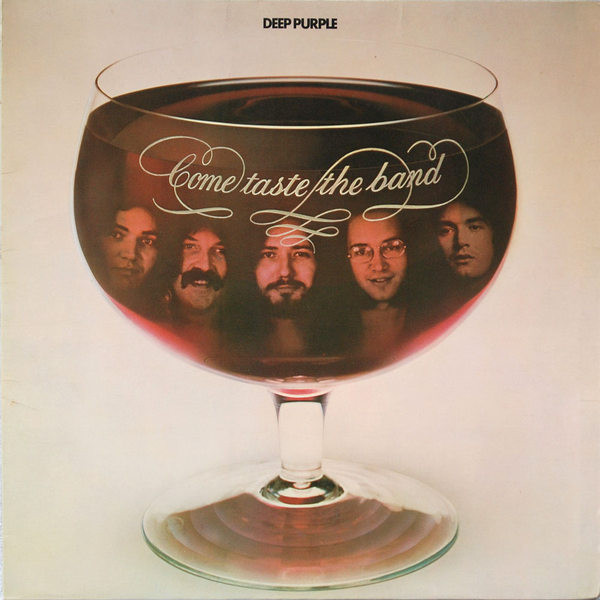
Isn’t it curious how, 50 years later*, the only Mark IV studio album still manages to divide Purple fans. Is it, or is not, DP? Why it shouldn’t be DP? Come Taste the Band could (or should) be called pioneering for being the first album in Purple discography not to feature Ritchie Blackmore. It’s not Machine Head, and thanks for that. It did not spawn any stadium hits à laSmoke on the Water — ditto.
I myself didn’t quite dig CTTB upon first hearing, some time in early ’80s. The fact that I heard the atrocious Last Concert in Japan first must have contributed to my initial prejudice towards Tommy Bolin. But why? Poor Tommy couldn’t even play on Last Concert in Japan, not with two hands anyway. Forget it. On CTTB, Bolin shines through and through. Re-listening it now, I realise how ahead of the time this record was.
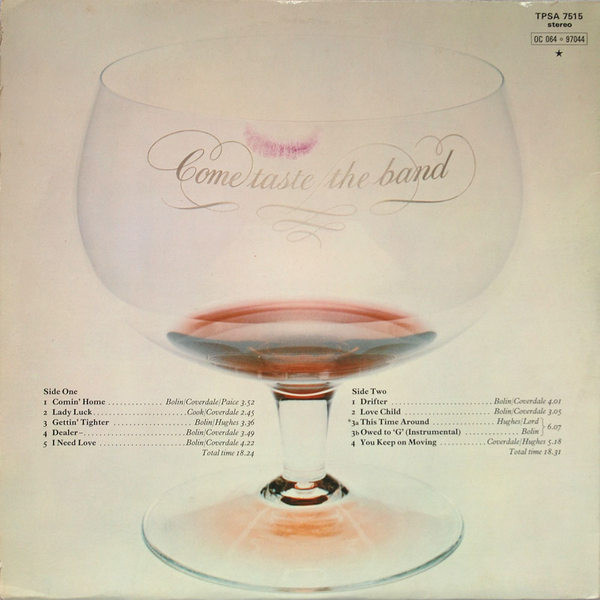
The title is, of course, a portmanteau of the famous Cabaret lyrics. My favourite tracks are Gettin’ Tighter, This Time Around/Owed to ‘G’ and You Keep On Moving. The 35th Anniversary Edition (why not 30th or 36th, I wonder?) does not provide much in terms of extra material. The second CD (2010 Kevin Shirley Remix) is a refreshing alternative worth listening to... before you go back to enjoy the “original” version, in this case, CD1 (i.e. 2010 Digital Remaster). If I owned a turntable, a space to house it, and £105 to spare, I’d go for the real thing, not least because of its gorgeous cover art.
*
Wikipedia says, in the same article, that the album was released on 10 October 1975 and on 7 November 1975. This cannot be right. According to the BPI database, Come Taste the Band was certified silver on 01.11.1975, six days before its release on 07.11.1975.
Ishiguro’s second novel is not a follow-up, but is in a similar vein to A Pale View of Hills. The narrator, a retired painter Ono, could be considered a development of Ogata-San. The title, as I just learned, is based on the literal translation of Ukiyo-e, “picture of the floating world”. Once again, the characters seem to be permanently embarrassed about practically everything.
This childlike aspect of Shintaro has frequently been a source of entertainment for Mrs Kawakami, who has a somewhat wicked side to her. One night recently, for instance, during a rainstorm, Shintaro had come running into the little bar and begun squeezing his cap out over the doormat.
‘Really, Shintaro-san!’ Mrs Kawakami had shouted at him. ‘What terrible manners!’
At this, Shintaro had looked up in great distress, as though indeed he had committed an outrageous offence. He had then begun to apologize profusely, thus leading Mrs Kawakami on further.
‘I’ve never seen such manners, Shintaro-san. You seem to have no respect for me at all.’
‘Now stop this, Obasan,’ I had appealed to her after a while. ‘That’s enough, tell him you’re just joking.’
‘Joking? I’m hardly joking. The height of bad manners.’
And so it had gone on, until Shintaro had become quite pitiful to watch. But then again, on other occasions, Shintaro will be convinced he is being teased when in fact he is being spoken to quite earnestly. There was the time he had put Mrs Kawakami in difficulties by declaring cheerfully of a general who had just been executed as a war criminal: ‘I’ve always admired that man since I was a boy. I wonder what he’s up to now. Retired, no doubt.’
Some new customers had been present that night and had looked at him disapprovingly. When Mrs Kawakami, concerned for her trade, had gone to him and told him quietly of the general’s fate, Shintaro had burst out laughing.
‘Really, Obasan,’ he had said loudly. ‘Some of your jokes are quite extreme.’
My brother and I first heard Wish You Were Here relatively late, in early ’80s, already after The Wall. Like most of Western music at the time, it came on magnetic tape reel. It was a good quality recording (chromium dioxide tape, 19 cm/s, directly from vinyl) that turned out to be an exceptionally good quality recording. By the beginning of the title track my brother temporarily left our (tape recorder-hosting) room and went to the kitchen. Then I heard him shouting, “Will you quit plinking!” — obviously at me, as we were alone in the house at that moment. As flattered I was, it wasn’t me. It just so happened that Gilmour’s acoustic guitar in the intro sounded very similar to mine. I myself wouldn’t dare to play along the song I heard for the first time in my life. That’s how good the tape was.
There was nothing to grow on me: it was a love at first hear. WYWH dethroned all other Pink Floyd’s albums, even The Dark Side of the Moon. By contrast, the cover art, when I finally saw it, was a disappointment, if not to say sacrilege. I wouldn’t mind to have that postcard though.
In 2006, I went to see Rodrigo y Gabriela at The Junction in Cambridge. As they often did back then, they played Wish You Were Here with Rodrigo using a (half-full) beer bottle as a slide and the audience singing along. I am still looking for a decent quality video of that or a similar performance, but believe me, it was magic. How I wish you were there.
Every year, I think “this is the last one”; then my memory brings up a few more of her words or expressions. Here is another чёртова дюжина (baker’s dozen) of them.
This was another LP that my mum loved. DiscoGS lists 57 versions of this record, the earliest of them released in 1967. The orchestra is credited as Большой Симфонический Оркестр Всесоюзного Радио, which was its official name between 1966 and 1974. So let’s think Suites were recorded in 1966—1967. In our house, however, we had a 1971 pressing. I even remember the time (1971?) when it was squeaky new.
Since it was the only Grieg vinyl we had (Holberg Suite and Piano Concerto in A minor would come later), my mum referred to it just as a “Grieg”. “Put on a Grieg please.” My all-time favourite was «Шествие гномов» (March of the Trolls)*. As it was the last track, I had to wait. But it was well worth it.
It still is.
Edvard Grieg Peer Gynt Suites Nos. 1 & 2, Lyric Suite
Эдвард Григ Пер Гюнт. Две сюиты из музыки к драме Г. Ибсена Лирическая сюита, соч. 54
This piece, Troldtog (literally, “troll procession”), is known in English as either March of the Trolls or March of the Dwarves. I prefer the former translation, while the Russian «Шествие гномов» means “procession of the gnomes”.
†
I suppose Soviet bureaucrats couldn’t leave «Норвежский марш» (“Norwegian march”) as such, they needed to insert peasants somewhere, as in “Workers and Peasants”. Thus «Норвежский крестьянский марш» (“Norwegian peasant march”). The original title, Gangar, is simply “march”, not even “Norwegian”.
A year after their father’s death, his three adult children return to their family home in the country. To spruce it up before selling, no doubt. As the memories flood back, they don’t seem to be that sure.
I wish them all the luck in the world and... hope they keep the house.
In spite of its title, the film — just like the bossa nova that gave it the name — is full to the brim with the very saudade, that is, nostalgia, longing, blues, etc. it says to be “no more”. For saudade is its motor, as it is for old-timers filling the ballroom.
Chega de Saudade reminded me strongly of, and probably was influenced by, Ettore Scola’s Le Bal. A stellar cast including the great late Elza Soares. Watch it.
музыкальный суп / супец: гороховый суп // literally, “musical soup”; pea soup
набивать себе цену: to push or bid up one’s price; typically said of somebody who refuses or hesitates to stay for dinner, take another helping, accept a gift and so on ♦ «бери ещё, не набивай себе цену»
навести марафет, наводить марафет: put something or oneself in order
не продохну́ть: can’t get a break, there’s no respite
невпроворот: bags of (things to do) ♦ «у вас у самих небось дел невпроворот»
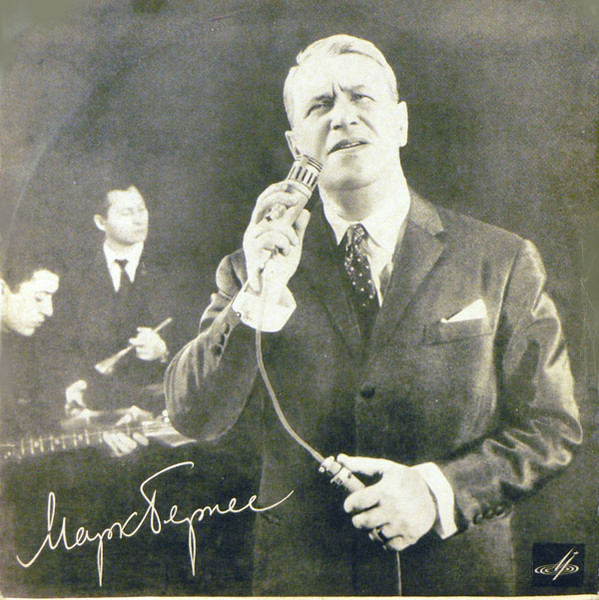
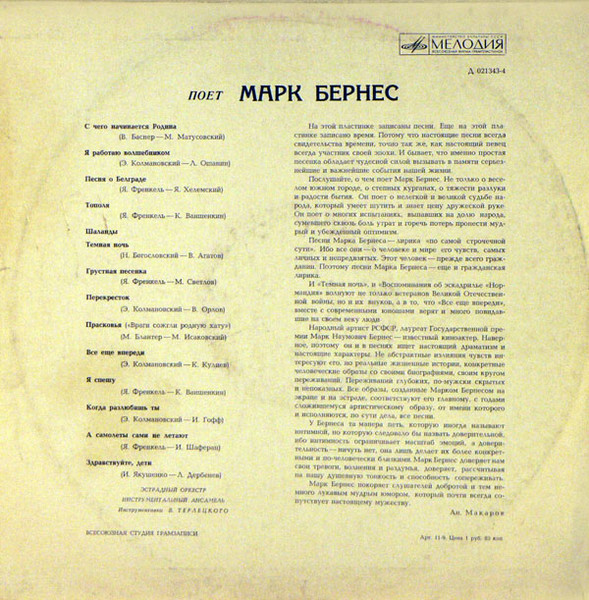
Very different from Les Grandes Musiques de Films but equally loved by my mum was an LP called simply «Поёт Марк Бернес» (Mark Bernes sings). Since the mid-seventies, although she was perfectly able to put it on the turntable, my mum would rather ask my brother or me to do it. As a result, the vinyl was scratched beyond any reason. So yes, another record I grew up listening to and damaging it in the process.
On the sleeve, a black and white photo of a middle-aged man holding a mike. Back then, I’d probably say “an old man”. Old? The album was released in 1968; Mark Naumovich Bernes (Марк Наумович Бернес) died the following year aged 57.
I myself would never call Bernes «певец» (singer) — I felt that word was reserved for the likes of Iosif Kobzon, Lev Leshchenko or Muslim Magomayev. Bernes was a chansonnier. He was not singing his heart out but talking, joking, telling a story.
I can’t listen to this disc now with the same ears as 50 years ago. The opener, «С чего начинается Родина» (What Does the Homeland Begin With), just makes me cringe. I can live with most of the lyrics — I mean, it’s all right, not worse than a typical Anglophone pop song — such as the one of surprisingly jazzy «Всё ещё впереди» (Everything is Still to Come). Two tracks, however, are unquestionable masterpieces: «Тёмная ночь» (Dark is the Night) and «Шаланды, полные кефали» (Scows Full of Mullet)*, both composed by Nikita Bogoslovsky with lyrics by Vladimir Agatov for the 1943 film «Два бойца» (Two Soldiers). The songs in the movie sound quite different from those on the 1968 record. For example, in the “original” «Шаланды» Bernes pronounced the name Odessa as «Одэсса» /ɐˈdɛsːə/ while in the ’60s rendition it’s the normative «Одесса» /ɐˈdʲesːə/. Imprinting and all, I still prefer the latter version†.
As for «Тёмная ночь», it deservedly became one of the most famous and beloved Soviet songs created during the Great Patriotic War... and that despite neither being patriotic nor mentioning the war. Yes, we know, the war is raging on — in the film. Bullets, mortal combat, death are all present, but there is no word “war” in the lyrics. And so the song transcends time, place and circumstances. An immortal classic.
*
Curiously, the word шаланда comes from the French chaland (barge), and that, in its turn, from Ancient Greek χελάνδιον; кефаль (mullet) from κέφαλος; and Одесса (Odessa) itself was named after the ancient Greek city of Odessos (Ὀδησσός).
†
According to Nikita Bogoslovsky, «Шаланды», its success notwithstanding, was harshly criticised by Soviet bureaucrats (who likened the song to criminal folklore) and not recommended for official performances.
It’s been cold outside, innit? Even here in Canarias it’s pretty chilly by night. So this song came up in my memory.
В холода, в холода...
Of course Vysotsky would normally accompany himself on the guitar, but this jazz-waltz version recorded with Georgy Garanian’s big band Melodia (Мелодия) is exquisite. As I just have learned from Russian Wikipedia, in 2009 Garanian founded the jazz festival «Играем джаз с Гараняном» (“Playing jazz with Garanian”) which has been taking place annually on 25 January!
I’ve found a number of English translations which render the words «в холода» as “to the cold”, “into cold”, or “into the cold”. Oh dear. «В холода» really means “when it’s cold” (outside), “in cold weather”. This is a completely different meaning of the preposition «в»! And even if we wanted to go to a colder place, neither Minsk nor Brest would do: they are normally warmer in winter than, say, Moscow. I like the re-interpretation of this song by Mika Tubinshlak: not literal (for example, he swaps the cold for the mist and rain) but quite poetic and true to the spirit.
Владимир Высоцкий Холода
Vladimir Vysotsky, Mika Tubinshlak (translation) Through the mist
В холода, в холода,
От насиженных мест
Нас другие зовут города,
Будь то Минск, будь то Брест,
В холода, в холода.
Неспроста, неспроста,
От родных тополей
Нас суровые манят места,
Будто там веселей.
Неспроста, неспроста...
Как нас дома ни грей,
Не хватает всегда
Новых встреч нам и новых друзей,
Будто с нами беда,
Будто с ними теплей.
Как бы не было нам
Хорошо иногда,
Возвращаемся мы по домам.
Где же наша звезда?
Может — здесь, может — там...
Through the mist, through the rain
From our sheltering nest
Other places are calling our names
To the east, to the west,
Through the mist, through the rain.
Home is where we belong
But we hear them again
Distant voices we’ve known all along
Like the missing refrain
From an old favourite song.
And it seems, yes it seems
Live can be so much more
New adventures and friendships and dreams
Once we walk through the door
So it seems, so it seems.
But no matter how clear,
How light-hearted we are
Home is waiting, and we reappear.
Where is our lucky star?
Maybe there, maybe here...
In the first post-Soviet year, when we had no money and were surviving being permanently drunk on new, as we thought, freedom, I bought this book from a rickety stall somewhere in the vicinity of Park Kultury metro station. I loved it so much that I kept returning to that stall, so many of my friends and colleagues have got it as a gift. Some of its limericks (or parts thereof), in Russian translation, became our cultural references that stood the test of time.
Five teenagers living in a small town in Donbass have a dream. Well, they have a lot of dreams, mostly about the end of the war, or about getting out of this arse end of nowhere. But the most outlandish one is to visit Himalayas.
As it happens, this is the one dream that actually comes true. Pretty unbelievable, I say. And the film, I’m afraid, does not make it believable — a fatal flaw in a documentary. Which is a shame. I can’t blame the director — she interrupted the work on the picture she had been filming for three years when the full-blown Russian invasion of Ukraine started in order to fight on the frontline. It could be that she lost the interest in the film, at least for a while. That she eventually managed to finish it, after coming back, is already a miracle. In any case, the film as envisaged does not exist. The war added a harsh epilogue: three protagonists became refugees; the contact with the remaining two who fell under occupation was lost.
We Will Not Fade Away (rendered in Spanish as “Nosotras, mañana”) was the last Documental del Mes of this year.
Another great comic from Fior. I was half expecting the protagonists go their separate ways. That would be more logical and the book almost comes to that point... I felt slightly annoyed by them coming back together, but hey, who wants 5,000 Kilometers Per Second2? Not me. Hypericon could be an alternative universe version of 5,000 kps though... I said too much already.
Like in Celestia, I find most of the dialogue superfluous. Ditto the internal monologue of Teresa. With some exceptions, of course. Such as Teresa and Ruben’s bickering.