Showing posts with label China. Show all posts

Wednesday, 19 November 2025

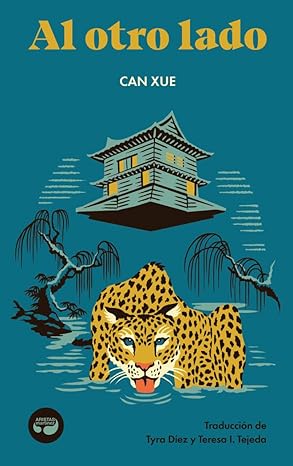
Al otro lado

by Can Xue
translated by Tyra Díez and Teresa I. Tejeda

I borrowed this book from the library without even knowing who Can Xue is. I just read the first paragraph of the first story that gave the collection its name and knew that I had to finish it. A few days later, I read that Can Xue was one of the favourites to win this year’s Nobel prize in literature. I didn’t read anything by the actual winner but I hate him already.

This compilation contains 10 stories originally published by Can Xue between 2010 and 2018; five translated by Tyra Díez and five by Teresa I. Tejeda. All these stories can be found in English translation by Karen Gernant and Chen Zeping in I Live in the Slums (Yale University Press, 2020), but I haven’t read that book. I can only hope the English versions are as good.

It’s a shame I don’t read Mandarin though because something is always lost in translation. Does the name of the village in La reina (Wang) refers to its most famous citizen, (Nǚwáng)? Is Mrs Wang of Catfish Pit also a royal? Even more intriguingly, is Xiao Ping of Catfish Pit the same girl as Xiao Ping of Venus?

Ah well. In words of Liane Moriarty, not all mysteries are meant to be solved.

旧居
Un señor mayor cogió una tetera y preguntó a Zhou Yizhen por el precio. Ella le contestó que no era la dueña de la tienda.
— Y si no eres la dueña, ¿qué haces aquí parada? — dijo en tono de reproche —. Ten el coraje de hacerte cargo. ¡Ja! He visto el precio, está pegado en el fondo de la tetera. Veintitrés yuanes.
Sacó el dinero, contó veintitrés yuanes, los puso sobre el mostrador y se dirigió hacia fuera farfullando aún enfadado: «No he visto nunca peor manera de hacer negocios que la tuya».
La antigua casa
沼泽地
Curiosamente, esta vez encontró el estudio fotográfico sin mayor complicación. Seguía siendo el edificio de ladrillo visto de tres plantas, aunque el cartel original «Fotografía de boda» había desaparecido de su fachada, así como su puerta principal. Era como si hubiera cambiado su orientación, y la entrada ya no diera a la callejuela. Ah Yuan se acercó al muro y pegó la oreja. No oyó nada. Una niña de once o doce años se le acercó.
— Eh, ¿qué haces? — le preguntó.
— ¿Sabes como puedo entrar? — le replicó a su vez, avergonzado.
— ¿Entrar? No se puede, este edificio no tiene puerta.
— ¿Y hay alguien dentro?
— Claro que hay alguien.
— Quiero decir, los que están dentro, ¿nunca salen?
— Y por qué tendrían que salir? No los he visto ni una vez. Puedes quedarte aquí esperando todo lo que quieras, pero será inútil.
El humedal
女王
Frente a ella estaba aquella mujer. Zhen no pudo evitar preguntar en voz baja:
— ¿Reina?
— Eso parece — se adivinaba cierto tono burlón en su voz.
— No pretendía importunarla.
— De todas formas, ya me has molestado. Has supuesto muy bien, no necesito que nadie venga a hacerme compañía. En cambio, sí me gusta aleccionar a los demás, es mi punto débil. Tu problema resulta muy fácil de solucionar, te voy a ayudar a resolverlo ahora mismo.
La reina

Al otro lado

隔墙的那边 Al otro lado * The Other Side of the Partition
旧居 La antigua casa Her Old Home
鹿 El tormento de Lu Er * Lu-er’s Worries
老蝉 La vieja chicharra * The Old Cicada
El Recodo del Siluro Catfish Pit
幸福 Plenitud * Euphoria
沼泽地 El humedal * The Swamp
鬼屋 La montaña del Cuervo Crow Mountain
La reina The Queen
Venus Venus

* Translated by Tyra Díez
Translated by Teresa I. Tejeda

Friday, 1 March 2024

Cuerpos vivos & Guián

Two Central American documentaries by women directors, screened yesterday in Casa de Colón.

Cuerpos vivos

a film by Andrea Arauz

An experimental short dealing with gender violence in Honduras.

Guián

a film by Nicole Chi Amén

Nicole is a young Costa Rican of Chinese descent who doesn’t speak Chinese. Her granny Guián, born in China, never learned Spanish. So the two women were never able to communicate in the same language. After the death of Guián, Nicole embarks on a journey to her grandmother’s natal home... An intimate yet universal story. You know, it’s OK to belong neither here nor there.

The title of the film supposedly means “paternal grandmother”. But 奶奶 is pronounced nothing like “guián”: /nǎinai/ 🔊 in Mandarin, /naai naai/ 🔊 in Cantonese. Could it be because Nicole, as she says herself, used to confuse it with 外婆, /ngoi po/ in Cantonese, “maternal grandmother”? Still, does not sound exactly like Guián!

Saturday, 27 June 2020

Хунну

by Lev Gumilyov

Хунну (The Xiongnu), published 60 years ago, was not the first book by Gumilyov that I read. However it was thanks to it that I got interested in Chinese history. Why Chinese? Well, the Xiongnu had long and complex relationships with China, and practically everything that was known about them came from Chinese sources. Now Gumilyov himself did not read or speak Chinese, so he’s got the material for his book second- (or third-, or higher order) hand, with 19th-century works by Nikita Bichurin, aka Hyacinth (Иакинф), being his main references. So what? That does not make Хунну any less readable. No matter matter what you think of his theories, Gumilyov is a brilliant storyteller. At times, he is even convincing.

Хунну is blissfully free of moralising (something that Gumilyov could not quite avoid in his later works) as well as of Marxist-Leninist ideas which permeated practically all history books published in Soviet times. That could explain why Gumilyov’s own books were not published until perestroika.

Curiously, throughout the book Gumilyov mentions his ethnogenesis theory (to be developed in his 1979 monograph Ethnogenesis and the Biosphere of Earth) as if it were something widely known and accepted. Which, obviously, was not the case in 1960.

Wednesday, 8 January 2020

China Fast Forward

by Sergi Vicente
translated by Agnès González Dalmau

Originally written in Catalan, translated to Spanish and named China Fast Forward, this book intrigued me from the start. Not only did the fist chapter, Pero ¿qué diablos hago aquí?, fail to answer this very question, “What the hell am I doing here?”: it also confirmed that the author himself never got the answer during all his twelve years in China. Vicente started his Chinese stint as an English teacher, then continued as a TV3 correspondent, then had enough of it. I can’t blame him. I liked the anecdotes of his travels around China the most; less so stories of encounters with Chinese bureaucracy (after a while, they get rather samey — I guess they really were); and even less his excursuses into recent Chinese history and politics. For the benefit of those interested in Chinese language it would be useful to include hanzi or at the very least Pinyin rather than ambiguous romanisation used by the author. A fascinating book nevertheless; read it before it becomes hopelessly out of date.

En pocas semanas perfeccioné mi capacidad de responder a mis compañeros de viaje. Me inventaba ejercicios de memorización de vocabulario, como cuando a cada nuevo encuentro decía que era de un lugar diferente:
— Vengo de Alemania.
— Ah... Alemania. Buenos coches.
O bien:
— Vengo de Suiza.
— Ah... Suiza. Buenos relojes.
Aprendidos los más fáciles, me atrevía con países como Israel, Bulgaria... y recuerdo haber probado también con algún país africano.
— Vengo de Nigeria.
— Ah... Nigeria... ¿En qué continente está?
— África.
— Ah.
— En realidad soy negro, pero llevo demasiado tiempo sin ver el sol.
— ¿Eh?
— Un poco como Michael Jackson, ya sabes.
— ¿Quién?
Extraordinario. Su mundo, sus referentes, su sentido del humor... no tenían nada que ver con los míos. Aunque alguno acabó sonriendo cuando le dije que había pasado de ser negro a blanco.

Monday, 20 May 2019

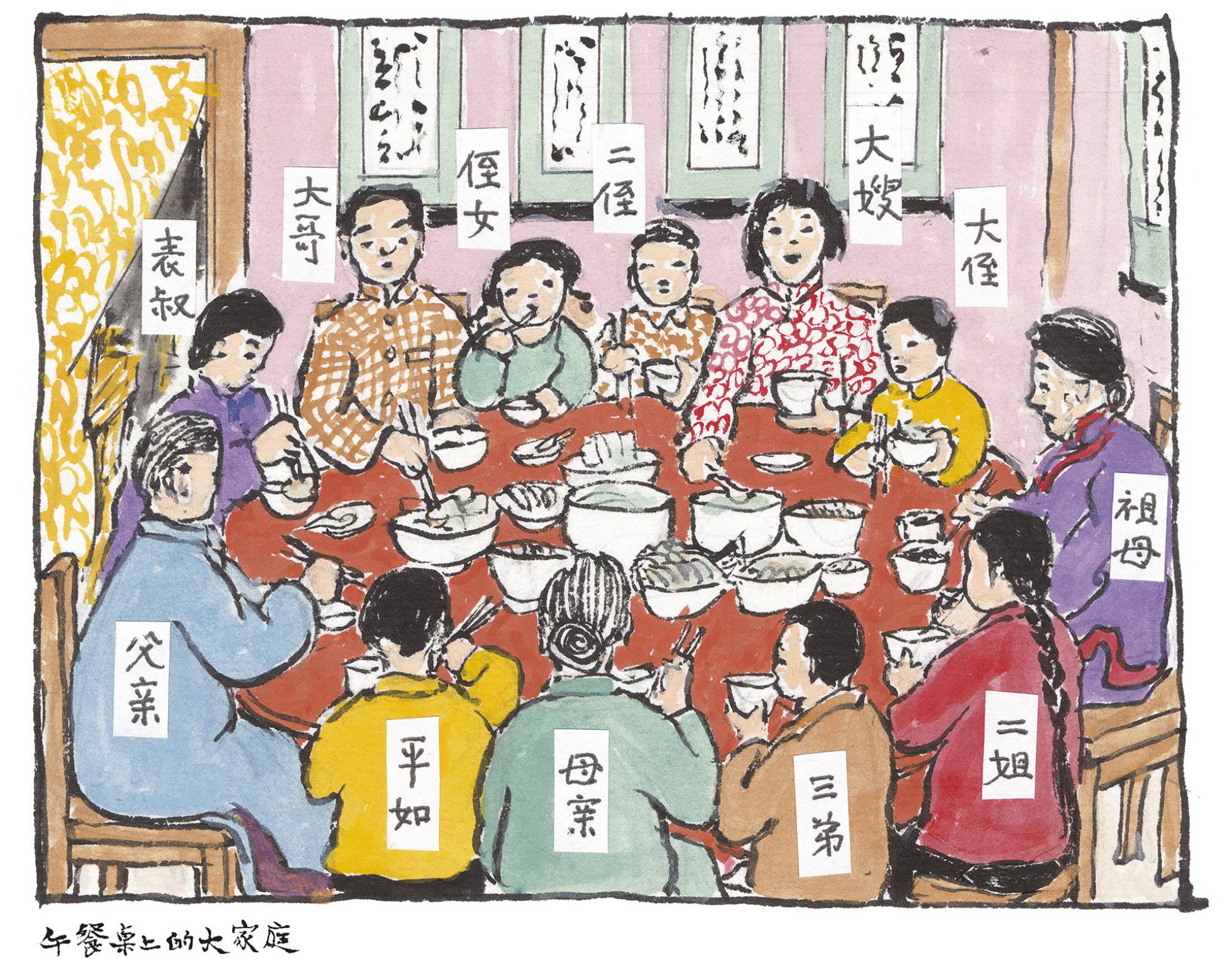
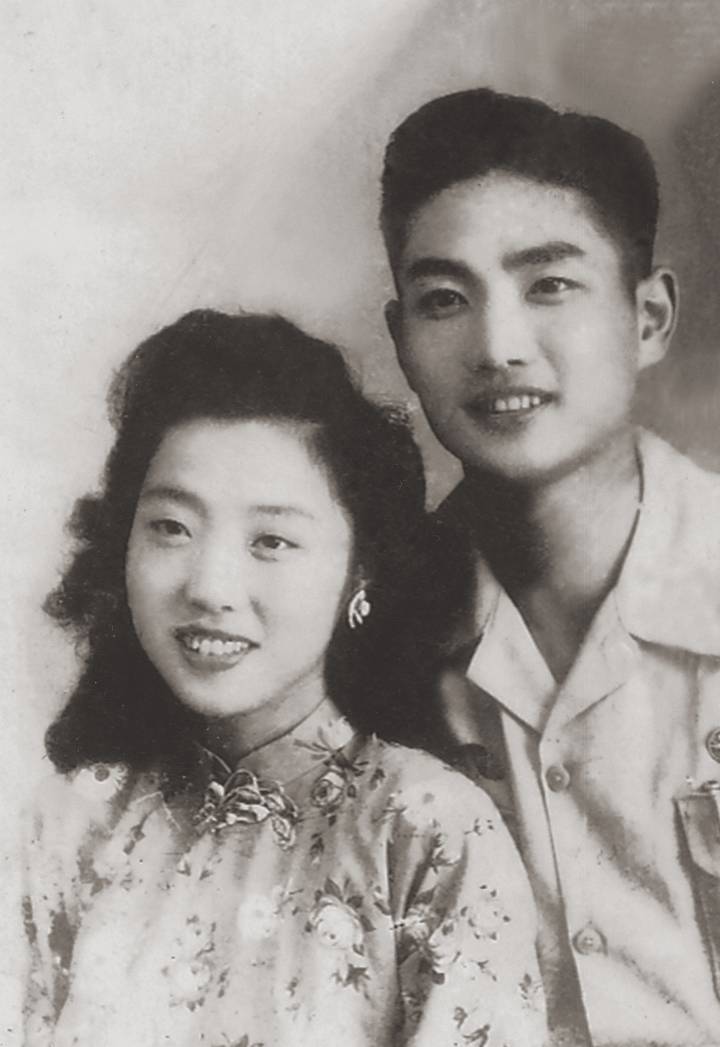
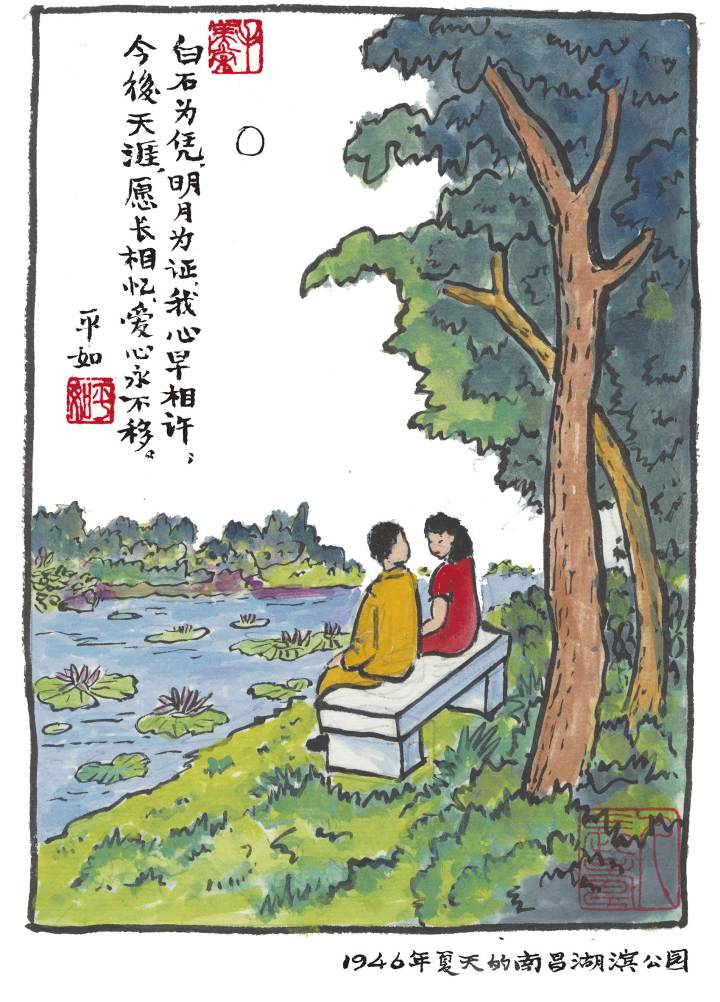
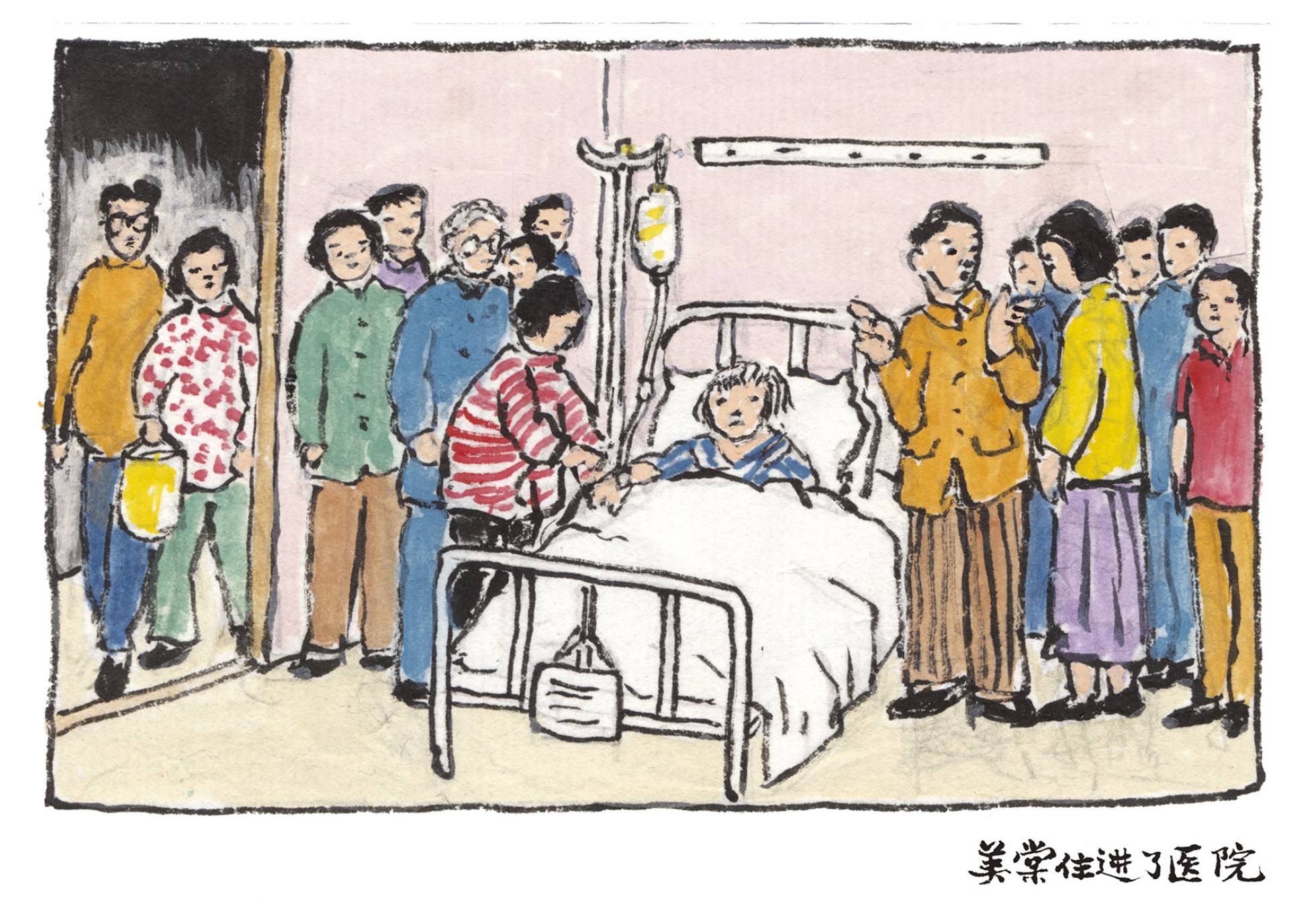
La Historia de Pingru y Meitang

by Rao Pingru, translated by José Antonio Soriano

I fell in love with this book — or rather with its cheerful, art naïf illustrations — the moment I saw it in the library. Now I finished reading and it didn’t disappoint. Did Pingru also fall in love with Meitang like that, the moment he saw her for the first time? Most probably not. Which makes their story even more amazing. What started as a “normal”, that is, arranged, marriage, lasted for sixty years, literally till death did them part. By then 86, Pingru started to work on what became Our Story. At the time, he did not think of publishing it: “When my wife died, I wanted to tell the story of our life to my children and grandchildren. Nothing more”, he says.

In 1958 Pingru was sent to a labour camp in for “re-education”. The government officials tried to persuade Meitang to divorce him. She flatly refused. Pingru stayed in the camp until 1979. The book concludes with some letters of Meitang to Pingru from that period. In spite of their largely mundane content (family, weather, expenses, food etc.), every single one is a letter of love.

Friday, 16 September 2011

Balzac and the Little Chinese Seamstress

by Dai Sijie
‘What you are about to hear, comrade, is a Mozart sonata,’ Luo announced, as coolly as before.
I was dumbfounded. Had he gone mad? All music by Mozart or indeed by any other Western composer had been banned years ago. In my sodden shoes my feet turned to ice. I shivered as the cold tightened its grip on me.
‘What’s a sonata?’ the headman asked warily.
‘I don’t know,’ I faltered. ‘It’s Western.’
‘Is it a song?’
‘More or less,’ I replied evasively.
At that instant the glint of the vigilant Communist reappeared in the headman’s eyes, and his voice turned hostile.
‘What’s the name of this song of yours?’
‘Well, it’s like a song, but actually it’s a sonata.’
‘I’m asking you what it’s called!’ he snapped, fixing me with his gaze. Again I was alarmed by the three spots of blood in his left eye.
Mozart...’ I muttered.
Mozart what?’
Mozart is Thinking of Chairman Mao,’ Luo broke in.
The audacity! But it worked: as if he had heard something miraculous, the headman’s menacing look softened. He crinkled up his eyes in a wide, beatific smile.
‘Mozart thinks of Mao all the time,’ he said.
‘Indeed, all the time,’ agreed Luo.

Of course this was hardly a laughing matter during the author’s own “re-education” stint in 1970s, but Dai Sijie can make you laugh all the same. I really enjoyed Mr. Muo’s Travelling Couch; I liked Sijie’s debut novel even better.

Saturday, 31 July 2010

Mr. Muo’s Travelling Couch

by Dai Sijie
What is the Theatre of the Absurd to a Westerner, is Socialist Realism to us.
A maxim whose author I can’t remember right now.

This novel follows the (mis)adventures of Mr Muo, the first Chinese psychoanalyst, in his epic struggle with Chinese judicial system. In his quest, he narrowly avoids marrying Mrs Thatcher, survives the attack of murderous Lolo bandits, and meets the mysterious Old Observer of Panda Droppings (whom I mentally picture as Yoda). Hilarious stuff throughout.

The only regret is that I could not read this book in the language of Voltaire. (The French title, Le Complexe de Di, is a play on le complexe d’Oedipe and the name of Muo’s nemesis, the dreaded Judge Di. I suspect more puns are lost in translation.) Perplexingly, the English text of the Anchor edition is very different from that of the Vintage edition, even though both appear to be translated by Ina Rilke.

Monday, 26 April 2010

UFO in Her Eyes

by Xiaolu Guo

UFO in Her Eyes could have been one of short stories from Lovers in the Age of Indifference, except Guo has developed it into a 200-page book. It consists of three files compiled by Chinese National Security and Intelligence Agency, one file compiled by The Hunan Development Authority between 2012 and 2015, plus three Appendices. Trust me, it is much more interesting than it sounds.

I was hoping for some romantic development between Kwok Yun and bicycle repair man, but no such luck.

Hunan Agent 1989: So people are right when they say you’re a bit of a moody type...

Who said that? The bastards! This place stinks. Everyone wants to eat good meat, nobody wants to pay for it, and then they badmouth you behind your back. Bastards.

HN 1989: Okay, calm down. This isn’t important. Tell me, is it right that you were once famous for killing parasites, back in the sixties?

You want to know my sparrow story? That’s a surprise. Here in Silver Hill no one can stand it any more. But if you really want to hear it, I’m happy to tell it, and you’ll see that I’m not really as bad-tempered as those bastards say.

Thursday, 25 March 2010

20 Fragments of a Ravenous Youth

by Xiaolu Guo

Dear friend, you get the picture by now: reading three books of Xiaolu Guo in a row probably means that I am getting addicted. But, really, it is not my fault: her books are simply too short!

20 Fragments was originally written in Chinese. Ten years later, Guo started to collaborate with Rebecca Morris and Pamela Casey on the English translation of the novel. However, she ended up completely rewriting it:

Ten years on, I found I didn’t agree with the young woman who had written it. Her vision of the world had changed, along with Beijing and the whole of China. I wanted to rework each sentence of my Chinese book, and fight with its young author who knew so little about the world. Although Fenfang, the heroine of the novel, should still be desperate about her life, I wanted to convince her to become an adult.

Fair enough: I liked the result. However, now (that I read the Acknowledgements) I can’t help thinking about the “original” 20 Fragments. The only way to know is to learn Chinese.

I’ve been blessed with cockroaches in every place I’ve lived in Beijing, but it was in the Chinese Rose Garden that I was truly anointed. My apartment was their Mecca. They spent the entire time multiplying.
The thing about my cockroaches, they were very cinematic, like the birds in that Alfred Hitchcock film. I was under constant attack. Singled out, they were weak and destructible, but collectively they were unbeatable. Still, I wasn’t going to take it lying down. Once, I was stalking an enormous one when it made a surprise move and vanished into an electric socket. There was a crackle, a few sparks, and that was the end of that. Heavenly Bastard in the Sky, these cockroaches were sadomasochists, looking for the most painful way to die.

Friday, 19 March 2010

A Concise Chinese—English Dictionary for Lovers

by Xiaolu Guo
Passport typeP
Passport No.G00350124
Name in fullZhuang Xiao Qiao
SexFemale
Date of birth23 JULY 1979
Place of birthZhe Jiang, P.R. China

Zhuang arriving London, study English. English peoples even they read spelling of name Zhuang Xiao Qiao, they have no idea how saying it. Unprononcable Ms Z. having little Concise Chinese—English Dictionary, look just like Little Red Book. Is most important thing from China, but it not having all English words meaning. For example, properly. Or fart. Or homosexual. Ms Z. want write newly learned words, make own dictionary. So she learn English fast. One day Z. meet English man.

‘Love’, this English word: like other English words it has tense. ‘Loved’ or ‘will love’ or ‘have loved’. All these specific tenses mean Love is time-limited thing. Not infinite. It only exists in particular period of time. In Chinese, Love is ‘’ (ai). It has no tense. No past and future. Love in Chinese means a being, a situation, a circumstance. Love is existence, holding past and future.

If our love existed in Chinese tense, then it will last for ever. It will be infinite.

Saturday, 13 March 2010

Lovers in the Age of Indifference

by Xiaolu Guo
    Five emails from a woman to her lover, left without response.
    Address Unknown
    Several articles for the Beijing newspaper before and after its Chief Editor’s gentle touch.
    Beijing Morning Star
    Six emails to “undisclosed recipient”.
    Junk Mail
    A series of letters from a Berlin resident to five different addressees in Beijing, her hometown.
    Letters to a City of Illusion and Hope
    A love story told in SMS text messages.
    The Third Tree

These are not your typical short stories. But they work — at least for me — brilliantly. I hope they will work for you too.