Showing posts with label mental health. Show all posts

Wednesday, 3 June 2026

Orlando, ma biographie politique

a film by Paul B. Preciado

According to Wikipedia,

ARTE France reached out to Preciado in hopes of producing a documentary focused on his work as a philosopher. Preciado rejected the idea and instead jokingly suggested that the film should be an adaptation of Virginia Woolf’s Orlando: A Biography in an attempt to shut down the conversation. To his surprise, ARTE France agreed and asked Preciado to make the film.

And good thing they did. The film is neither a documentary nor adaptation nor, despite the name, biography, but a process, metamorphosis, transition — like those of the film’s many intelligent, charming, and funny protagonists. And yes, it’s political. Enough said. Watch it. Enjoy it.

Orlando, mi biografía política opens the fifth cycle Diversidad, Igualdad y Cultura organised by Filmoteca Canaria and Instituto Canario de Desarrollo Cultural.

Saturday, 15 March 2025

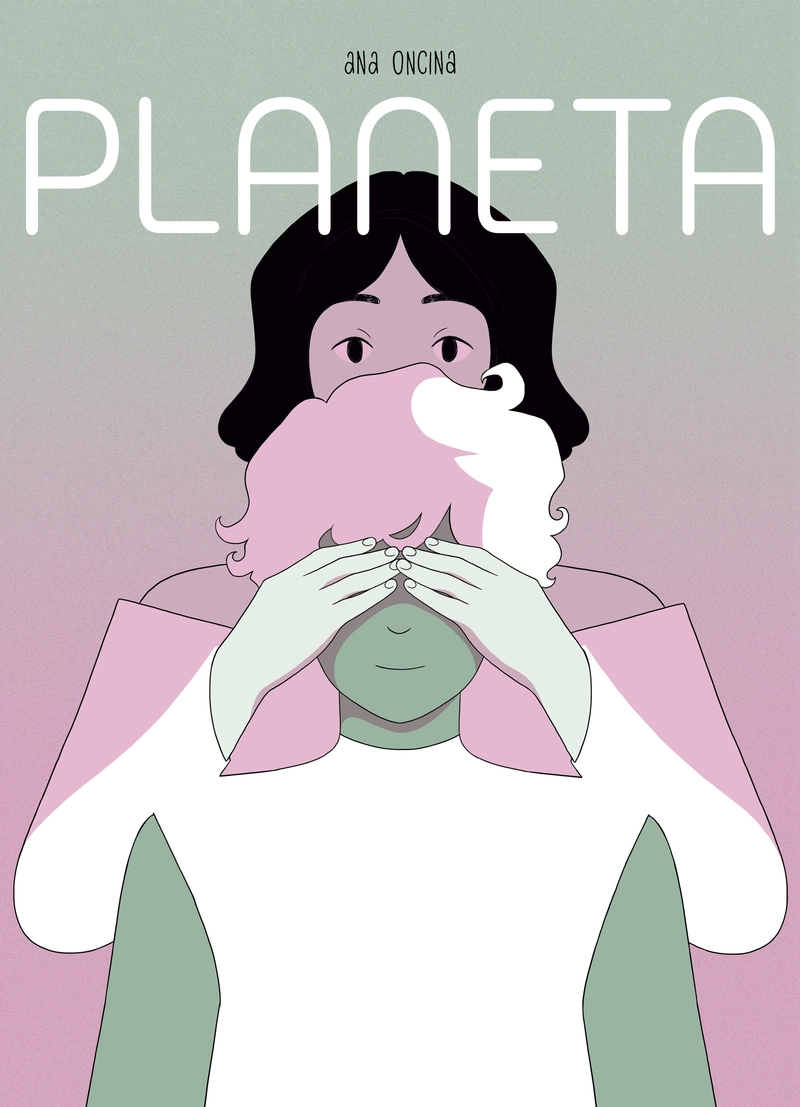
Planeta

by Ana Oncina

From the author of Croqueta y Empanadilla comes something completely, utterly different. Also, profoundly beautiful. And as much unsettling. You’ll feel unsettled if you couldn’t figure out what is reality (F, “forest”) and what is dream (P, “Planeta”), especially when in P you also dream about F. As Valentina does. On top of that, in P all human communication, apart from that with live-in partner, happens in virtual reality (V).

Friday, 18 October 2024

A Child Is Waiting

a film by John Cassavetes

This woefully underrated 1963 masterpiece, inexplicably rendered in Spanish as Ángeles sin paraíso, was screened as a part of the cycle Puntos de fuga. Starring Burt Lancaster, Judy Garland, Gena Rowlands, Steven Hill and Bruce Ritchey as Reuben.

Wednesday, 26 June 2024

Une vie comme une autre

a film by Faustine Cros

If Faustine’s father appears to be obsessive in his constant filming of his family, what will today’s babies say about their parents in 30 years time? That they were busy documenting the minutiae of their children’s lives, filling the Internet with petabytes of videos, sharing them with mostly random viewers? And letting the very lives to slip by, seen by many but as quickly forgotten.

So Jean-Louis, in his quest to preserve the moments of happiness for posterity, failed — or maybe refused — to see how deeply unhappy Valérie was. Taking a break in her career of a make-up artist (she used to earn more than her cameraman husband) for the sake of kids, being unable to find a full-time job afterwards. Sounds familiar?

In the end, Jean-Louis’s home videos turned out to be useful, albeit not in the fashion he envisioned. Faustine made a film about her mum whose life, despite all, is anything like any other.

Monday, 13 May 2024

Solo quería bailar

by Greta García
Скучно вам, серые? Щас я накапаю
Правду на смирные ваши мозги!

How come that just after watching Darling I went to the library and randomly picked up the book whose protagonist is, once again, a classical ballet dancer? Really, I am not that interested in ballet. Good news: turns out, the novel is not about ballet at all. It is about a classical ballet dancer turned terrorist — not a very successful one, much to her and my regret.

A little spoiler here.

Thursday, 2 May 2024

Den tid på året

a film by Paprika Steen

Yeah, it’s that time of year again: the annual family get-at-each-other’s-throats-together. Now, who brings what?

This hilarious and poignant tragicomedy brings a fitting finale to the Cine danés en femenino cycle. Bravo, Asociación de Cine Vértigo!

Tuesday, 16 April 2024

Darling

a film by Birgitte Stærmose

Didn’t I write years ago what I think about classical ballet? Yes, I did, and yes, it was years ago, so it’s time to reiterate. To say ballet isn’t pretty is an understatement. It’s a sadomasochistic art form we can live without. I almost wrote “we all can live without” but the tragic truth is that some people can not — or act as if they can not — live without ballet.

Which apparently is the case of the titular Darling (Danica Curcic, Lang historie kort). Not content with destroying her own body, she is bent on inflicting the same suffering on the others, primarily on her substitute Polly (Astrid Grarup Elbo, who is a real ballet dancer) but also, at least potentially, on her future students. And so, the abused becomes the abuser herself. As Darling’s partner Frans (Gustaf Skarsgård) tells her, “your hip is your least problem”.

Incidentally, Frans the choreographer seems to be a reasonable guy who is not buying all this “no pain, no gain”, “a dancer must suffer”, “in my days,” — in my flipping days, says the woman in her early 30s, but wait for it — “I danced the whole act with a broken leg” bullshit.

Another incidentally: I didn’t realise until now what a weird story that of Giselle is.

Sunday, 26 November 2023

La Singla

a film by Paloma Zapata

The fictional journalist Elena (Helena Kaittani) is looking for a trace of Antoñita Singla, a deaf bailaora famous in 1960s. According to Kaittani, her personage is based on the film’s director, Paloma Zapata. The investigation of Elena is much more believable than that of Jeff Harris in They Shot the Piano Player. But did La Singla really disappear only to be found by the film creators through, wait a minute, the car dealer Singlauto? I don’t think so. For example, a 2017 article mentions matter-of-factly that La Singla has retired from dancing but is very much alive.

Never mind that. The movie is gripping. At least it was for me. And, thanks to it, I discovered an amazing flamenco dancer.

Monday, 20 November 2023

Sur l’Adamant

a film by Nicolas Philibert

A heart-warming documentary portraying the daily lives of the inhabitants of L’Adamant, a floating mental health centre on the Seine in Paris.

Wednesday, 11 May 2022

A Woman Under the Influence

a film by John Cassavetes

This 1974 drama swings between sad, humorous, heartwarming and uncomfortably awkward. A bit — almost two and a half hours — long but completely redeemed by some amazing acting from Gena Rowlands and Peter Falk.

A Woman Under the Influence closes the John Cassavetes cycle organised by Filmoteca Canaria.

Tuesday, 1 February 2022

Szpital Przemienienia

a film by Edward Zebrowski

Hospital of the Transfiguration, based on the novel of the same name by Stanisław Lem, opens the cycle Cine Polska: Universo Lem (“Polish cinema: The Lem Universe”) organised by Instituto Polaco de Cultura and Filmoteca Canaria.

I did not read the book, so the film came as a bit of a shock. Science fiction it ain’t. The movie is powerful and brutal. Be warned.

Saturday, 10 July 2021

Kusama: Infinity

a film by Heather Lenz

Another documentary thanks to Filmoteca Canaria, about amazing life and work of yet another world-famous — and now, thankfully, top-selling — artist I never heard about before: Yayoi Kusama. Highly recommended.

Thursday, 24 January 2019

Mi experiencia lesbiana con la soledad

by Kabi Nagata

Nagata, a lonely, depressed 28-year-old girl with a bald patch (a consequence of trichotillomania) and arms covered with self-harm scars hires an escort in order to lose her virginity in a love hotel. What could possibly go wrong?

Too many things. Much to her disappointment, Nagata’s adventure turned out to be nothing like in the erotic dōjinshi (apparently, her main source of sex education). And a good thing too, otherwise I doubt that she would create, let alone publish, My Lesbian Experience With Loneliness. But now that she did, the readers around the globe can enjoy her amazing comic. (I, for example, found the Spanish version in the library.) It is funny, heart-warming and honest. I think everybody can relate to it, no matter what is their gender, sexual orientation or level of self-esteem. Nagata does not talk much about her self-harm experience and suicidal thoughts, but they are all there. Last but not least: the author treats sex workers as well as their profession with utmost respect and gratitude.

Sunday, 18 September 2016

A Special Scar: The Experiences of People Bereaved by Suicide

by Alison Wertheimer
foreword by Colin Murray Parkes

I hesitate to call this book a “must read”. And no, not all experiences in this life are necessary. You wouldn’t wish this one on your worst enemy.

The book is based on interviews of 50 suicide survivors conducted by the author, a suicide survivor herself. It’s not your typical “self-help” book. Nor is it an easy reading but, ultimately, a very gratifying one. You’ve got to get used to Ms Wertheimer’s dry, almost academic writing style. As Colin Murray Parkes points out,

she is very self-effacing and she avoids pontificating, theorising, and offering simple answers to complex problems. In much of the book she allows the survivors to speak for themselves, elsewhere she quotes the opinions of others, but they are always opinions offered for our consideration rather than holy writ. And because she shows us bereavement through the eyes of the bereaved, what we see is often direct and painful, but not without hope.

A hope — for those who tries to make sense of what happened, who is looking for clues which cannot change anything, who feels guilty, who feels alone, orphaned and abandoned, who feels angry and betrayed, who feels robbed of their past, present and future, who feels diminished, cut in half, who wants to talk and cannot talk, who strives both to forget it all and remember everything, who listens to the door opening with a familiar sound (could it be? ... but no), who wakes up in the middle of the night and thinks, thinks, thinks, who asks oneself, for the nth time, all these “why him?” or “why her?” or “why me?” or “what if?”, who wants to move away, to never wake up, to disappear, who needs to carry on as before — a hope is not a small thing.

Tuesday, 15 September 2015

Norwegian Wood

by Haruki Murakami
translated by Jay Rubin

Haruki Murakami might have denied that Norwegian Wood is an autobiographical novel, but I am pretty sure that it is exactly that. Toru Watanabe, aka “I”, is the same age as Murakami, studies drama (Euripides and stuff) at a private University in Shinjuku, and even works part-time in the record shop. What more evidence do you need?

How unhurried was life back then. Toru lives in a dormitory and doesn’t have a phone. His favourite communication mode is letter-writing. Now try that in Japan, or elsewhere.

If there is a moral to the story, it is that you shall not kill yourself grieving for a loved one. The two most tender and uplifting moments of the novel are a kind of memorial service for Midori’s father (after which Midori falls asleep in Toru’s arms) and an alternative “funeral” for Naoko organised by Reiko (followed by Reiko and Toru’s full night of proper sex). And the dialogues between Toru and Midori are simply great.

“Know what I did the other day?” Midori asked. “I got all naked in front of my father’s picture. Took off every stitch of clothing and let him have a good, long look. Kind of in a yoga position. Like, ‘Here, Daddy, these are my tits, and this is my cunt’.”
“Why in the hell would you do something like that?” I asked.
“I don’t know, I just wanted to show him. I mean, half of me comes from his sperm, right? Why shouldn’t I show him? ‘Here’s the daughter you made.’ I was a little drunk at the time. I suppose that had something to do with it.”
“I suppose.”
“My sister walked in and almost fell over. There I was in front of my father’s memorial portrait all naked with my legs spread. I guess you would be kind of surprised.”
“I s’pose so.”
“I explained why I was doing it and said, ‘So take off your clothes too Momo (her name’s Momo), and sit down next to me and show him,’ but she wouldn’t do it. She went away shocked. She has this really conservative streak.”

Saturday, 11 September 2010

The Book of Proper Names

by Amélie Nothomb

If I didn’t spell it out before, I think now it’s about time: I can’t stand classical ballet. Like foot binding, it is a form of violence against women disguised as “culture”. The difference is, foot binding is prohibited now, while the ballet is alive and, dare I say, kicking.

Reading The Book of Proper Names did not improve my opinion of this perverted art form. The novel, just like Loving Sabotage, is too outrageous to be untruthful. What I did not quite expect was that it turned out to be a biography of a real person, French chanteuse RoBERT. (Of course, the French title Robert des noms propres is a wordplay.) Once again Nothomb takes us on a seriously head-spinning ride through one girl’s childhood. And if it ends a bit too abruptly, well, this is all part of the game.

Being ten years old is the best thing that can happen to a human being. Especially a little dancer with all her art at her disposal.

Ten is the most sunlit point in childhood. There is no sign of adolescence visible on the horizon: nothing but mature childhood, already rich in long experience, without that feeling of loss that assaults you from the first hints of puberty onwards. At ten, you aren’t necessarily happy, but you are certainly alive, more alive than anyone else.

Thursday, 10 June 2010

The First Person and Other Stories

by Ali Smith

So far, I liked every book by Ali Smith that I read. Her novels are great. But it is the short stories where she excels. And this short book of short stories is a treasure.

In The Child, the cherub-like creature is found sitting in the Waitrose shopping trolley. Just wait till the infant starts talking.
In The History of History, the schoolgirl writes a newspaper report of the execution of Mary, Queen of Scots, while her “mother’s gone mad”.
In Writ, the narrator comes home from work only to discover her fourteen-old-self sitting there. Again.
In The Third Person she takes the art to the extreme: it is several stories, none has either beginning or end.

“All short stories long”, she writes. I am not sure about that. But all short stories by Ali Smith long.

All short stories long.

This one is about two people who have just gone to bed together for the first time. It’s autumn. They met in the summer.
They’ve done it, they’ve shrugged themselves out of their shy clothes at last, they've slipped in under the covers of a small double bed, they’re holding each other in nothing but skin. One of them even has a quite bad cold and the other doesn’t care. Ah, love. Outside, the trees are quiet. The light is coming down. It’s five in the evening. But enough about them. It’s spring. It’s morning. In the tress the birds are singing like crazy.