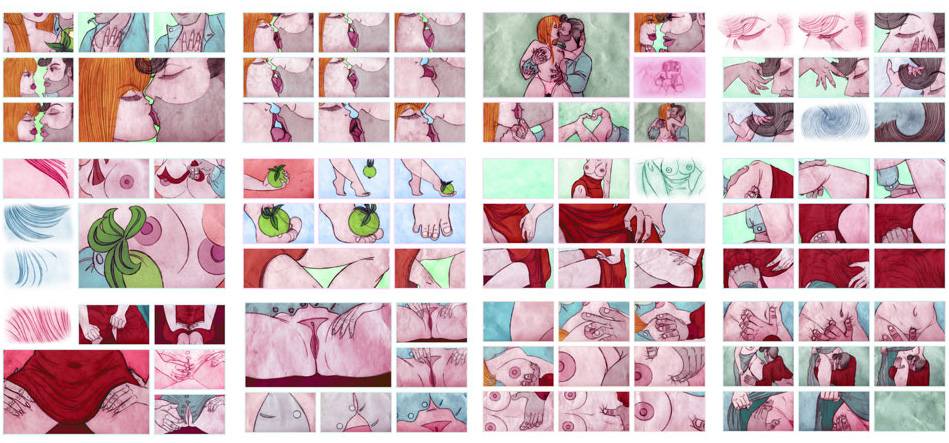
Showing posts with label nude. Show all posts

Saturday, 1 June 2024

Free live music and stuff in Las Palmas, May 2024

This is what I’ve seen in May:

  • 7 May: Las Hespérides «Barbara Strozzi, la musa del Barroco» @ Casa de Colón, Calle Colón, 1, Las Palmas de Gran Canaria
      This concert, a homage to the Venetian composer Barbara Strozzi (1619—1677), opened the 9th edition of Música Antigua en el Patio. Featuring Magdalena Padilla (soprano), Diego Pérez (baroque cello) and Carlos Oramas (theorbo). The programme included:
      • Strozzi: Che si può fare?, Op. 8
      • Strozzi: Non c’è più fede, Op. 8
      • Strozzi: Rissolvetevi pensieri, Op. 6
      • Strozzi: Per un bacio, Op. 7
      • Domenico Gabrielli: Sonata no. 1
      • Strozzi: Lagrime mie, Op. 7
      • Strozzi: Con male nuove, non si può cantare, Op. 3
      • Strozzi: L’eraclito amoroso, Op. 2
      • Strozzi: Amore è bandito, non si può cantare, Op. 6

  • 8 May: Piano recital @ Palacete Rodríguez Quegles, Calle Benito Pérez Galdós, 4
      The concert of the students of Escuela Municipal de Educación Musical de Las Palmas de Gran Canaria.

  • 12 May: «Historias de una trayectoria» @ Teatro Guiniguada, Plaza F. Mesa de León
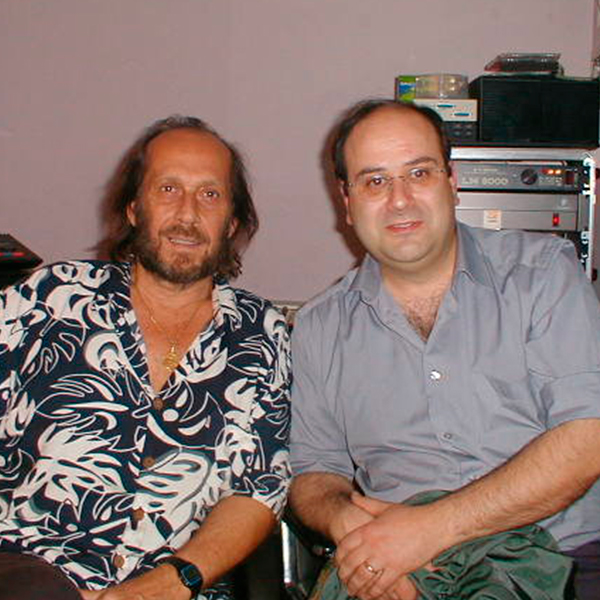
      A talk by Vicente Carrillo, a luthier who built guitars for Paco de Lucía, Keith Richards, Tomatito, Mike Olfield and many others.
  • 18 May: Noche Europea de los Museos in Las Palmas de Gran Canaria, various locations
      This is the first time ever we went to the Castillo de la Luz (calle Juan Rejón), to see the exhibition of Martín Chirino and hear the concert of Germán López (timple) and Yuniel Rascón (guitar). After that, we headed to Vegueta. Unfortunately, one can’t be everywhere at the same time so we largely missed the Musicando concert of Beatriz Alonso and Javier Cerpa (la plaza de Santo Domingo). Our last stop was in the Museo Canario.

  • 19 May: «La música sacra de la Catedral de Canarias en el siglo XVIII» @ Catedral-Basílica de Santa Ana, Plaza Santa Ana, Calle Obispo Codina, 13
      The commemorative concert showcasing the music of Joaquín García (1710—1779), maestro de la capilla of the Cathedral de Santa Ana from 1735 till his death. Featuring the Chamber Choir Ainur directed by Mariola Rodríguez; Jennibel Hernández (soprano), Celia Jiménez (alto), Dulce María Rodríguez (alto), Daniel Marrero (tenor); Pablo Guijarro (violin), Carlos Parra (violin), Carlos Rivero (cello), Samantha de León (double bass), Alejandro Rodríguez (organo) and Patricia Robaina (harpsichord and musical direction). Presented by Isabel Saavedra Robaina. The complete programme is available here.

  • 22 May: Quinteto de viento Aulós @ Palacete Rodríguez Quegles
      With the participation of the Canarian artist Moisés Manrique who was painting in real time as the wind quintet played Pictures at an Exhibition. Wind Quintet Aulós are: Alfons Bonafont (bassoon), Juan J. Cerpa (flute), Jose L. Ferrando (clarinet), Jose M. Manrique (oboe) and Leonardo Pérez (French horn).

  • 23 May: Dácil Santana @ Museo Castillo de Mata, Calle Domingo Guerra del Río, 147

  • 24 May: «Procedimientos en acuarela» @ La Galeria Bellas Artes, Calle Néstor de la Torre, 7
      A masterclass of watercolour by Miguel Torrús García.
  • 25 May: XXVIII Concurso de Pintura Rápida al Aire Libre @ Calle Mesa y López

  • 28 May: Liana Llauger «Al temple del Laúd» @ Casa de Colón
      The concert of the Cuban musician Liana Llauger performing 16th-century music for 6-course (11-string) lute. The programme included:
      • Joan Ambrosio Dalza: Pavana alla venetiana
      • Vincenzo Capirola: Padoana alla francese No. 2
      • Joan Ambrosio Dalza: Calata ala spagnola ditto terzetti
      • John Dowland: Preludium
      • John Dowland: A Fancy
      • John Dowland: Lachrimae pavane
      • John Dowland: Galliard
      • Luys de Narváez: Fantasía del quarto tono
      • Luys de Narváez: Canción del emperador
      • Luys de Narváez: Cuatro diferencias de Guárdame las vacas
      • Francesco da Milano: Recercar (41) dal quinto tono
      • Francesco da Milano: Fantasia de mon triste
      • Girolamo Kapsperger: Toccata VI
      • Girolamo Kapsperger: Corrente
      • Girolamo Kapsperger: Gagliarda 4ª
      • Vincenzo Capirola: Ricercar ottava
      • Joan Ambrosio Dalza: Piva

And exhibitions:

Tuesday, 21 May 2024

Nada

by Claudio Stassi
based on a novel by Carmen Laforet
introduction by Estefanía Molina

This comic adaptation of the eponymous novel by Carmen Laforet is so good it made me wish to read the original. This doesn’t happen too often.

Monday, 13 May 2024

Solo quería bailar

by Greta García
Скучно вам, серые? Щас я накапаю
Правду на смирные ваши мозги!

How come that just after watching Darling I went to the library and randomly picked up the book whose protagonist is, once again, a classical ballet dancer? Really, I am not that interested in ballet. Good news: turns out, the novel is not about ballet at all. It is about a classical ballet dancer turned terrorist — not a very successful one, much to her and my regret.

A little spoiler here.

Wednesday, 1 May 2024

Free live music and stuff in Las Palmas, April 2024

This is what I’ve seen in April:

  • 3 April: Grupo coral @ Palacete Rodríguez Quegles, Calle Benito Pérez Galdós, 4
      The programme included: Wiegenlied and Das Heimliche Lied by Louis Spohr, performed by Andrea Quintana Mesa (soprano), Simón Martín (clarinet) and Cristina Díaz Álamo (piano); Yesterday and Can’t Help Falling in Love performed by Paula Herrera Hernández (mezzo-soprano), Nira Vera Almeida (harp) and Laura Urbín López (harp); and Bastien und Bastienne (Bastián y Bastiana) by Mozart, with Teresa Rodríguez Vázquez (Bastiana), Daniel Marrero González (Bastian), Francesco Pisapia (Colas), Marta López Falcón (flute) and Riccardo Vignaga (piano).

  • 7 April: Happy Piano Day 2024 in Las Palmas de Gran Canaria, various locations (11:30—22:00)
      This year, the 6th edition of Happy Piano Day was postponed because of rain, and I was afraid it would be cancelled again because, well, it was raining in the morning. But it stopped in the afternoon and in the evening I headed straight to the Parque San Telmo to watch Levi Keyb & Kisandra Pujol (19:00), Sergio Alonso & Magdalena Padilla (20:00) and two Charlie Chaplin films accompanied by Federico Lechner (21:00).

  • 11 April: Luismi Segurado @ Teatro Guiniguada, Plaza F. Mesa de León

  • 13 April: «Étnico» @ Auditorio José Antonio Ramos, Parque Doramas
      Another great Musicando concert with José Manuel Ramos (guitar, vocals) and Benito Cabrera (timple).

  • 14 April: Zumba @ Parque de El Rincón
      As part of the Tour Universo Mujer, Jessica Expósito gave two free classes of Zumba Fitness; I joined in for twenty minutes or so.
  • 17 April: Grupos de cámara @ Palacete Rodríguez Quegles
      The complete programme of this evening of classical chamber musi is available here. My favourite part was Pagan Dances for Saxophone Quartet (Pagan Ballad and Pagan Fugue) by Steve Winstead performed by José Manuel Falcón, Gabriel Climent, Gabriel Santana and Alberto Medina.

  • 25 April: Alba Rodríguez and Víctor Lemes @ Museo Castillo de Mata, Calle Domingo Guerra del Río, 147
      A double bill of Gran Canarian singers-songwriters in one evening, the fourth concert from the cycle «12 Noches de autor».
  • 27 April: Maratón de Jazz @ Auditorio José Antonio Ramos
      The LPA International Jazz Day concert organised by Fabrica La Isleta.
      • 18:00: Maracujazz Trio featuring Ernesto Rossger (electric guitar), Jonay Mesa (acoustic guitar) and Nelson Saavedra (double bass), plus a guest vocalist Melania Piñeiro.
      • 19:00: Manu Sija, an Argentine multiinstrumentalist (electric bass, guitars, keyboards, drums, percussion, accordion, violin, vocals and loops) — a true discovery for me!
      • 20:00: Gary Willis Trio featuring Gary Willis (electric bass), Gergo Borlai (drums) and Zsolt Kaltenecker (keyboards). Unfortunately, this last set was interrupted by rain.

And two exhibitions:

And that was it for April.

Sunday, 4 June 2023

Josephine Baker

by Catel Muller and José-Louis Bocquet
afterword by Jean-Claude Bouillon-Baker
translated by Regina López Muñoz

I am not a big fan of biographies, but I’m always prepared to make an exception for a book like this. A monumental graphic biography of Josephine Baker — or Tumpie, as they used to call her as child.

Gabriela Frost wrote in her review:

Catel and Bocquet give an often excessive blow-by-blow of Josephine’s male sexual partners, but fail to mention her relationships with women. This can only be a deliberate exclusion, given the depth of research which must have gone into the graphic novel. Only once is her bisexuality alluded to.

This “only once” refers to pp. 176179 showing Josephine cuddling up with Ruth Landshoff on a sofa. I am not sure about “deliberate exclusion”. At the end of the book, there are eighty pages (out of 568!) dedicated to biographies of main and secondary characters of the comic*. Reading through them, I could see that the authors were really careful not to bring the unproven relationships — either homo- or heterosexual — into the story. So no affairs with Colette (p. 515) or General de Gaulle (p. 541). Bricktop, most likely. And no Frida Kahlo in sight. Anyway, who needs unsubstantiated gossip describing a life as fantastic as Josephine’s?

Tuesday, 25 April 2023

Las hijas de Lilith

by Erika Bornay
introduction by Pilar Pedraza

I honestly wanted to like this book. Now that I finished reading it, I still like the idea of this book: to explore the rise and fall of femme fatale in art of the late 19th to early 20th centuries from the feminist perspective. Not the implementation though.

First, the style. If the author wanted to make a misery of your reading experience, she mostly succeeded. Long and convoluted sentences abound, as does the use of passive voice and first person plural albeit there is only one author*. Like this passage (p. 19):

Otros aspectos cuyos análisis también se echan de menos, y que ya hemos señalado líneas atrás, confluyeron asimismo en el desarrollo y creciente expansión de estas imágenes en la iconoesfera europea, que, si en un principio, en Dante Gabriel Rossetti y Gustave Moreau, fueron producto de eruditas fantasías canalizadoras de oscuras pulsiones sexuales, más adelante, cuando el mito femenino por ellos creado fue recogido por los «baudelerianos», fueron recreadas por estos agregándoles los rasgos de las femmes damnées y las femmes stériles del poeta, conformando una imagen que conectaría con la atmósfera de rechazo hacia el sexo femenino de su entorno social.

The word “perverse” and variations thereof (perverso, perversa, perversidad) are overused to the degree that they lose any meaning. In the chapter about Salome, the author insists on the absurd expression cabeza decapitada, “decapitated head”.

You’d think, once you plough through the text, great intellectual reward awaits. You may be disappointed. The “analysis” (another worn-out word there) of artworks could be boiled down to looking for — and finding — polarising stereotypes: Madonna vs whore and man/God/virtue/soul/spirit/reason/art vs woman/Devil/sin/body/matter/instinct/nature. Of the two dichotomies, the latter trumps the former: Madonna is still a woman and as such is inferior to a man. The recurrent themes are reduced to simplistic formulae such as woman = beast = evil, woman = monster = evil, woman = lust = evil, woman + redhead = evil, woman + power = evil, woman + sterile = evil, woman + homosexual = evil, woman = castrating = evil, woman = child = evil, woman = death = evil... You’ve got the idea.

The book is full of quotes in languages other than Spanish. I attribute this not as much to snobbery as to availability of Spanish translations to the author coupled with good old laziness. For example, on p. 225 Edvard Munch is quoted in Catalan because, the footnote explains, its source was a catalogue of Munch exhibition in Barcelona. Given that not everybody in Spanish-speaking world is fluent in English (French, German, Italian or, for that matter, Catalan), it could be nice to provide the reader with translations.

The volume I took from the library is marked as the 3rd edition (Ediciones Cátedra, 2021, ISBN 978-84-376-4134-8); on the same page, the first edition is said to be 2020. Yet according to Bornay’s bibliography, the first edition of Las hijas de Lilith appeared in 1990. I found what is called the 1st edition (1990) and the 2nd edition (1995) on Internet Archive. A handful of illustrations differ but the text remains essentially the same. Even the phrase “la segunda mitad del pasado siglo” (p. 50), “the second half of the last century”, obviously referring to the 19th century, has not been corrected.

Does it matter? Let’s check out the literature references. In this (2021) edition, the only post-1990 sources cited are Nana, Mito y Realidad (Madrid, Alianza, 1991) by Werner Hofmann, which is a translation of a German book Nana: Mythos und Wirklichkeit (DuMont, Köln, 1973), as well as Bornay’s own La cabellera femenina: un diálogo entre poesía y pintura (Madrid, Cátedra, 1994). The rest of the bibliography seems to be identical to that of the older edition. So we have to take any mention of “new”, “recently discovered”, “in the last years” and so on with a spoonful of salt (and subtract 30 years).

On a positive note, I discovered new (for me) artists. The book is printed on excellent heavy paper and most of the illustations are also of decent quality; it’s a pleasure to hold in hands. For the reasons unknown, several oil paintings are reproduced in black and white. I think it would make a good gift if it were available in hardback.

Now let us look at the pictures.

If the 1st edition (1990) shows a small fragment (just a face) of Judith II by Klimt on its cover, its 1995 follow-up features an illustration by Margarita Suárez Carreño, also of a female face. The cover of the 2021 edition is graced by the nude figure of Lilith (1889) by John Collier. No doubt, calculated to grab attention of a male passer-by like me.

Monday, 13 March 2023

La sombra roja

by Jean-Pierre Pécau and Jandro González
preface by David Fernández de Arriba

The writer Jorge Semprún, aka Federico Sánchez, finds himself on a mission: to tell the story of Tina Modotti (1896—1942), actor, model and photographer turned Comintern agent. The investigation takes Semprún to Mexico, where he is met by a beautiful and mysterious guide, one Lupe Vega...

Monday, 13 February 2023

Trazo de tiza

by Miguelanxo Prado
preface by Álvaro Pons

Mysterious island that is not on the map; mysterious woman waiting for mysterious somebody. Given the pace of the story (spoiler: not much happens really), by the end of the comic the mystery stays practically intact. What not to love?

A perfect example of me totally judging a book by its cover. I took this comic from the library knowing nothing of it or its author. Trazo de tiza was first published in 1992; what I picked from the shelf is the “definitive” 30th anniversary edition. Well we all know by now how definitive the definitive editions are; expect even more definitive definitive editions in 2032 and 2042. But at the moment, the book I have next to me is absolutely gorgeous.

Monday, 31 October 2022

Live music and stuff in Santander and Las Palmas, October 2022

It was an unusually warm month. I enjoyed it a lot.

Three exhibitions that I saw in Teatro CASYC (Calle Tantín, 25) on 1 of October:

A lot of music — more than I expected!

  • 5 October: Nusondia @ Rvbicón, Calle del Sol, 4, Santander
      African music meets jazz-funk. Featuring Sabari Kurra (kora, vocals), Chema (keyboards) and Dani Martín (drums). Watch the full concert here.

  • 6 October: Maud the Moth @ Teatro CASYC, Calle Tantín, 25
      The Edinburgh-based composer, pianist and singer Amaya López-Carromero aka Maud the Moth opened her Spanish tour with this intimate concert, playing (mostly) the material from her last album Orphnē. A sumptuous and singular fusion of folk, electronica, classical music and prog-rock charmingly presented by a lady at the piano.

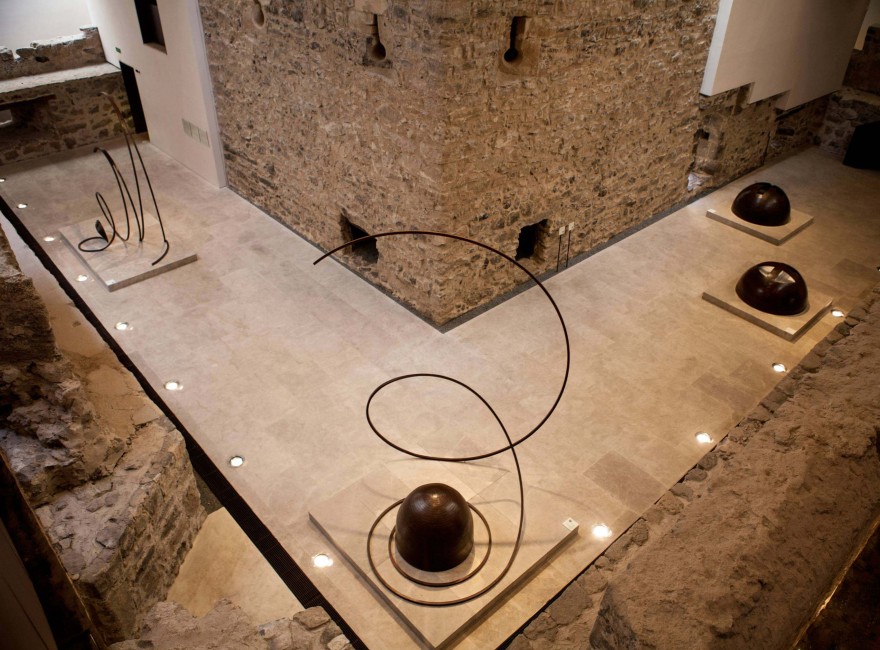
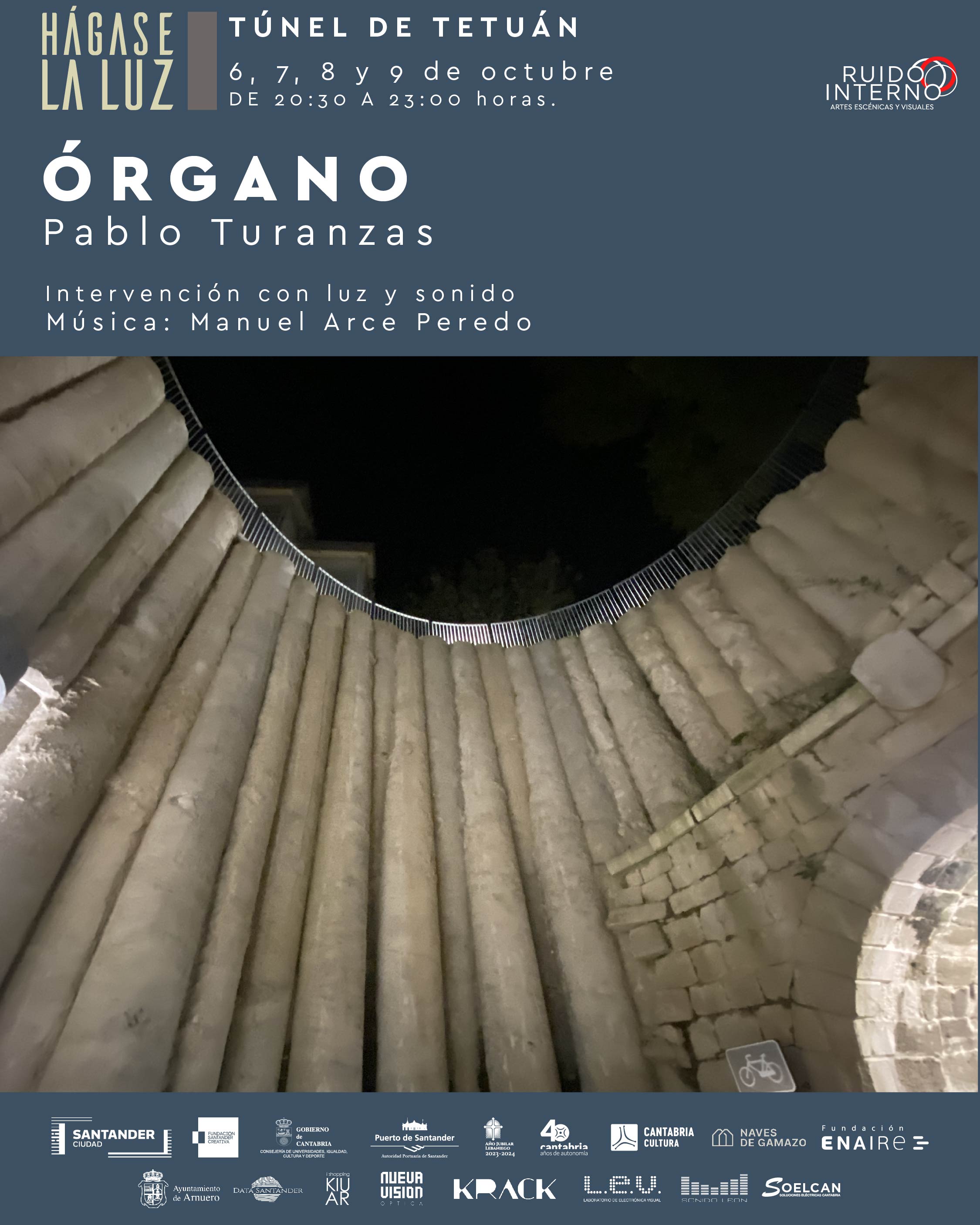
  • 6—9 October: Sala del órgano @ El antiguo túnel de Tetuán
      An audiovisual show (lasting about five minutes) by Pablo Turanzas, at the Sardinero exit of the old Tetuan tunnel. A part of the festival Hágase la luz.

  • 7 October: Tranki & Los Palos de Blues @ Plaza Pombo
      A local trio playing good old rock’n’roll; with collaboration dancing folk courtesy of Asociación Punto Swing Santander.
  • 7—9 October: Sol de Otoño @ Calle del Sol
      I couldn’t attend all the activities but I went to see Deaf Dogs (Friday), Tomasito (Saturday) and Hendrik Röver & Los Míticos GT’s (that is, Goyo Chiquito & Toño López).

  • 12 October: The Skin Tree Project @ Rvbicón
      A modern jazz trio featuring Sergio Rowles (electric guitar), Guillermo Suárez (double bass) and Mario Fuentes (drums). Watch the full concert here.

  • 14 October — 9 November: Tierra de sueños @ Plaza Porticada

A short holiday in Las Palmas...

  • 17 October: El Mundo de Van Gogh @ INFECAR, Avenida de la Feria, 1, Las Palmas de Gran Canaria
      I missed (or rather ignored) this immersive experience all summer in Santander (26 May — 31 August), but it followed us to Las Palmas. We decided to give it a shot and were not disappointed. There was no need to buy tickets online as that involved paying €1.50 “gastos de gestión” per person.

  • 19 October: Mariana @ Palacete Rodríguez Quegles, Calle Benito Pérez Galdós, 4

Back to Santander...

  • 23 October: Phil Grijuela @ Rvbicón
      A proof, if any was needed, that Spanish is not the best language for blues and rock, effortlessly provided by Phil Grijuela (guitar, harmonica, voice) and some guests who, thankfully, did not sing.

  • 27 October: Solana @ Rvbicón
      A world music fusion band featuring Tamsin Elliott (accordion, flutes, voice), Rowan Elliott (violin, viola, cajón), Elio Araúz de Marcos (drums, percussion, voice), Jp Wolfgang (guitars) and Henry Edmonds (double bass, electric bass).

  • 29 October: Context @ Café de Las Artes Teatro, Calle García Morato, 4
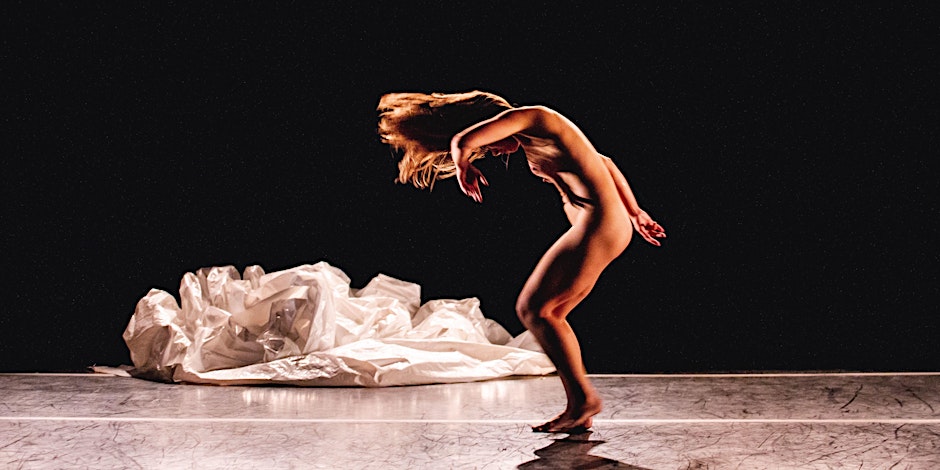
      A creation by Alessandro Carboni performed by Sara Capanna. I found its 30 minutes excruciatingly long and at the same time not providing enough value for its €11.

  • 29 October: Crash Normal @ Cafe/Bar Bolero, Calle San Celedonio, 35
      Later the same evening: the Paris-based musician mixing the Greek rebetiko rhythms with psychedelic rock and electronica sounds in his new project Hypno Rebetiko, plus a mind-blowing version of Tomorrow Never Knows. To quote his BandCamp page,
      I’m here to celebrate the music of the outlaws, the pot smokers, the jailbirds and the gamblers but also those who would be able to spend 15 years in prison just for the love of someone.
      Free entrance and very agreeable ambience.

  • 30 October: MAR (Micrófono Abierto Rvbicón) @ Rvbicón
      Many familiar faces, nothing extraordinary. I was half-expecting something in a Halloween-ish mood but no such luck, apart from a face-painted couple next to me.

Goodbye, October.

Friday, 30 September 2022

Live music and theatre in Santander, September 2022

This is what I’ve seen in September:

  • 7 September: The Silver Lining Serenaders @ Rvbicón, Calle del Sol, 4, Santander
      Trad jazz and swing band from New Orleans. Featuring Ella Inglebret (violin, vocals), Scott Stobbe (guitar, vocals) and Ben Redwine (clarinet). Watch the full concert here.

  • 13 September: Bywater Call @ El Almacén de Little Bobby, Calle del Sol, 20
      Dave Barnes (guitar), Stephen Dyte (trumpet), John Kervin (keys), Bruce McCarthy (drums), Mike Meusel (bass), Julian Nalli (tenor sax), Meghan Parnell (vocals). The price of tickets bought in advance was €14; at the entrance, €17; and online, €17 plus €1.70 “gastos de gestión”, €18.70 in total — daylight robbery. Luckily, I was able to get the “advance” tickets half an hour before the concert in the bar across the road.

  • 20 September: Devórate @ Escena Miriñaque, Calle Isaac Peral, 9
      Since its 2019 première, Mari Paula’s creation has matured almost to perfection. That “plasticky” part in the middle is still a bit too long for my taste; otherwise, I enjoyed the show even more than three years ago.

  • 21 September: Nico Andino Quartet @ Rvbicón
      With Nico Andino (trumpet), Nicolás Alvear (guitar), Jesús Pérez (electric bass) and Daniel Pimenta (drums). Watch the full concert here.

  • 27 September: Kirie, las voces del alma @ Paraninfo de La Magdalena, Calle de la Familia Real, 8
      A show by Espacio Espiral directed by Cristina Samaniego. I liked the singing but struggled to keep awake during the narration.
  • 28 September: Sed @ Escena Miriñaque
      A play by Quásar Teatro, directed and performed by Mónica González Megoya. I found it a bit long for its message.

  • 28 September: Carlos Pizarro Trio @ Rvbicón
      Later the same evening: melodic modern jazz trio playing mostly original compositions. Featuring Diego Gutiérrez (drums), Javier Mayor (double bass) and Carlos Pizarro (guitar). Watch the full concert here.

  • 30 September: Las Migas @ Teatro CASYC, Calle Tantín, 25
      Could there be a better way to finish a rainy day than to see Las Migas? Featuring Alicia Grillo (guitar, vocals), Carolina Fernández ‘La Chispa’ (lead vocals, dance), Laura Pacios (violin, vocals) and Marta Robles (guitar, vocals), plus Oriol Riart (double bass) and Guillem Arnau (drums, percussion). Marta Robles joked that they were dreaming of playing in Santander for the last 18 years (that is, from the moment the band was formed). A mix of old songs and material from their new album, Libres.

The summer is truly over now.

Friday, 4 February 2022

Fragmentos de feminidad

by Olivier Pont
coloured by Laurence Croix
translated by Ana Isabel Pérez Ocaña

Not exactly a graphic novel but rather a collection of seven graphic short stories, each named after its protagonist: Chloe, Mathilde, Alison, Sylvia, Faith, Elikya and Fleur. The story of Faith touched me the most; and Fleur provided the well-needed happy end for the whole book.

Wednesday, 22 December 2021

Susana y el sexo

a film by César Vallejo
La libertad sexual para una mujer pasa por no renunciar al placer, y por tener experiencias sexuales más seguras y libres, sin discriminación ni violencia. Porque no puede existir la verdadera libertad sin libertad sexual.
Susana Estrada

So says Susana Estrada (Gijón, 1950), the protagonist of an illuminating RTVE Play documentary, which I watched quite by chance, thanks to an article in elDiario.es. Until now, I had no clue who Estrada was and, luckily, still is. Who? The first Spanish actress to perform nude onstage; sex columninst in Play-Lady; the singer famous for songs such as ¡Quítate el sosten!, Voy desnuda and ¡Gózame ya! aka ¡Fóllame ya!; probably the first Spanish woman to employ bodyguards — well, everything that one should expect from the self-proclaimed “mujer icono e ‘icoño’ de la Transición”, and more.

Directed by César Vallejo. Screenplay by Valeria Vegas, Ángela Gallardo and César Vallejo. With participation of Celia Blanco, Fernando Castedo, María Ángeles Durán, Gracia Trujillo and others.

Saturday, 10 July 2021

Kusama: Infinity

a film by Heather Lenz

Another documentary thanks to Filmoteca Canaria, about amazing life and work of yet another world-famous — and now, thankfully, top-selling — artist I never heard about before: Yayoi Kusama. Highly recommended.

Saturday, 3 April 2021

Valentina: Tomo 1

by Guido Crepax
translated by Carlos Sampayo, Marcelo Raboni and María Fernández

I came across this book in our library a few weeks ago. How come I wasn’t aware of this artist before?

Crepax’s wild imagination, encyclopaedic influences/cultural references and exquisite Beardsleyesque drawings had won me over from the first few pages. In Valentina’s world, the boundaries between reality and dream are blurred or non-existent; in any case, her “reality” hardly makes more sense than her dreams. Considering the dreams she has, who should care about reality? Not me.

Philip Willan wrote in the obituary of Guido Crepax:

Inspired by the silent movie actor Louise Brooks, and by Crepax’s own wife, Luisa, Valentina presented something of a dilemma for Italian feminists. They approved of her sexual emancipation and Trotskyite politics, but were less taken by her fantasies and the speed with which she peeled off her clothes.

Is that so? Oh well. Personally, I don’t see anything wrong with either Valentina’s fantasies or speedy undressing. She may have angered some feminists while encouraging others. American painter and photographer Jude Harzer said:

I was always impressed by the rawness and forwardness of a woman as a dominant character. I was inspired by the sensuality of Crepax’s work and in particular the sexuality and force of Valentina as a protagonist. Her strength as a heroine lay in her intellect, femininity, eroticism and talent rather than in a contrived super heroic ability.

Speaking of dreams: Luisa Mandelli, who died in November 2020, not just “inspired” Crepax, her spouse for 40 years: she told him her dreams that became the Valentina’s adventures. Also, she invented the language of The Subterraneans.

Apart from creating Valentina, Guido Crepax illustrated works of Marquis de Sade, Edgar Allan Poe, Leopold von Sacher-Masoch, Emmanuelle Arsan and Anne Desclos. He designed vinyl covers for Italian releases of jazz musicians such as Louis Armstrong, Bix Beiderbecke, Xavier Cugat, Fletcher Henderson, Lee Konitz, the Modern Jazz Quartet, Jelly Roll Morton, Gerry Mulligan, Fats Navarro, Charlie Parker, Bud Powell, Sarah Vaughan, Fats Waller, Paul Whiteman and Cootie Williams, to name a few. Poking around, I’ve discovered Italian prog-rockers Garybaldi (Crepax designed the cover art for their debut album Nuda) and La curva di Lesmo, clearly named after the Valentina story of same name.

But let’s go back to the book.

Sunday, 10 May 2020

Edward Weston: A Legacy

by Susan Danly, Jonathan Spaulding, Jessica Todd Smith and Jennifer A. Watts

Edward Weston, just like his friend and Group f/64 colleague Ansel Adams, is one of the titans of 20th century photography. While Adams concentrated on landscape, Weston was prodigiously versatile artist, and this book is a witness to it.

I bought it some 17 years ago but never bothered to read about a hundred pages of text preceding the plate section. (I leafed through them at the time to look at the photos, of course.) In the meantime, the book travelled with us from England to Fuerteventura — where, perhaps as a homage to Weston’s dunes, it accumulated between the pages a bit of sand from “our” own dunes — and then to Las Palmas. It would remain unexplored for some years more if not for our little art project.

A few weeks ago, I was looking for a good background for a symbol and the black cloth cover of this book did fit the bill. Once we finished with photography, I sat down to read...

Monday, 30 September 2019

Theatre and live music in Santander and Las Palmas, September 2019

I spent this September in Santander and Las Palmas de Gran Canaria.

  • 7 September: Devórate @ Palacio de Festivales de Cantabria, Calle de Gamazo, Santander
      There is nothing wrong in dancing in the nude. It will do us a lot of good to dance more, to get naked more, and to make love more, and any combination thereof. Personally, I preferred Retrópica to Mari Paula’s brand new creation, Devórate. The opening is almost painfully slow; I’m sure the lovers of Sokurov would appreciate it more than I did. However, there was an absolutely stunning African dance part in the middle; I’d love to see more of that.

  • 8 September: Jam session @ Rvbicón, Calle del Sol 4, Santander
      The sixth edition of Raqueros del Jazz, organised and hosted by Rvbicón, kicked off with a jam. Toño Gutiérrez (bass), Rafa Santana (piano), Rodrigo Irizábal (drums), Manuel Cavero (double bass) and others.
  • 10 September: Víctor Antón Group @ Rvbicón
      Technically accomplished but rather predictable mainstream jazz collective featuring Víctor Antón (guitar), Roberto Nieva (alto sax), Marcos Salcines (piano), Darío Guibert (double bass) and Mikel Urretagoiena (drums). The original compositions sounded as if I heard all this before. Then they played encore which was simply fantastic. Why not the all of the concert?
  • 12 September: Raynald Colom Trio with Eliot Zigmund @ Rvbicón
      Raynald Colom (trumpet), Juan Sebastián (piano), Manel Fortiá (double bass) and jazz legend Eliot Zigmund (drums) playing mostly modern jazz standards and making them sound fresh and their own. (Cf. the previous act.) Unfortunately, I wasn’t in Santander for the second week of Raqueros; then again, nobody could be in two places at once.
  • 19 September: Fasur Rodríguez @ Teatro Guiniguada, Plaza F. Mesa de León, Las Palmas de Gran Canaria

  • 21 September: Totem @ Meloneras
      The final live event as well as the highlight of the month. Bravo, Cirque du Soleil!

Back to Santander, I’m looking forward to see and hear more.

Monday, 8 April 2019

Pascin

by Joann Sfar
translated by Ana Millán

How come I never heard of Julius Mordecai Pincas, aka Jules Pascin (1885—1930), the “Prince of Montparnasse”, before? Nor of Chaim Soutine, for that matter. One day, going out of the library, I took a book from the shelf (of the new or recently retuned items), randomly opened it and saw this (except it was in Spanish):

Which is surprising on itself, given that almost every other page shows its protagonist accompanied by ladies in varying degrees of nudity, the painter’s favourite subject.

When I went to see Lulu femme nue in Monopol last week, I had the book with me. There was still about ten minutes until the start of the movie, so I just sat there browsing it. Three French-speaking ladies made their way to the row before me. One of them turned around and, with charming directness, addressed her companions: “Regardez, Pascin!” — luckily, they ignored that, it wouldn’t be very comfortable if all of them indeed started looking. From which I conclude that the comic must be famous in France.

I would have come across the name of Pascin if I ever read A Moveable Feast, which I didn’t. As it happened, I first learned about Pascin meeting Hemingway in Paris from Sfar’s comic (pp. 181—182), then I found a blog post describing this very encounter (from where I borrowed two pages reproduced below), and then I finally moved on to Hemingway’s own account. I find Sfar’s version funnier, not to mention shorter.

Another celebrity encounter, between Pascin and Claude McKay, takes place on pp. 163—165, and the dialogue, at least in the Spanish version (I’m sure it’s the same in the original French edition), goes on in English. (During this dialogue, Pascin teaches McKay to curse in Yiddish.) I bet the whole thing loses something in English translation.

The author takes care to note that the events decribed in the comic are fictitious and it is not the biography of real Julius Pincas. The book consists of the seven episodes originally published between 1997 and 1999 in the comic magazine Lapin. I understand that they appear in the book in order of publication and, as such, indeed do not present any continuous narrative. But who cares. I’d like to see the follow-up.

Tuesday, 1 January 2019

Live music in Santander and Las Palmas, December 2018

Good old acquaintances and new discoveries during the last month of 2018...

  • 5 December: Vinnie Sperrazza @ Rvbicón, Calle del Sol 4, Santander
      New York-based drummer Vinnie Sperrazza with Kike Arza (double bass) and Alejandro Mingot (guitar).

  • 8 December: Retrópica by Mari Paula @ Café de Las Artes Teatro, Calle García Morato 4
      You may think that cooking and then eating tortilla de patatas while dancing is not such a good idea. I might have thought that too until I saw the Brazilian dancer Mari Paula doing exactly that, and more.

  • 12 December: Juan de Diego Trio @ Rvbicón
      Juan de Diego (trumpet) returns to Rvbicón with his new trio featuring Alejandro Mingot (guitar) and Santi Colomer (drums).

  • 14 December: Los Mambo Jambo @ El Centro Botín
      I can’t think of a better way of saying goodbye to Santander than spending my last night there listening and dancing to this band’s music. Los Mambo Jambo are Dani Nel·lo (saxophones), Dani Baraldés (guitar), Ivan Kovacevic (double bass) and Anton Jarl (drums).

  • 21 December: Fiesta de Navidad @ Centro Cívico Suárez Naranjo, Calle Pamochamoso 34, Las Palmas de Gran Canaria
      After a ten-months break, I joined my friends from the African Percussion Workshop to play two songs to close the Christmas concert at the Centro Cívico Suárez Naranjo.
  • 29 December: Link Floyd @ Centro Cultural CICCA, Alameda de Colón 1, Las Palmas de Gran Canaria
      In what appears to be a traditional pre-New Year concert, Link Floyd played entire Meddle plus a great selection of other tasties such as What Shall We Do Now?/Young Lust and High Hopes — all in all, more than two hours of pure Floydian pleasure. My only complain is that, as I already mentioned a year ago, CICCA is not as good sound-wise as Guiniguada, and this year’s concert has proved it once again. The line-up was Besay Brehcist (guitars, lap steel, vocals), Felipe García (bass), Miguel Izquierdo (keyboards, vocals), Fran Navarro (drums) and Kenneth Suárez (guitars, keyboards, harmonica, vocals), with José Pulido (cello) joining on the closing number, Comfortably Numb.

  • 30 December: Gabriela Suárez trio @ Clipper La Puntilla, Calle Caleta
      In the last Isleta Sunset concert of 2018, young (really, really young) jazz singer Gabriela Suárez was accompanied by Jose Alberto Medina Quintana (piano) and Tana Santana (double bass).
Happy New Year!