Showing posts with label archaeology. Show all posts

Saturday, 30 November 2024

Free live music and stuff in Santander, November 2024

These are a few things that I’ve seen in November:

  • 3 November: Jazz Jam @ Rvbicón, Calle del Sol, 4, Santander
      The base band of Cristina Ceballos (vocals), Manuel Cavero (double bass), Rafa Santana (piano) and Dani Trueba (drums), plus usual and unusual suspects guests.
  • 16 November: Gospel Revolution @ Auditorium Salesianos Santander, Paseo del General Dávila, 73
      In spite of the name, there was very little “gospel” in it — praise the Lord for that, I wouldn’t endure an hour and a half of the stuff. Apart from a couple of truly cringeworthy numbers, the rest was a pleasant enough, if not spectacular, rendition of jazz, soul and disco standards like Hit the Road Jack, I Say a Little Prayer, Moanin’ and We Are Family. Featuring Pachi Aguilar, Loli Andreu, Cris Arnejo, Judith Caballo, Patu Campos, Oriana Carreño, Cris Lobato, Pedro Montero, Pilar Revuelta and Álvaro del Val.

Some exhibitions:

  • 21 November — 3 December: «Hippie Memory» @ Galería Este, Mercado Municipal del Este, Calle Hernán Cortés, 4

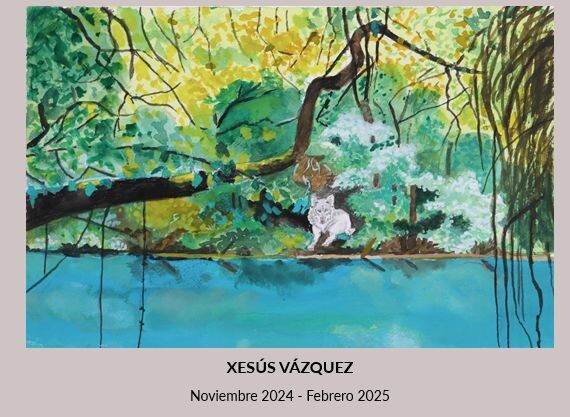
  • 22 November 2024 — 9 February 2025: «Escenas para el séptimo ángel» @ El Palacete del Embarcadero, Muelle de Calderón
      Works by Xesús Vázquez.

  • From 4 September: «La Dama Roja» @ Museo de Prehistoria y Arqueología de Cantabria, Calle de Hernán Cortés, 4
      The exhibition dedicated to the Red Lady of El Mirón, an Upper Paleolithic woman buried some 19,000 years ago. This is the first time I went to the Museum of Prehistory and Archaeology of Cantabria and absolutely loved it. Free entrance on Sundays from 17:00 to 20:00.

And that was it for November.

Monday, 24 June 2024

Sapiens: A Brief History of Humankind

by Yuval Noah Harari

I wish I read Sapiens before I did The Dawn of Everything, for the latter book refers to and criticises the Yuval’s work. So every now and then I was catching myself agreeing with Graeber and Wengrow’s critique and musing if I would read Sapiens with different eyes, say, ten years ago. Of course I would.

The book is very well written — you can’t take that away from Harari.

There is some evidence that the size of the average Sapiens brain has actually decreased since the age of foraging. Survival in that era required superb mental abilities from everyone. When agriculture and industry came along people could increasingly rely on the skills of others for survival, and new ‘niches for imbeciles’ were opened up.

Closer to our times, the book grows less interesting (for me) and more erratic. It looks as if the author was in a hurry to finish it. This is what Harari writes about the end of Soviet Union (which happened not in 1989 but in 1991):

The Soviet collapse in 1989 was even more peaceful, despite the eruption of ethnic conflict in the Balkans, the Caucasus and Central Asia. Never before has such a mighty empire disappeared so swiftly and so quietly. The Soviet Empire of 1989 had suffered no military defeat except in Afghanistan, no external invasions, no rebellions, nor even large-scale Martin Luther King-style campaigns of civil disobedience. The Soviets still had millions of soldiers, tens of thousands of tanks and aeroplanes, and enough nuclear weapons to wipe out the whole of humankind several times over. The Red Army and the other Warsaw Pact armies remained loyal. Had the last Soviet ruler, Mikhail Gorbachev, given the order, the Red Army would have opened fire on the subjugated masses.
Yet the Soviet elite, and the Communist regimes through most of eastern Europe (Romania and Serbia were the exceptions), chose not to use even a tiny fraction of this military power. When its members realised that Communism was bankrupt, they renounced force, admitted their failure, packed their suitcases and went home. Gorbachev and his colleagues gave up without a struggle not only the Soviet conquests of World War Two, but also the much older tsarist conquests in the Baltic, the Ukraine, the Caucasus and Central Asia. It is chilling to contemplate what might have happened if Gorbachev had behaved like the Serbian leadership — or like the French in Algeria.

And a bit later:

Today humankind has broken the law of the jungle. There is at last real peace, and not just absence of war. For most polities, there is no plausible scenario leading to full-scale conflict within one year.

The book was originally published in Hebrew in 2011; this English translation appeared in 2014. There was no way for the author to know what’s coming for Crimea, but he should have been aware of Abkhazia, South Ossetia and Transnistria.

Tuesday, 17 October 2023

Hypericon

by Manuele Fior
translated by Regina López Muñoz

Another great comic from Fior. I was half expecting the protagonists go their separate ways. That would be more logical and the book almost comes to that point... I felt slightly annoyed by them coming back together, but hey, who wants 5,000 Kilometers Per Second 2? Not me. Hypericon could be an alternative universe version of 5,000 kps though... I said too much already.

Like in Celestia, I find most of the dialogue superfluous. Ditto the internal monologue of Teresa. With some exceptions, of course. Such as Teresa and Ruben’s bickering.

Sunday, 1 October 2023

Free live music and stuff in Las Palmas, September 2023

What we’ve seen in September:

And that was it for September.

Tuesday, 31 January 2023

Live music in Las Palmas and around, January 2023

January came and went way too fast. Or maybe it’s just cold outside, by Canarian standards anyway, and I didn’t have energy to go out as much as I would “normally” do. This is what I’ve seen:

  • 6 January: Arístides Moreno & la 101 Brass Band @ Alameda de Colón, Las Palmas de Gran Canaria
      For years I was avoiding venturing out downtown during the Noche de Reyes. This time I just wanted to check out some live music in Triana. To get my curiosity satisfied, I had to negotiate the inebriated crowds, mountains of rubbish (mostly empty beer cans and plastic cups) and, I’m sorry to say, rivers of urine. As the concert of my interest started at 00:30, I didn’t stay for all of it. 101 Brass Band from Tenerife were great; I’d love to see (more of) them again another time. Mr Moreno could — maybe should — have stayed at home.

  • 20 January: Rebeca Mora Trío @ Museo y Parque Arqueológico Cueva Pintada, Calle Audiencia, 2, Gáldar
      A guided night tour through Cueva Pintada, with a musical intermission by Rebeca Mora (vocal), Jonay Mesa (seven-string guitar) and Nelson Saavedra (fretless bass). I’d enjoyed it more if (a) the bus to Gáldar was on time and (b) we didn’t have to run to catch the return bus to Las Palmas.

  • 28 January: Pablo Queu @ Teatro Guiniguada, Plaza F. Mesa de León, Las Palmas de Gran Canaria
      This is the second time I saw this band. On this occasion, the “extended format” included Alberto Díaz (trombone), Emilio Diena (drums), Ruyman Franco (bass guitar), Jonay Mesa (guitar), Claudio Marrero (tenor sax), Ernesto Montenegro (trumpet, flugelhorn) and Pablo Quintana Guillén (guitar), with short but spectacular appearance of Miriam Fleitas (vocal).

Really looking forward to a warmer February.

Tuesday, 17 January 2023

The Dawn of Everything: A New History of Humanity

by David Graeber and David Wengrow

What a book! Apart from anthropology and archaeology (the authors’ respective field expertise), it deals with, or at least touches upon, ecology, economics, ethnology, history, linguistics, philosophy, political science, psychology, sociology — in short, most of the social sciences and beyond. Or, as the authors modestly put it, “everything”. You don’t have to agree with everything they say to admire their work. The point is not agreeing but questioning the accepted, or any other, narrative.

Speaking of which: I really liked the way the (sub)chapters are named, for example,

How the conventional narrative of human history is not only wrong, but quite needlessly dull
In which we ask: would you rather fish, or gather acorns?
In which we go in search of the real origins of bureaucracy, and find them on what appears to be a surprisingly small scale

and so on. An inexhaustible source of quotes about — well, you’ve got it.

On academia and democracy:

Scholars tend to demand clear and irrefutable evidence for the existence of democratic institutions of any sort in the distant past. It’s striking how they never demand comparably rigorous proof for top-down structures of authority. These latter are usually treated as a default mode of history: the kind of social structures you would simply expect to see in the absence of evidence for anything else. Obviously, it’s partly just the desire to preserve the credit for having ‘invented’ democracy for something called ‘the West’. Part of the explanation might also lie in the fact that academia itself is organized in an extremely hierarchical fashion, and most scholars therefore have little or no experience of making democratic decisions themselves, and find it hard to imagine anyone else doing so as a result.

On self-awareness:

Philosophers tend to define human consciousness in terms of self-awareness; neuroscientists, on the other hand, tell us we spend the overwhelming majority of our time effectively on autopilot, working out habitual forms of behaviour without any sort of conscious reflection. When we are capable of self-awareness, it’s usually for very brief periods of time: the ‘window of consciousness’, during which we can hold a thought or work out a problem, tends to be open on average for roughly seven seconds. What neuroscientists (and it must be said, most contemporary philosophers) almost never notice, however, is that the great exception to this is when we’re talking to someone else. In conversation, we can hold thoughts and reflect on problems sometimes for hours on end. This is of course why so often, even if we’re trying to figure something out by ourselves, we imagine arguing with or explaining it to someone else. Human thought is inherently dialogic.

On freedom:

The freedom to abandon one’s community, knowing one will be welcomed in faraway lands; the freedom to shift back and forth between social structures, depending on the time of year; the freedom to disobey authorities without consequence — all appear to have been simply assumed among our distant ancestors, even if most people find them barely conceivable today. Humans may not have begun their history in a state of primordial innocence, but they do appear to have begun it with a selfconscious aversion to being told what to do.

Thursday, 27 January 2022

Huellas: Manifestaciones Rupestres de las Islas Canarias

a film by Tarek Ode

I quite enjoyed watching this documentary about prehistoric rock art in the Canary Islands. It would be much more convincing though if they lost the embarrassing scenes featuring the “aborigines” (just arrived from Africa, you understand, that’s why they don’t look like aborigines) and “conquistadors”.

Monday, 27 April 2020

The Horse, the Wheel, and Language

by David W. Anthony

It took me, what, well under a year to read this book. Not being either a linguist or an archaeologist, I found it interesting — in more than one sense of the word — rather than good. Now Guns, Germs and Steel is jolly damn good. The Horse, the Wheel, and Language is merely interesting. Feel the difference.

It starts well enough. In general, the first part, Language and Archaeology, reads much better (and is much shorter) than the second one, The Opening of the Eurasian Steppes. This latter appears to be a collection of recycled academic papers by Anthony et al., maybe slightly reformatted and given pop-sciencey titles but otherwise left intact. Which is a shame, because the author’s indubitably fascinating discoveries and insights are buried among grave inventories and tables of carbon dating so one has to be a kind of archaeologist themself to unearth them. Why not consign all these tedious trees to the endnotes or appendices so we can finally see the forest?

And vice versa: not trusting the author, I took the effort to go through the “small print”. (In a hardcopy, I would read the endnotes as I go along, which is nearly impossible on Kindle.) I think the Author’s Note on Radiocarbon Dates is not just illuminating but worthy of inclusion in the main text, and there are a few pearls in the notes, for instance, a curious discovery of

the Potapovka horse skull lying above the shoulders of the decapitated Poltavka human. Before dates were obtained on both the horse and the skeleton this deposit was interpreted as a “centaur”— a decapitated human with his head replaced by the head of a horse, an important combination in Indo-Iranian mythology. But Nerissa Russell and Eileen Murphy found that both the horse and the human were female, and the dates show that they were buried a thousand years apart.

There is a suspiciously detailed and non-critical Wikipedia article, most likely written by the fans of the book. Still, could be a good idea to check it first before embarking on a 500-plus-page monograph.